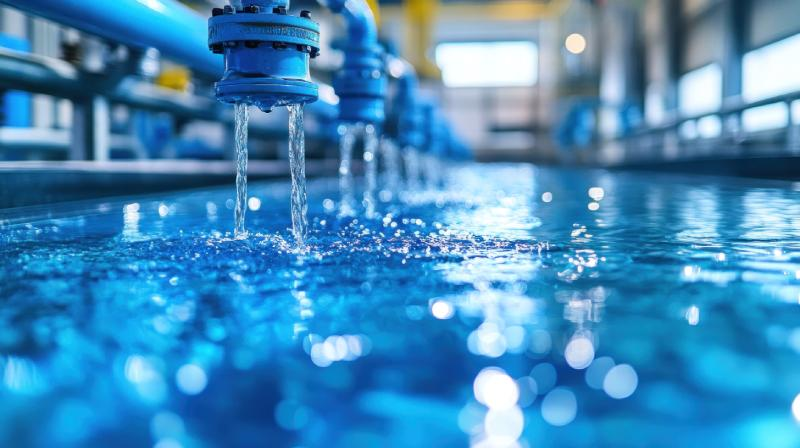
Water is an essential resource for businesses, industries, and commercial facilities. Ensuring its quality and availability is critical for operational efficiency, health, and compliance with regulations. Commercial water treatment refers to the processes designed to purify, condition, and manage water in commercial and industrial settings. This process ensures that water meets the required standards for consumption, manufacturing, cleaning, and other applications. In this comprehensive guide, we will explore the importance of commercial water treatment, the techniques used, challenges, and the benefits it provides to businesses.
Understanding Commercial Water Treatment
Commercial water treatment involves a series of processes designed to remove impurities, contaminants, and harmful microorganisms from water used in businesses and industrial facilities. Unlike residential water treatment, commercial systems must handle larger volumes of water, comply with stricter safety regulations, and address diverse water needs depending on the industry.
The water used in commercial facilities can come from municipal sources, wells, or other natural water bodies. Each source may contain physical particles, chemicals, microorganisms, and dissolved minerals that need treatment before the water can be safely used. Effective commercial water treatment ensures operational efficiency, reduces equipment damage, and promotes a safe and hygienic environment for employees and customers.
Importance of Commercial Water Treatment
For businesses, the quality of water is more than a matter of taste or aesthetics. It has direct implications for health, safety, and productivity. Contaminated water can lead to operational issues such as scale buildup, corrosion, and malfunctioning equipment. In food, beverage, and healthcare industries, untreated water poses health risks that can compromise safety and violate regulatory standards.
Commercial water treatment ensures that businesses comply with health and safety regulations. Many industries, including hospitality, healthcare, manufacturing, and food processing, are required to maintain specific water quality standards. Implementing effective water treatment reduces the risk of violations, protects employees and customers, and supports long-term operational sustainability.
Additionally, treated water can save costs by reducing maintenance and extending the lifespan of commercial equipment. Boilers, cooling towers, and water-using machinery are prone to damage from hard water, scaling, and chemical contaminants. Commercial water treatment helps mitigate these issues, resulting in fewer repairs, reduced downtime, and improved efficiency.
Common Commercial Water Treatment Methods
The choice of water treatment method depends on water quality, usage requirements, and industry-specific needs. Commercial water treatment often involves multiple processes to ensure water meets desired standards.
Physical treatment methods remove large particles, sediments, and debris from water. Filtration and sedimentation are commonly used to capture impurities and prevent them from entering equipment and plumbing systems. Chemical treatment methods include disinfection, pH adjustment, and coagulation to remove microorganisms, neutralize harmful substances, and prevent corrosion or scaling.
In certain commercial applications, advanced technologies such as reverse osmosis, ultrafiltration, and deionization are employed to remove dissolved solids, heavy metals, and other contaminants. Biological treatment methods are used for wastewater management in commercial facilities, utilizing microorganisms to break down organic matter and pollutants. These combined methods ensure comprehensive purification and conditioning of water for safe commercial use.
Steps in a Commercial Water Treatment Process
A typical commercial water treatment system involves several stages to achieve optimal water quality. The first stage is usually screening or sedimentation, which removes large particles and debris. Filtration follows, using media such as sand, gravel, or membranes to capture smaller impurities. Chemical treatment may then be applied to disinfect the water and adjust its chemical composition to prevent scaling and corrosion.
Advanced treatment processes such as reverse osmosis or deionization are sometimes applied to remove dissolved minerals and achieve high-purity water required in industries like pharmaceuticals, electronics, or food processing. For facilities that discharge wastewater, biological treatment and additional purification steps ensure that the water released into the environment meets regulatory standards. Throughout the process, continuous monitoring and testing are essential to maintain consistent water quality and prevent system failures.
Challenges in Commercial Water Treatment
Commercial water treatment faces several challenges due to the complexity of water sources and usage requirements. One major challenge is water contamination from industrial chemicals, agricultural runoff, and natural impurities. These contaminants can be difficult to remove and may require specialized treatment methods.
High water usage in commercial facilities also increases the complexity of treatment, as large volumes must be processed efficiently to meet operational demands. Aging infrastructure and equipment can compromise treatment efficiency, requiring regular maintenance, upgrades, and monitoring. Compliance with strict regulations adds another layer of responsibility, as businesses must ensure that treated water meets legal and safety standards at all times.
Additionally, managing costs while maintaining high-quality treatment can be challenging. Implementing advanced technologies and chemical treatments involves capital investment and ongoing operational expenses. Balancing water quality, operational efficiency, and cost-effectiveness requires careful planning and expert knowledge.
Benefits of Commercial Water Treatment
Despite challenges, commercial water treatment offers numerous benefits to businesses and industries. Treated water ensures safe and hygienic conditions for employees, customers, and clients. It reduces the risk of equipment damage and operational disruptions caused by hard water, scaling, and corrosion.
Effective commercial water treatment also supports regulatory compliance, reducing the risk of fines, penalties, and reputational damage. For industries such as food and beverage, healthcare, and hospitality, maintaining high water quality is essential for customer safety and satisfaction.
Environmentally, commercial water treatment reduces pollution and minimizes the impact of wastewater discharge on natural ecosystems. By properly treating water before release, businesses contribute to environmental sustainability and conservation of water resources. Additionally, treated water improves efficiency in energy and chemical usage, making operations more cost-effective and eco-friendly.
Choosing the Right Commercial Water Treatment System
Selecting the right commercial water treatment system depends on factors such as water source, volume, intended use, and industry-specific regulations. Conducting a water quality analysis is the first step, helping identify the contaminants and impurities that need to be addressed. Based on the analysis, businesses can choose appropriate treatment methods, whether physical filtration, chemical treatment, advanced membrane technology, or a combination of processes.
Working with experienced water treatment professionals ensures that systems are designed, installed, and maintained according to industry standards. Properly designed systems improve efficiency, reduce operational risks, and provide consistent high-quality water for commercial use.
Future Trends in Commercial Water Treatment
As water scarcity and pollution continue to grow, commercial water treatment technologies are evolving to become more efficient, sustainable, and cost-effective. Smart water management systems are being implemented to monitor water quality in real time, detect contamination, and optimize treatment processes automatically.
Emerging technologies such as nanofiltration, UV-based disinfection, and energy-efficient reverse osmosis provide higher levels of purification while reducing environmental impact. Reuse and recycling of water within commercial facilities are also gaining popularity, helping businesses conserve resources, reduce costs, and support sustainability initiatives.
Conclusion
Water is a critical resource for commercial facilities, and ensuring its safety, quality, and efficiency is essential for operational success and regulatory compliance. Commercial water treatment provides businesses with safe, clean, and properly conditioned water for consumption, industrial processes, and environmental protection.
By implementing effective treatment processes, businesses can protect employees, customers, and equipment, reduce operational costs, and minimize environmental impact. With advances in technology and growing awareness of water sustainability, commercial water treatment continues to play a vital role in modern industries. Investing in reliable water treatment systems ensures safe and efficient operations, contributing to long-term success and responsible water management.