By Michel Haydon | Academic Strategy Consultant
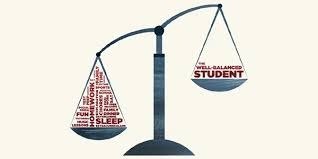
For students in the United States today—whether navigating a high school Senior Capstone, balancing AP Research, or finalizing a university honors thesis—the “Researcher’s Paradox” is a daily reality. This paradox is the nagging belief that academic excellence requires total social isolation.
As an education strategist, I’ve observed a “martyrdom mindset” contribute to a 40% increase in student burnout rates over the last three years. However, in 2026, the secret to a top-tier thesis isn’t “more hours”—it’s strategic efficiency. Research suggests that peak mental performance drops significantly after four hours of continuous high-intensity focus.
The following strategies allow you to master your research while keeping your social life intact.
Implementing Time-Boxing for Deep Research
One of the most common pitfalls for students is “passive studying”—spending eight hours in a library while losing four of those to digital distractions. This leads to academic burnout and a constant feeling of being “behind.”
To combat this, utilize the 3-Hour Power Block. Instead of a marathon session, allocate a specific, non-negotiable window for “Deep Work.”
- Zero Notifications: Use “Focus Mode” to block all pings.
- Specific Output Goals: Don’t just “work.” Set a goal like “Drafting 500 words of the Literature Review.”
- The Hard Stop: Once the timer hits zero, you are done.
By compressing effort, you achieve more in three hours than most do in ten, leaving your evenings open for social engagement—guilt-free.
Leveraging Expert Support to Overcome Learning Curves
Many students lose weeks of social time because they get stuck on technicalities—formatting Chicago or APA citations, structuring a complex argument, or analyzing data sets. There is a fine line between “doing the work” and “spinning your wheels.”
In the professional world, experts use consultants to move faster. You should do the same. If you find yourself staring at a blank page for more than two hours, it’s time to seek external expertise. Utilizing professional assignment help for editing and structural guidance can bridge the gap between a rough draft and a polished, grade-A submission.
Whether you need a fresh perspective on a difficult prompt or professional editing to ensure your work meets high-tier university standards, getting expert help is a form of resource management. This allows you to focus on core ideas while outsourcing the mechanical “busy work” that eats into your weekend.
Adopting a Professional Academic Mindset
“A thesis becomes a ‘social-life killer’ when it has no boundaries. To protect your mental health, treat your degree like a 9-to-5 job and seek thesis help when you feel stuck to avoid burnout. Establish psychological boundaries by setting a ‘Hard Stop’ time.”
If you decide that 6:00 PM is the end of your workday, then at 6:01 PM, the laptop must be closed. Use a “Shutdown Ritual”—close your browser tabs and write down the first task for tomorrow. This signals to your brain that it is safe to switch into “social mode.”
Utilizing the Social Study Hybrid
Isolation is a choice, not a requirement. While the final draft requires solitude, the brainstorming and initial research phases are perfect for social settings. Organize a Thesis Café Session with peers.
- Focus: Work for 50 minutes in silence.
- Break: Socialize for 10 minutes.
Explaining a complex thesis topic to a friend helps you simplify your own logic—a key component of authoritative writing.
Reverse-Engineering Academic Deadlines
Anxiety is the primary reason students cancel social plans. To solve this, you need a Reverse-Engineered Roadmap. Instead of looking at the final due date, create “Micro-Deadlines” to earn your leisure time.
| Phase | Micro-Deadline Goal | Estimated Hours |
| Week 1 | Finalize Thesis Statement & Core Argument | 5 Hours |
| Week 2 | Gather & Annotate 10 Primary Sources | 8 Hours |
| Week 3 | Detailed Outline of Chapters 1 & 2 | 6 Hours |
| Week 4 | First 1,000 Words of Draft | 10 Hours |
When you hit your Friday micro-deadline, you have “earned” your weekend. This structured approach ensures you never have to pull a “week-long hermit session” to catch up before finals.
Summary of Student Productivity
Success in modern education isn’t just about what you know; it’s about how you manage your cognitive load. By using a combination of deep work, expert guidance, and strict boundaries, you can join the elite group of students who graduate with both a high GPA and a thriving social circle.
About the Author: Michael Haydon is a veteran education strategist and academic consultant based in the USA. With over a decade of experience in student productivity and research methodology, he helps students achieve peak performance without compromising their well-being.