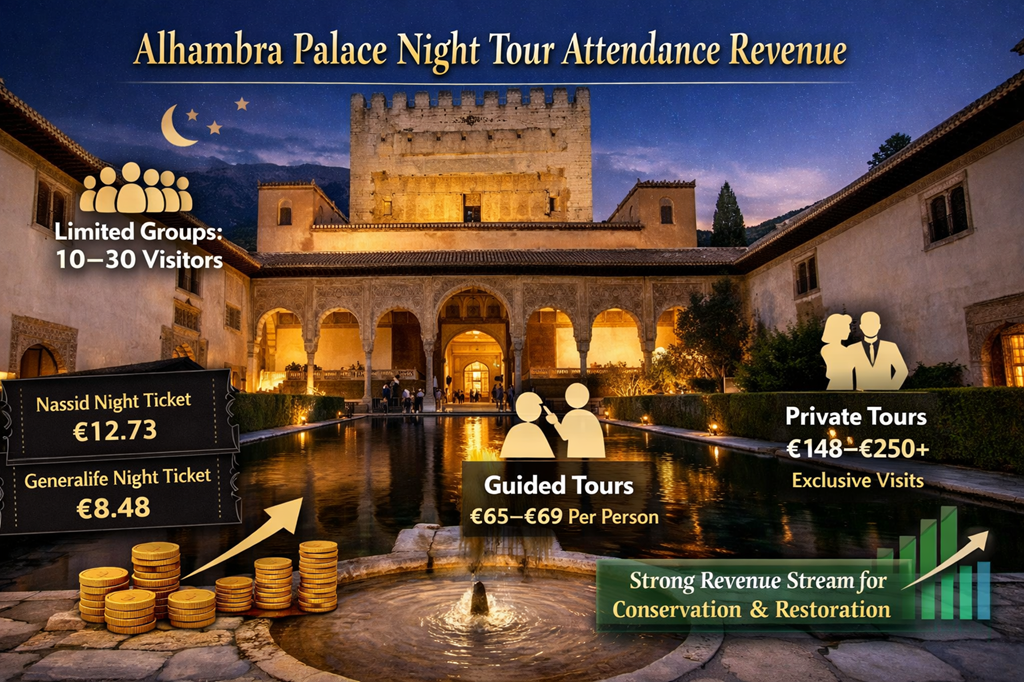
The Alhambra Palace night tour attendance revenue represents one of the most effective examples of how cultural heritage sites can balance preservation, visitor experience, and financial sustainability. Rather than increasing visitor numbers, the Alhambra focuses on controlled access and premium experiences, especially during evening hours. As a result, night tours generate strong revenue while protecting one of Europe’s most delicate historic monuments.
In recent years, the Alhambra Palace has consistently welcomed around 2.7 million visitors annually. Within that total, night tours account for a smaller share of attendance, yet they deliver disproportionately high value per visitor.
Why Alhambra Night Tours Matter Financially
Night tours are not designed to increase volume. Instead, they focus on value, atmosphere, and exclusivity. Because capacity is limited and demand remains strong, each night visitor contributes more revenue compared to a typical daytime guest.
At the same time, evening visits allow the monument to:
- Distribute visitor flow more evenly
- Reduce daytime congestion
- Protect sensitive architectural areas
- Fund long-term conservation work
As a result, night tour revenue plays a strategic role rather than a purely commercial one.
Understanding Night Tour Attendance
Strict Capacity Controls
The Alhambra operates under carefully defined limits to protect the site.
- Overall annual visitors: approximately 2.7 million
- Night tour groups: typically 10 to 30 people per guide
- Entry windows: fixed schedules with timed access
Because night visits are intentionally scarce, availability often sells out quickly, especially during peak travel months.
Official Night Ticket Pricing Structure
The foundation of attendance revenue comes from official tickets sold directly by the monument.
Base Night Ticket Prices
- Nasrid Palaces Night Visit: approximately €12.73
- Generalife Palace and Gardens Night Visit: approximately €8.48
These prices reflect the shorter visit duration, limited capacity, and enhanced lighting design that defines the night experience.
Guided Night Tours and Revenue Premiums
Although official tickets create the baseline, guided tours significantly increase total per-visitor spending.
Standard Guided Night Tours
- Typical price range: €65 to €69 per adult
- Includes licensed guides, storytelling, and structured routes
- Represents the most popular night tour option
While the monument earns the ticket portion, guides and operators capture the additional premium through expertise and service.
Private Night Tours and High-End Revenue
PNT (Private Night Tours) form the most exclusive revenue tier.
Private Experience Pricing
- Entry-level private tours: around €148
- Fully customized experiences: €200 to €250 or more
Despite lower attendance numbers, these tours generate the highest revenue per booking, making them an important niche within the night tour ecosystem.
Key Night Tour Experiences
Nasrid Palaces Night Visit
This experience focuses on the Alhambra’s most iconic architectural spaces:
- Mexuar
- Comares Palace
- Palace of the Lions
Carefully designed lighting reveals geometric patterns, inscriptions, and details often overlooked during the day.
Generalife Palace and Gardens Night Visit
This tour highlights:
- Terraced gardens
- Water channels and fountains
- Quiet walking paths under soft illumination
It attracts visitors who value atmosphere, landscape, and calm reflection.
How to Estimate Alhambra Night Tour Attendance Revenue
A clear and ethical approach separates official ticket revenue from tourism market income.
Simple Revenue Formula
Night Ticket Revenue =
(Nasrid Night Tickets × €12.73) +
(Generalife Night Tickets × €8.48)
This calculation reflects the income that directly supports the monument.
Why Guided Tours Are Calculated Separately
Guided tour prices include:
- Guide fees
- Operator margins
- Platform commissions
Therefore, they should be treated as tourism-sector revenue, not purely monument income.
Illustrative Revenue Scenarios
Because exact night attendance figures are not always published, scenario-based estimates offer realistic insight.
Moderate Season Example
- 20,000 Nasrid night tickets
- 20,000 Generalife night tickets
Estimated revenue: €424,200
Strong Annual Performance
- 50,000 Nasrid night tickets
- 50,000 Generalife night tickets
Estimated revenue: €1,060,500
Peak Demand Scenario
- 100,000 Nasrid night tickets
- 80,000 Generalife night tickets
Estimated revenue: €1.95 million
These examples show how limited attendance can still produce meaningful income when pricing and demand align.
Economic Impact Beyond Ticket Sales
Night tour attendance revenue supports more than daily operations.
Conservation and Restoration
Income contributes to:
- Structural preservation
- Garden maintenance
- Lighting systems
- Security and monitoring
Local Economic Benefits
Evening visits also encourage:
- Hotel stays
- Restaurant dining
- Transportation services
Although this spending does not flow directly to the monument, it strengthens Granada’s broader tourism economy.
Why Controlled Exclusivity Works
The Alhambra’s night tour model succeeds because it:
- Protects heritage assets
- Enhances visitor satisfaction
- Maintains predictable revenue
- Avoids overtourism
Rather than chasing higher numbers, the site focuses on higher quality engagement.
Future Outlook for Night Tour Revenue
Looking ahead, several trends will shape performance:
- Demand for quieter cultural experiences continues to grow
- Premium private tours are gaining popularity
- Flow management remains a priority over volume expansion
As long as conservation remains central, night tour revenue is likely to stay stable and resilient.
Final Perspective
The Alhambra Palace night tour attendance revenue model demonstrates how cultural landmarks can generate income responsibly. By combining limited access, thoughtful pricing, and unforgettable experiences, the Alhambra turns scarcity into strength.
Ultimately, night tours do more than generate revenue. They help ensure that the Alhambra remains protected, accessible, and financially sustainable, while offering visitors one of the most memorable cultural experiences in Spain.