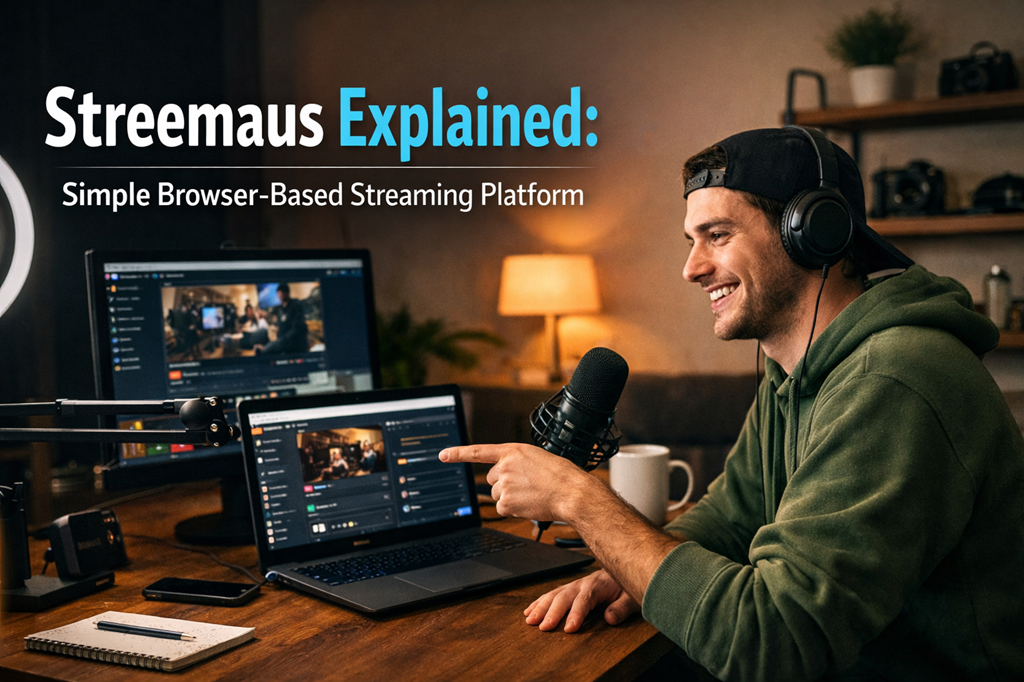
Streemaus is a browser-based platform for live and on-demand audio and video streaming, introduced around 2020. It was created to reduce the technical friction often associated with broadcasting while offering viewers a clean and focused way to consume content.
Instead of competing with large, algorithm-heavy platforms or advanced professional tools, Streemaus focuses on simplicity, stability, and accessibility. The goal is straightforward: help creators go live quickly and help audiences enjoy content without distractions.
What Is Streemaus?
Streemaus is a web-based streaming solution that allows users to broadcast live or share recorded content directly through a modern browser. It supports both audio and video formats and works across devices without requiring dedicated software.
Unlike many platforms that demand complex setup or constant optimization, this system emphasizes ease of use. As a result, creators can focus on content quality rather than technical configuration.
In practical terms, the platform acts as a middle ground between professional broadcasting tools and crowded social streaming apps.
Why Streemaus Was Created
Many streaming services struggle to balance usability and capability. Some are too complex for beginners, while others are overloaded with feeds, ads, and algorithmic pressure.
Streemaus was designed to address this gap by prioritizing:
- Fast onboarding
- Minimal setup requirements
- Stable stream delivery
- Content-first interaction
Because of this design philosophy, it appeals to users who value clarity, control, and reliability over reach or virality.
How the Platform Works
For Viewers
Watching content is simple:
- Open the platform in a web browser
- Browse live sessions or recorded media
- Click and start watching instantly
No mandatory downloads are required, and navigation remains clean and intuitive.
For Creators
Creators access a streamlined dashboard that allows them to:
- Start live broadcasts quickly
- Upload recorded audio or video
- Manage basic stream settings
- Interact with audiences in real time
The platform handles background technical processes, such as stream delivery and compatibility, which significantly lowers the learning curve.
Key Features Explained Clearly
Browser-First Streaming
All core functionality runs directly in the browser. This improves accessibility and allows creators to stream from different devices without changing tools.
Live and On-Demand Content
The platform supports real-time broadcasts as well as recorded media. Live sessions can be saved and made available later, which helps creators extend the value of their content.
Simple Setup Process
There is no need to understand encoding formats or bitrate calculations. The setup process is designed to be quick and approachable, even for first-time streamers.
Stable Performance
Stream stability is a priority. The system is optimized to reduce buffering and maintain consistent playback, particularly for audio-focused formats such as podcasts or discussions.
Clean Interface Design
The interface avoids clutter, aggressive recommendations, and unnecessary visual noise. This keeps attention on the content rather than the platform itself.
Who Streemaus Is Best Suited For
This platform works particularly well for:
- Independent creators and podcasters
- Educators and community organizers
- Small teams hosting live sessions or events
- Viewers who prefer focused, distraction-free content
It is especially appealing to users who feel overwhelmed by large, algorithm-driven platforms.
How It Compares to Other Streaming Platforms
Streemaus does not aim to replace major platforms in scale. Instead, it competes on usability and experience.
- Compared to large video platforms, it feels calmer and more intentional
- Compared to professional broadcasting tools, it is far easier to use
- Compared to social streaming apps, it avoids noise and engagement pressure
This balance makes it suitable for creators building genuine communities rather than chasing maximum reach.
Accessibility and Device Support
Because the platform is browser-based, it works on:
- Desktop computers
- Laptops
- Tablets
- Modern mobile browsers
No dedicated application is required, which keeps access simple and consistent across devices.
Common and Practical Use Cases
Typical use cases include:
- Live podcasts and interviews
- Educational sessions and workshops
- Community discussions
- Creative performances
- Internal business streams
Each scenario benefits from quick setup and dependable delivery.
Advantages and Limitations
Advantages
- Easy to use, even for beginners
- No complex configuration
- Clean and distraction-free interface
- Reliable audio and video playback
- Works across devices
Limitations
- Smaller audience compared to major platforms
- Fewer advanced production features
- Limited third-party integrations
These trade-offs are intentional and align with the platform’s simplicity-first approach.
Safety, Legitimacy, and Responsible Use
Streemaus follows standard web security practices, including secure connections. Like any streaming service, users should review the terms of service and community guidelines before broadcasting or engaging.
It is not a content piracy site or media aggregator. Responsibility for streamed material remains with the creator, which aligns with common industry standards.
Final Verdict
Streemaus is not designed to be the largest streaming platform. Instead, it focuses on being one of the most approachable and reliable.
For creators who want to stream without technical frustration and for viewers who prefer calm, content-first experiences, it offers clear value. If your priority is simplicity, stability, and ease of use, this platform is worth exploring.
Frequently Asked Questions
What is Streemaus?
It is a browser-based platform for live and on-demand audio and video streaming designed to reduce technical complexity.
Is it free to use?
Yes. Free access is available with basic features. Additional options may vary by account level.
Do users need special software?
No. Everything runs directly in modern web browsers.
Who benefits most from this platform?
Independent creators, educators, podcasters, and viewers who prefer distraction-free streaming.
How is it different from major platforms?
It prioritizes usability and reliability over scale, aggressive algorithms, or complex production tools.