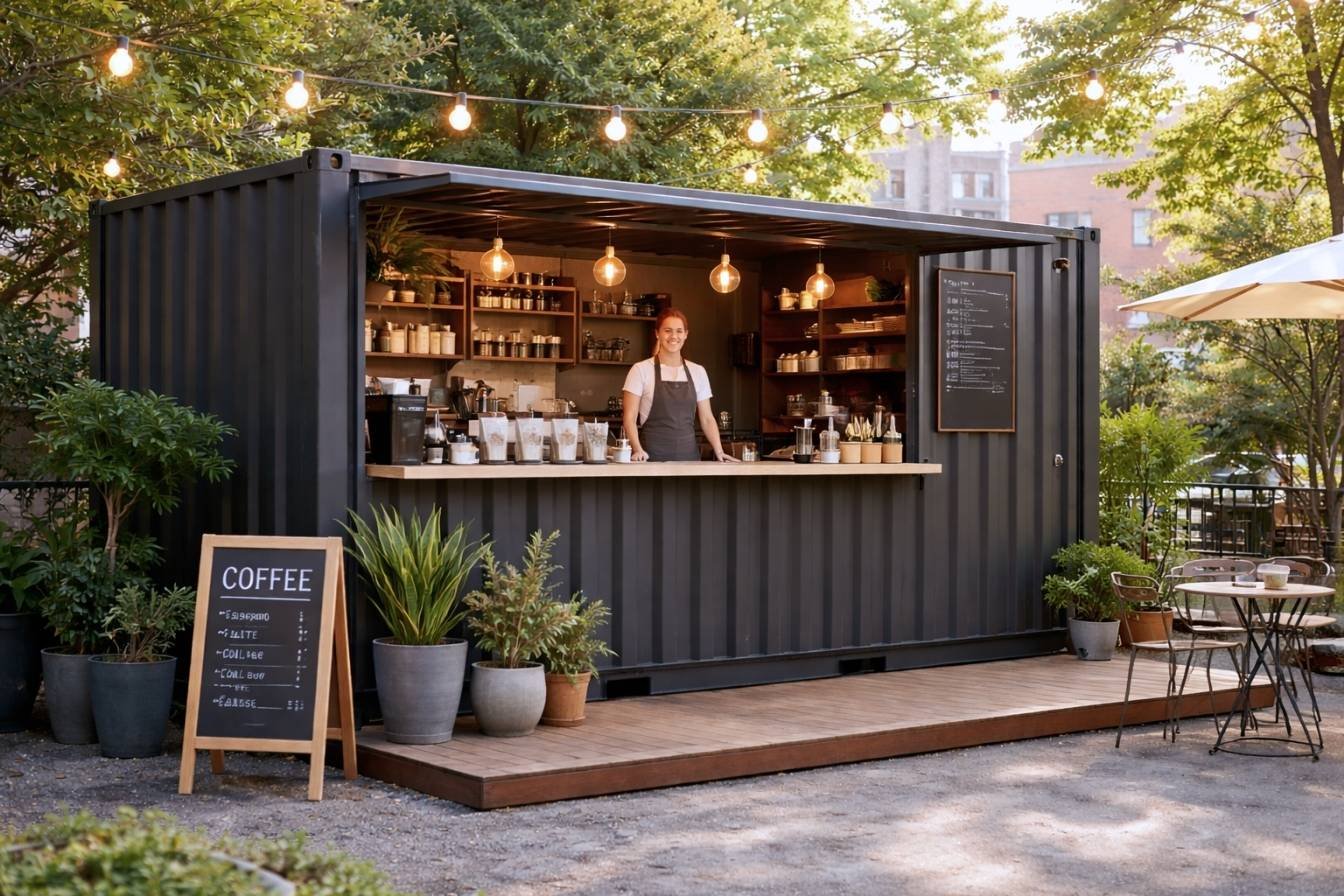
You do not need a massive building or a long lease to start something meaningful. Sometimes all you need is a steel box, a clear idea, and the willingness to begin.
A shipping container gives you a defined space that forces focus. It keeps costs down and lets you test ideas without overcommitting. When you stand inside one for the first time, you realize it feels less like a box and more like a blank canvas.
Running a business from a shipping container also changes how you think. You design smarter. You keep only what matters. You become intentional about every square foot. That mindset often carries over into the way you serve customers and grow the business itself.
Below are five business ideas you can realistically run from a shipping container, each one built around simplicity, flexibility, and real demand.
Why Containers Work for Small Business
When you run a business from a shipping container, you make fewer excuses. Space constraints force clarity. Every decision has a purpose. You know exactly what you need to operate, and you cut the rest.
Containers also lower the barrier to entry. Instead of signing a long lease or renovating an old building, you start with a known cost and timeline. You can test ideas, refine them, and pivot faster. That flexibility is invaluable, especially early on.
There is also something grounding about working inside a container. The steel walls create separation from the noise of the world. You focus. You build momentum. Customers notice the authenticity and effort behind what you created.
1. Coffee Stand or Beverage Bar
You can turn a shipping container into a compact coffee stand that feels modern and inviting. The structure itself already has character, which saves you money on branding. With a service window, basic plumbing, power, and a clean interior layout, you are ready to serve.
You might park near an office park, construction site, farmers market, or busy roadside pull off. Customers love the novelty of ordering from a container, but what keeps them coming back is speed and consistency. Inside, everything is within arm’s reach. You move faster, waste less, and focus on quality.
The limited space works in your favor. Instead of a massive menu, you offer a tight selection you can execute well. Coffee, espresso drinks, cold brew, teas, or even smoothies fit easily. You can start small and expand later by adding outdoor seating or a second container.
This is also a business where shipping containers for rent can help you test a location before committing long term.
2. Retail Shop or Pop Up Store
A shipping container makes an excellent retail space for products that benefit from storytelling. Clothing, outdoor gear, handmade goods, vintage items, plants, or specialty foods all work well in a compact shop. The container becomes part of the experience rather than just a shell.
You might set up in a parking lot, event space, festival, or shared commercial property. Customers step inside and immediately feel like they are discovering something. The narrow layout encourages movement from front to back, guiding people past every product.
You control inventory carefully, which helps cash flow. You also gain flexibility. If foot traffic slows, you can relocate. If sales spike during certain seasons, you can move closer to demand. Many container retail owners treat the shop as a physical extension of an online brand, using it to deepen relationships rather than carry massive stock.
Over time, you can add lighting upgrades, shelving, and exterior paint that matches your brand. The container grows with you instead of locking you into a fixed space.
3. Workshop or Trade Based Business
If you work with your hands, a shipping container can become a powerful base of operations. Woodworking, welding, bike repair, small engine repair, metal fabrication, or custom builds all fit naturally into a container workspace.
You gain security from the steel walls and doors. Tools stay protected. Materials stay dry. When you unlock the doors in the morning, everything is exactly where you left it. That consistency saves time and mental energy.
Inside, you design the workflow around how you actually work. Benches line the walls. Storage goes vertical. Power tools stay mounted. You are not paying for unused square footage, which keeps overhead low. This is especially valuable if you are building a business while still taking on freelance or contract work.
A container workshop also travels well. If your projects change location, your shop moves with you. Many tradespeople start this way and later expand into larger yards or multiple containers as demand grows.
4. Office or Creative Studio
You do not need a traditional office to run a professional operation. A shipping container office can feel quiet, focused, and surprisingly comfortable. With insulation, windows, climate control, and good lighting, it becomes a space where real work gets done.
This setup works well for designers, consultants, marketers, writers, engineers, and remote teams. You step away from distractions at home and avoid the costs of commercial office leases. When you close the door, work stays inside.
The container also sends a message. It signals creativity and independence. Clients who visit remember the experience. You are not just another office in a glass building. You built something intentional.
Some owners place their container office on rural land or behind an existing business. Others create small office parks made entirely of containers. Brands like Drybox containers are often chosen for these setups because consistency and build quality matter when the space is used daily.
5. Food Prep, Catering, or Specialty Production
Beyond coffee, shipping containers work well for food prep and specialty production businesses. Think bakery prep, sauce bottling, meal prep, spice blending, or packaged foods. You are not running a full restaurant. You are creating a controlled environment for production.
Health departments often approve container kitchens when properly built. Stainless surfaces, ventilation, refrigeration, and clean layouts are easier to maintain in a small space. You focus on process instead of presentation.
This model pairs well with farmers markets, online sales, wholesale accounts, and local delivery. You prep during the week and sell on weekends. You grow volume before expanding footprint. Many successful food brands started in spaces smaller than people expect.
Because the container is modular, you can add cold storage or dry storage containers as demand grows. You scale by stacking systems, not by overextending yourself.
Starting Your Own Container Based Business
If you are considering this path, start by identifying the business you already think about when you are not working. Then ask how little space it truly needs. Visit a container yard. Step inside a unit. Visualize the layout.
Think about access, power, ventilation, and zoning early. These details matter, but they are solvable. Many entrepreneurs overestimate complexity and underestimate how adaptable containers really are.
A shipping container is not a shortcut to success, but it is a powerful tool. It gives you structure without trapping you. It lets you build something real with less risk. Most importantly, it helps you start now instead of waiting for the perfect setup.