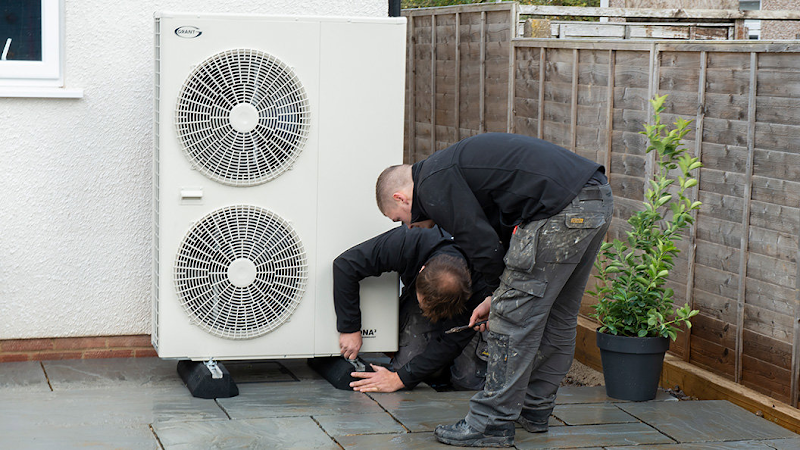
Your engineer’s van has just pulled away. MCS certificate secured. Grant voucher redeemed. £7,500 saved, and your heat pump is quietly working outside.
So, what now? Many homeowners assume installation is the finish line. It isn’t. It’s mile one of a 20-year journey. What you do in the next 12 months decides whether your system becomes a costly headache or a set-and-forget saver. This is especially true when you’ve benefited from heat pump grants in the UK, where long-term performance matters as much as the installation itself.
What really matters, though:
Post-Installation: The 48 Hours That Define Everything
Did Your Installer Actually Commission the System?
Commissioning isn’t a courtesy, it’s where theory meets reality. Commissioning has to be more than simply switching it on; your installer should have spent a couple of hours fine-tuning flow temperatures, testing controls, and matching output against your property’s heat loss calculations.
If they rushed this? You’re living with someone else’s default settings. That’s like buying a tailored suit and wearing it straight off the rack.
What You Should Have Received:
- MCS Certificate (non-negotiable for grant claims)
- Manufacturer warranty details + registration deadline
- Heat loss calculations for each room
- Commissioned control settings (specific to YOUR property)
- Maintenance schedule
Missing any of these? Call your installer. Today.
The Documentation Problem Nobody Mentions
Store everything digitally. Not “I’ll scan it later”—now, while you’re thinking about it.
Why? Because in Year 3, when a sensor fails, your warranty claim hinges on proving you received proper commissioning documentation. Installers fold, sell up, or disappear. Your backup folder doesn’t.
Warranty Structure: Three Layers Most People Don’t Understand
Stop thinking of your warranty as a single thing. It’s not.
| Warranty Type | Coverage Period | Covers What | Critical Deadline |
| Manufacturer | 5-10 years | Equipment defects (compressor, heat exchanger) | Register within 60 days |
| Installer Labor | 1-3 years | Workmanship errors | Automatic (check contract) |
| Insurance-Backed Guarantee | 10-12 years | Structural failures if installer disappears | N/A |
The registration trap: 37% of heat pump owners never register their manufacturer warranty. If you’re past day 60? You’ve just voided £2,000+ in coverage.
Annual maintenance: The £200 decision that saves £2,000
Boiler servicing: £100, 45 minutes, mostly safety checks. Heat pump serving: £200-£300, 2-3 hours, actual engineering work.
What does a proper service include?
- Refrigerant pressure testing: the cost of missing a leak on test is in the region of £1,500-£2,000.
- Electrical safety check
- Cleaning of filter and coil (15-25% efficiency)
- Testing of control functions
- Performance benchmarking against design specifications
That refrigerant leak? Caught during service, it’s a £200 repair. Caught when your system dies mid-February? £2,000 compressor replacement while you freeze for three days.
Service Plans
Monthly service plans run £10-£25. That’s £120-£300 annually for guaranteed maintenance plus priority callouts.
Pay-per-visit? £150-£300 per service, plus you’ll forget to book it.
The breakeven is obvious. Some manufacturers require service plans for full warranty coverage—check before declining.
Performance Monitoring: What Your App Actually Tells You
Is Your System Underperforming or Are You?
Modern heat pumps report real-time data through smartphone apps. Flow temperature, return temperature, power consumption, efficiency metrics.
Most homeowners ignore these completely.
Three numbers that matter:
- Coefficient of Performance (COP): Aim for 3.0-4.0 (3-4 units of heat per unit of electricity)
- Flow temperature: Should be 35-45°C for air-source systems (not 60-80°C like your old boiler)
- Temperature differential: Flow minus return should be 5-8°C
If your radiators feel warm but not hot? That’s correct operation, not a fault. Heat pumps work at lower temperatures for longer periods—that’s efficiency, not weakness.
Financial Reality: Beyond the £7,500 Grant
What This Actually Costs Over 20 Years
| Cost Category | Annual | 20-Year Total |
| Annual maintenance | £200-£300 | £4,000-£6,000 |
| Repairs (post-warranty) | £0-£500 avg | £2,000-£5,000 |
| Energy costs (vs. gas boiler) | -£300 to -£600 | -£6,000 to -£12,000 |
That maintenance cost looks brutal until you factor in 25-40% heating bill reductions. Payback typically hits at year 10-12, then you’re pure profit for another decade.
The Energy Cost Variable
Your savings depend entirely on:
- Property insulation quality (uninsulated = minimal savings)
- Electricity vs. gas price ratio (currently ~3:1)
- System efficiency (poorly commissioned = poor performance)
Heating a poorly insulated Victorian terrace with a heat pump? You’ll save money, but not much. Heating a well-insulated modern build? Your heating bills might drop 50%.
When Your Installer Disappears
The MCS Safety Net
Installers fold. It happens.
If yours becomes unresponsive, stops honoring warranties, or refuses maintenance obligations: contact MCS directly at 0333 103 8130.
The MCS disputes process exists specifically for this scenario. They’ll mediate, enforce compliance, or help you find alternative service providers while protecting your warranty.
Your insurance-backed guarantee covers this scenario—that’s why you have it. Review the terms; some cover parts only, others include labor.
Long-Term Planning: Years 10-20
Component Lifespan Reality
| Component | Typical Lifespan | Replacement Cost |
| Heat pump unit | 20-25 years | N/A (full replacement) |
| Controls/sensors | 10-15 years | £300-£800 |
| Expansion vessel | 10-12 years | £150-£400 |
| Circulation pump | 10-15 years | £200-£500 |
Budget for control upgrades around year 10. These are wear items, not failures, proactive replacement costs less than emergency callouts.
Heat pumps outlast gas boilers by 5-10 years. Your 20-year-old boiler is ancient; your 20-year-old heat pump is middle-aged.
The Bottom Line
Post-installation management isn’t complicated, but it’s non-negotiable.
Three actions determine everything:
- Register the manufacturer’s warranty within 60 days
- Schedule annual maintenance without exception
- Monitor performance and address issues during the warranty period
Follow these steps and your heat pump can run reliably for 20 years or more, while reducing heating costs by 25–40%. Ignore them, and a £7,500 grant can quickly turn into a £10,000 maintenance problem.Many homeowners then start asking are oil filled radiators cheap to run as a fallback, but with proper care, a heat pump remains the far more efficient long-term choice.