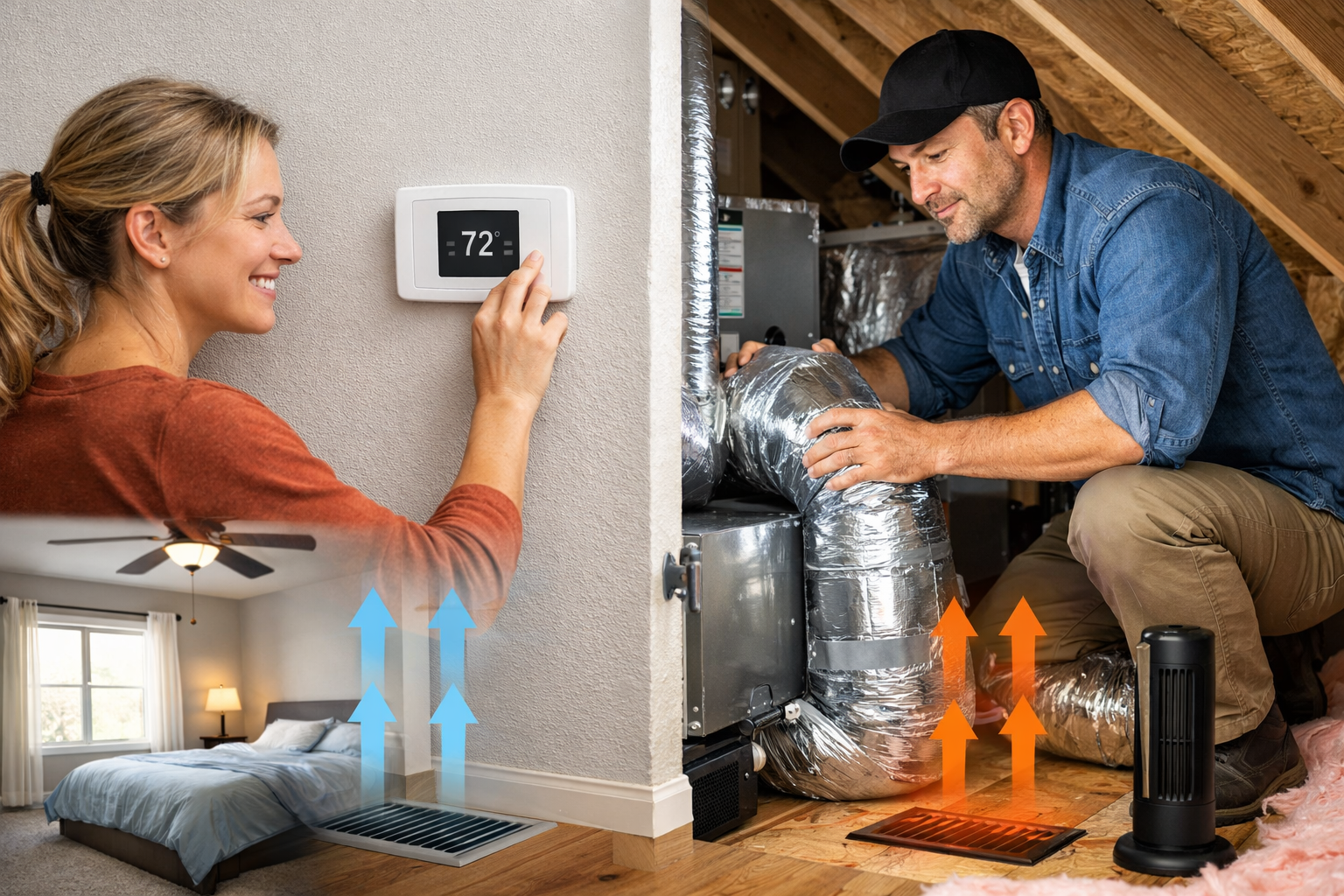
Uneven heat distribution in multi-story homes often shows up as a familiar pattern: the upstairs feels warmer, the downstairs feels cooler, and one or two rooms never seem to match the thermostat setting. This happens because heat naturally rises, but the building layout, duct routing, and pressure relationships decide whether that natural movement helps or hurts comfort. Long duct runs to upper rooms can reduce delivered airflow, while a thermostat on the main level may satisfy the system before the upper floor reaches a comfortable temperature. Daily habits add another layer, such as keeping doors closed, using exhaust fans, or leaving blinds open on sunny windows. The good news is that many causes can be identified with simple observations, and most fixes focus on improving airflow paths, balancing supply and return, and reducing heat loss or gain in the right areas. Addressing the problem is less about constantly adjusting the thermostat and more about making the home distribute heat in a controlled way.
Balance airflow and temperature drift
- Why multi-story homes drift out of balance
Temperature differences between floors come from both physics and system design. Warm air rises through open stairwells, two-story foyers, and even small wall cavities, which can make upstairs rooms feel stuffy while the main floor cools down. At the same time, the HVAC system may have been designed with a single thermostat and one set of ducts serving the entire house, even though heat loss is different on each floor. Bedrooms over garages, bonus rooms above unconditioned spaces, and rooms with large windows often lose heat faster than interior rooms. Ducts running through attics or crawl spaces also lose heat before the air reaches far rooms, and those losses can be greater in winter. Pressure differences matter too. If an upstairs door is closed and there is no return path, supply air can pressurize the room, reducing airflow and making it harder to warm up. Conversely, a large return on the main floor can pull air downward, reinforcing the feeling that upstairs never catches up. These factors combine so that the thermostat is satisfied by the area around it, but the rest of the home lags.
- Airflow balancing and return pathways that fix comfort
A practical first step is to focus on airflow delivery and return routes, since uneven heat distribution is often an airflow problem disguised as a capacity problem. Check that supply registers are open and not blocked by furniture, drapes, or rugs. Replace the air filter if it is dirty, as a clogged filter reduces airflow throughout the house, and the upper floor often suffers most. Then look at return air: each level should have a clear path back to the system. If upper rooms have only supplies and no returns, consider transfer grilles, jump ducts, or larger door undercuts to reduce pressure buildup when doors are closed. In many homes, small adjustments to branch dampers can redirect more warm air upstairs in winter, but this should be done carefully so static pressure does not rise too high. In regions like Raleigh, NC, where winter swings can be sharp, seasonal balancing is common: slightly more airflow is sent upstairs during cold months and redistributed in summer, when upper floors need more cooling. If your system has balancing dampers near the trunk lines, a technician can measure airflow and tune it so each room receives a closer match to its load, rather than relying on trial and error.
- Reducing stack effect and sealing the building envelope
Multi-story homes are prone to the stack effect, where warm air rises and escapes through upper leaks, pulling in colder outdoor air through lower leaks. This can make the second floor harder to heat and the first floor draftier, even when the furnace is running normally. Air sealing can significantly reduce this effect. Focus on attic penetrations around recessed lights, plumbing vents, attic hatches, and top plate gaps, as these are common pathways for heated air to escape. Weatherstripping exterior doors and sealing rim joists in basements or crawl spaces can also reduce cold air infiltration into the lower level. Insulation matters, but sealing comes first because insulation works better when air is not moving through it. Another overlooked spot is the garage ceiling under the bonus rooms. If the garage ceiling is underinsulated or leaky, that room may feel cold no matter how much warm air you send to it. Window treatments can also help by reducing radiant heat loss at night, especially in bedrooms with large glass areas. These envelope improvements reduce the total heat the system must provide, making airflow balancing easier and lowering temperature differences between floors.
Uneven heat distribution in multi-story homes comes from rising warm air, uneven room loads, duct losses, and pressure imbalances that prevent air from circulating properly between floors. The most effective fixes usually combine airflow balancing, reliable return pathways, and air sealing that reduces stack effect and heat loss. Thermostat placement and control strategy also matter, and options such as remote sensors, zoning, and variable-speed blower settings can help the system respond to different floor needs. With measured adjustments and targeted envelope improvements, multi-story comfort becomes more consistent without constant thermostat changes or excessive runtime.