
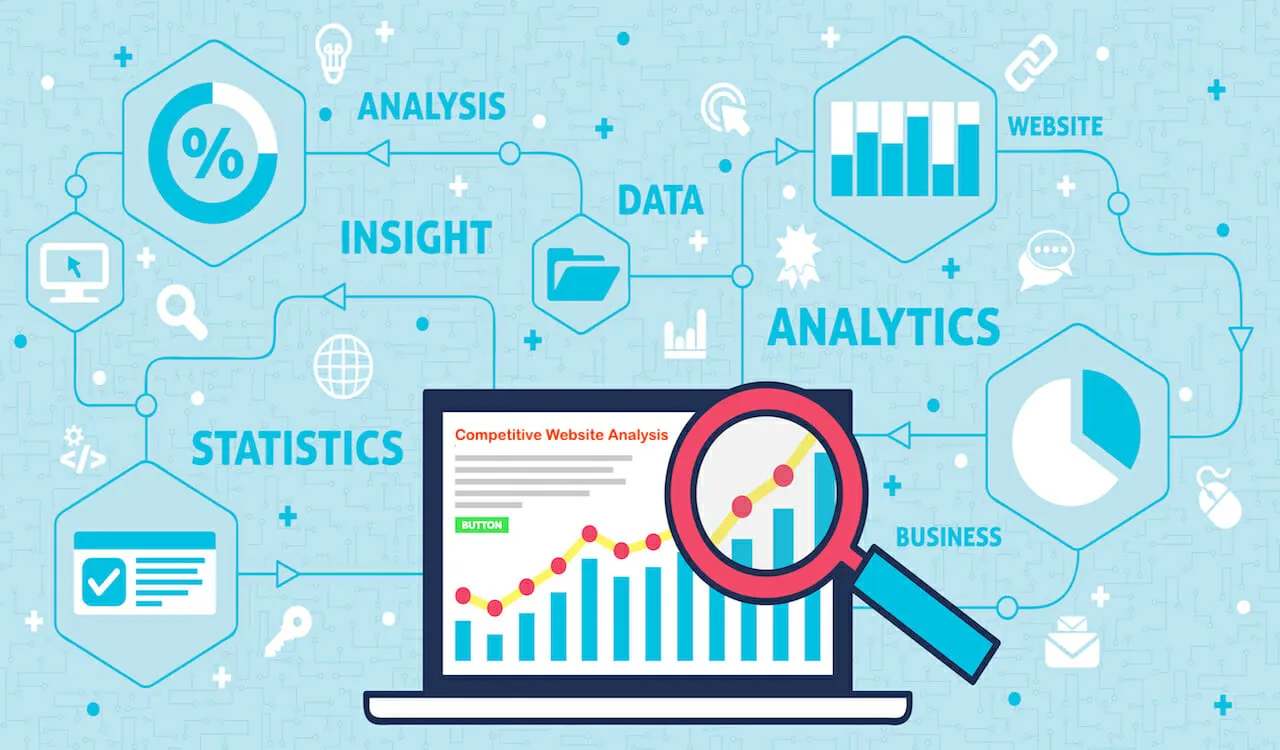
An advanced Domain tool is not just for checking metrics. It’s a competitive intelligence engine. It shows you where competitors get traffic, how they build authority, and where their weaknesses live.
If you want to outrank established websites, you need to analyze them like an investor audits an acquisition.
Here’s how.
1. Map Competitor Authority Before You Compete
Before creating content, measure who you’re up against.
What Advanced Domain Tools Reveal
- Domain authority trend over time
- Referring domain growth
- Link velocity
- Topical backlink relevance
- Anchor distribution patterns
According to Ahrefs, backlinks remain one of the strongest ranking signals in competitive SERPs.
If a competitor’s authority is built on niche-relevant links, you need a better link acquisition strategy — not just more content.
Authority analysis sets your baseline.
2. Reverse-Engineer Their Keyword Strategy
Content volume doesn’t win. Intent wins.
A serious Domain tool helps you identify:
- High-traffic ranking pages
- Commercial intent keywords
- Informational cluster hubs
- Emerging keyword growth
Tools like SEMrush show how competitors capture both top-of-funnel and bottom-of-funnel traffic.
Look for These Patterns
- Pages ranking for 500+ keywords
- Low-competition keywords with strong intent
- Product pages ranking for blog-style queries
When you see a gap, you build around it.
3. Detect Content Gaps and Weak Spots
Most competitors leave money on the table.
Advanced domain analysis highlights:
- Keywords they rank #8–15 for
- Topics with thin content
- Pages losing traffic
- Missed long-tail opportunities
That’s where you strike.
If they dominate head terms but ignore mid-volume transactional phrases, you gain faster wins.
Competitive analysis reduces guesswork.
4. Evaluate Traffic Quality, Not Just Volume
Traffic numbers alone mislead.
Ask:
- Is traffic branded or non-branded?
- Is it commercial or informational?
- Is it stable or declining?
According to 2025 SEO benchmarks from Moz, high-conversion intent keywords often produce stronger ROI than high-volume informational queries.
A domain tool that breaks down keyword intent helps you prioritize revenue-driven targets.
5. Analyze Backlink Acquisition Strategy
Backlinks reveal strategy.
Advanced tools show:
- Guest post footprints
- Editorial PR placements
- SaaS directories
- Resource link pages
- PBN patterns
You don’t copy blindly. You identify repeatable tactics.
If competitors consistently earn links from industry publications, you replicate and improve that outreach model.
6. Assess Market Position and Liquidity
Competitive analysis isn’t just about ranking.
It’s about market control.
According to Verisign, .com remains dominant in global registrations. Premium .com competitors often have higher brand trust and direct traffic.
When analyzing competitors, check:
- Domain age
- Brand memorability
- Extension strength
- Direct traffic indicators
Strong brand domains defend rankings longer.
7. Identify Acquisition or Investment Opportunities
Smart investors use domain tools differently.
They ask:
- Is this competitor overperforming on weak authority?
- Could this domain be acquired and scaled?
- Is there consolidation opportunity?
Historical sales data from NameBio helps validate market value trends.
Sometimes competitive analysis leads to acquisition strategy.
2026 Competitive SEO Signals to Watch
The landscape continues to evolve.
Key shifts:
- AI-driven content clusters expanding fast
- Greater emphasis on topical authority
- Increased scrutiny on backlink quality
- Rising demand for brandable, short domains
- Consolidation in niche SaaS industries
Search engines reward depth, trust, and intent alignment.
Your domain tool must reveal all three.
Common Mistakes in Competitive Domain Analysis
Avoid these:
- Comparing only domain authority scores
- Ignoring keyword intent
- Overlooking content depth
- Focusing on quantity of backlinks
- Skipping traffic trend analysis
Competitive analysis requires layered evaluation.
Final Thoughts
Advanced domain tools transform how you compete.
They reveal:
- Authority structure
- Keyword strategy
- Content gaps
- Backlink tactics
- Market position
If you use them strategically, you stop reacting.
You start predicting.
And prediction wins rankings.
FAQ: Domain Tool
1. What is a domain tool used for in competitive analysis?
A domain tool helps you analyze competitor authority, backlinks, traffic sources, and keyword strategies.
2. Can I outrank competitors with lower authority?
Yes, if you target keyword gaps and build stronger topical relevance.
3. How often should I analyze competitor domains?
Quarterly at minimum. Monthly in competitive industries.
4. Are backlinks still important in 2026?
Yes. High-quality, relevant backlinks remain critical for ranking.
5. What is the biggest competitive SEO advantage?
Owning underserved commercial keywords within strong content clusters.
6. Should startups use domain tools before launching?
Yes. Competitive insight reduces wasted marketing spend.
