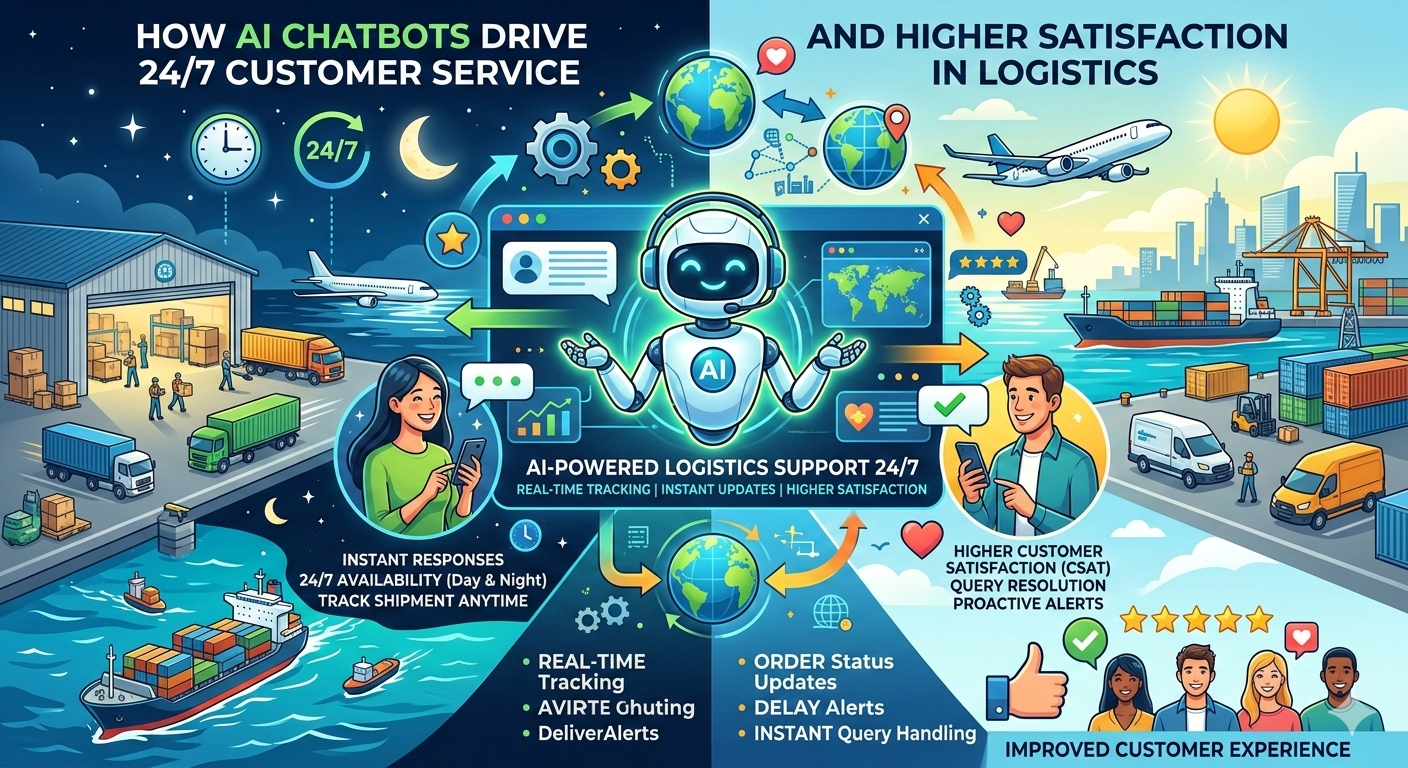
Communication needs to be as fast as the shipments themselves in logistics. Customers want to know when their deliveries will arrive. Partners need accurate schedules. Internal teams must coordinate pickups, documents, and routes. Every step depends on clear information moving quickly between people.
When these updates slow down, problems appear. A delayed message can cause missed pickups, confused customers, or delivery disruptions. Because of this, many logistics companies are acquiring AI chatbots in logistics to support their communication processes. Chatbots help answer routine questions instantly, provide shipment updates, and assist teams without requiring someone to manually respond to every message. They operate around the clock, which means customers and partners can get help at any time of the day.
As logistics networks expand across regions and time zones, this type of automation is becoming an important part of reliable customer service.
Why Real-Time Customer Support Matters in Modern Logistics
Logistics operations rely on constant communication. A customer might want to check the delivery status of an order. A warehouse team may need confirmation about pickup schedules. A carrier might request documentation before moving a shipment forward.
When these conversations are delayed, the entire process can slow down.
Slow replies often cause customers to ask the same questions again and again. Many people start calling support for updates. This creates frustration for customers and staff. Support teams also find it harder to handle the growing number of messages each day.
Many logistics providers are now using AI-powered chatbots in logistics customer support to handle customer questions faster. These chatbots connect with tracking systems and logistics platforms to find shipment updates quickly. Customers can check delivery progress and receive answers immediately instead of waiting for support teams.
For logistics providers that serve global clients, automation also ensures support remains available all day and night.
Transforming Customer Touchpoints in Logistics
Logistics companies interact with customers and partners throughout the delivery journey. From booking shipments to confirming final delivery, each conversation affects the overall experience.
Managing these interactions manually can become difficult as shipment volumes grow. Chatbots allow companies to handle these communication points more efficiently while still providing clear and helpful responses.
Real-Time Shipment Tracking and Updates
Shipment tracking is one of the most frequent customer requests. People want to know where their packages are and when they will arrive. Instead of contacting support teams for updates, customers can ask a chatbot directly. The system connects with tracking databases and delivers the latest shipment information immediately.
This helps customers stay informed without placing extra pressure on support teams.
Coordinating Pickup and Delivery Schedules
Delivery planning often requires communication between different teams. Carriers, warehouses, and customers must all agree on the right time for pickup or delivery. Chatbots help manage these discussions more easily. They can confirm pickup schedules, send helpful reminders, and adjust basic timing requests automatically.
This reduces coordination work and allows logistics teams to concentrate on moving shipments efficiently.
Handling Documentation and Compliance Requests
Shipping goods across regions often requires several documents. These may include invoices, customs declarations, or certification paperwork. Chatbots can assist by retrieving these files or guiding users through the correct process. Instead of waiting for email responses, partners can receive answers instantly.
This reduces delays caused by missing documents or slow communication.
Faster Issue Resolution Across Supply Chains
Occasionally, shipments are delayed, damaged, or misrouted. When these situations occur, quick communication becomes critical. Chatbots can gather important details needed to fix the problem, such as shipment numbers, delivery locations, or reference information. After collecting these details, the chatbot forwards the request to the correct support team for faster resolution.
This allows problems to be addressed faster and prevents unnecessary confusion.
How AI Chatbots Streamline Team Support Operations
Customer service teams in logistics often handle many repetitive questions. These usually involve delivery timelines, shipment locations, or document requests.
When support agents spend most of their time answering the same questions, productivity often drops. Automation can help fix this issue. By managing routine conversations, AI chatbots streamline team support operations and allow staff to focus on more complex tasks.
For example, instead of checking shipment status repeatedly, agents can focus on solving delivery disruptions or assisting important clients.
Chatbots also help teams coordinate better inside the organisation. They send requests to the right department, alert warehouse staff about shipment updates, and share quick delivery information with partners. For companies handling thousands of deliveries daily, this greatly improves operational efficiency.
The Role of Conversational AI in Logistics Operations
Early chatbot systems relied on simple scripted responses. They could only answer limited questions and often struggled with real conversations. Today, technology has advanced significantly. Conversational AI in logistics allows chatbots to understand natural language and respond more intelligently. This makes the interaction feel smoother for customers and partners.
Natural Language Conversations with Logistics Teams
Users can communicate with chatbots in a simple way. Instead of clicking through complicated menus, they can type a question like “Where is my shipment?” or “Has my delivery been dispatched?”
The chatbot interprets the request and retrieves the correct information from connected systems.
Context-Aware Responses for Shipment Inquiries
Advanced chatbots keep track of past interactions. When a customer asks more questions about the same shipment, the system understands the situation and continues the conversation easily.
This helps avoid repeating information and improves the support experience.
Seamless Escalation to Human Support Teams
Some situations require human attention. Complex delivery problems, billing disputes, or sensitive issues may need assistance from experienced staff. Chatbots can transfer these conversations to support agents when necessary. Importantly, they pass along the conversation history so agents can understand the issue immediately.
This saves time and allows problems to be resolved faster.
How AI-Powered Chatbots Improve Supply Chain Communication
Several participants work together across supply chains. Carriers, warehouse teams, suppliers, and customers depend on accurate information to keep shipments moving smoothly.
When communication breaks down, delays often follow.
- Using AI-powered chatbots in supply chain customer service helps businesses improve how information flows between these different participants.
- Chatbots can send shipment alerts, answer questions instantly, and provide updates without requiring manual responses from support teams.
- Answer common supply chain questions quickly using connected systems, reducing repeated emails and calls between logistics teams and partners.
- Chatbots can send shipment updates to carriers, warehouse teams, and suppliers right away, ensuring everyone stays informed about delivery timelines and operational changes.
For example, if bad weather delays a shipment, the chatbot can instantly inform the customer about the new expected arrival time.
These early updates help build customer trust while reducing the volume of support questions. Keeping stakeholders informed allows logistics companies to manage supply chain operations more effectively.
Deploying a Customer Service Chatbot for Websites in Logistics
Many logistics companies now place chatbots directly on their digital platforms. A customer service chatbot for websites allows visitors to receive help without leaving the company website. Customers can open a chat window and ask questions about shipments, delivery timelines, or available services.
Chatbots usually connect with logistics platforms to provide real-time shipment updates. Businesses can also configure chatbots to support multiple languages for customers. This is helpful for logistics companies serving clients across different countries and regions.
Platforms like GetMyAI enable logistics companies to launch conversational AI agents that integrate with internal systems and knowledge bases. With these solutions, support teams can manage high volumes of customer inquiries while maintaining steady service quality.
Why AI Chatbots Are Becoming Essential for Logistics Operations
Logistics operations are becoming more demanding every year. Supply chains involve many partners, larger shipment flows, and customers who expect fast updates. Companies must respond quickly while running efficient operations. AI chatbots provide a practical solution by answering questions instantly, automating communication, and assisting customers during the delivery process.
By answering repetitive questions automatically, chatbots free support teams to focus on tasks that need human judgment. As technology improves, the role of AI chatbots in logistics will continue to grow. Companies that adopt these tools early can build faster support systems while keeping operations efficient and scalable.
In an industry where timing and coordination matter deeply, intelligent communication tools are becoming just as important as the physical movement of goods itself.