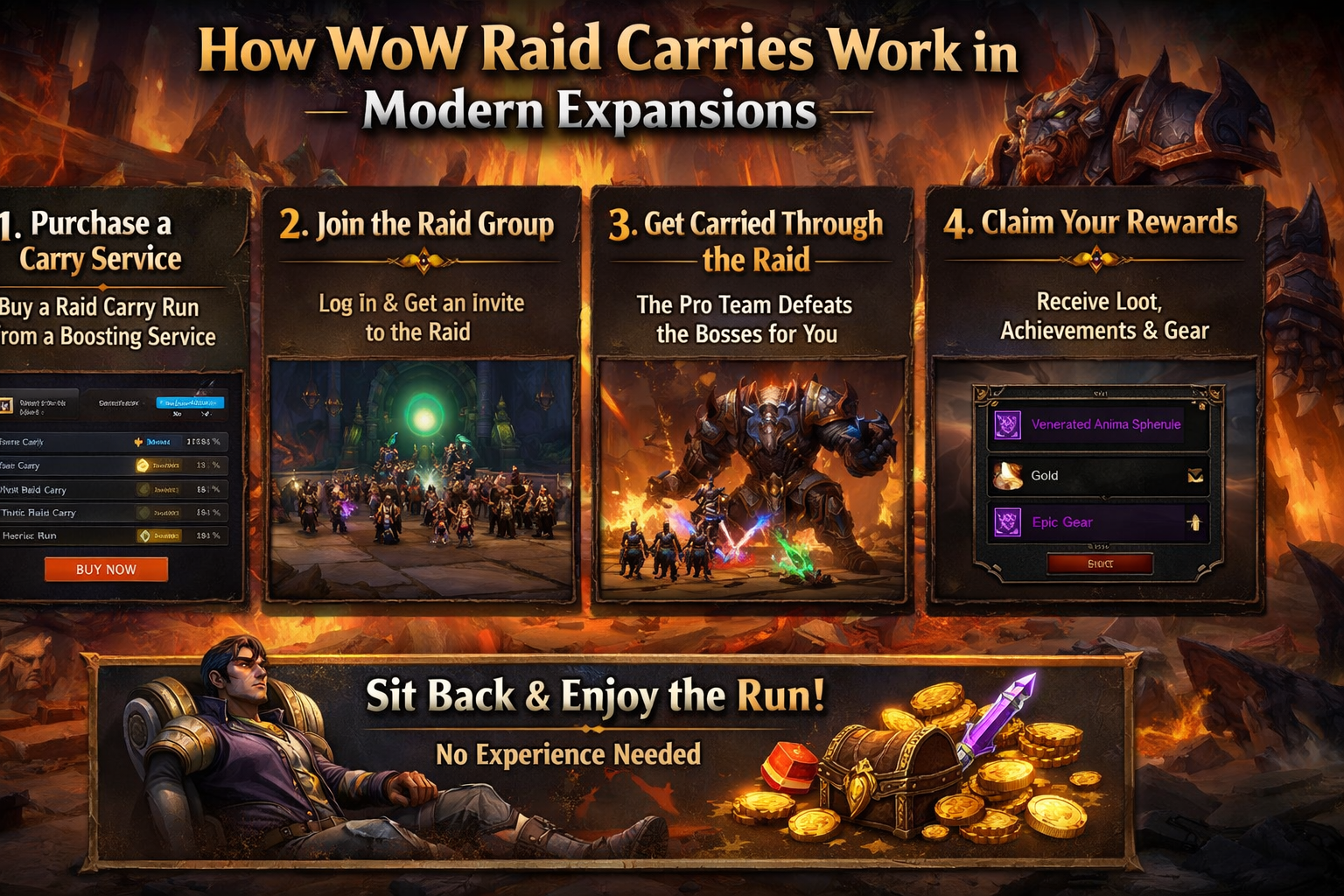
Think of raid carries as guided shortcuts through tough content — they let you skip the trial-and-error. You join an organized group that follows a leader’s plan, shows expected specs and consumable lists, and enforces simple mechanics. Loot is handled with set rules like master looter or need-before-greed, and cross-realm tools make pickup quick. Many players turn to a wow raid boost when they want guaranteed clears, faster access to high-level gear, or specific achievements without spending weeks learning every encounter. There are service tiers, tradeoffs, and ethical questions that change how designers balance raids, so you’ll want to weigh them.
How Raid Carries Work Right Now: Groups, Loot, Cross‑Realm
When you hire or join a raid carry today, you’re dealing with organized pick-up groups that mirror normal raid teams: a leader sets roles and strategy, carries bring optimized specs and consumables, and everyone follows a clear kill plan to get specific bosses or drops. You’ll plug into tight group dynamics where comms, target assignments, and timing are enforced; carries expect you to know basic mechanics and to follow instructions without trial-and-error teaching. Loot distribution is typically predefined—need-before-greed rules, ML or DKP-like tracking, or agreement that carries keep primary drops while clients get specific guaranteed items. Cross‑realm tech removes roster friction: you can join from another server, voice and raid frames sync, and invites occur instantly. You’re responsible for meeting entry requirements (gear level, consumables, behavior) and for confirming promised rewards before the run. Efficient carries minimize wipes, shorten session time, and deliver targeted outcomes; you get predictable progress in exchange for meeting the service’s systemized expectations.
Who Uses and Sells Raid Carries: Service Types and Pricing
Knowing how carries run raids lets you judge whether the service fits your needs—and who’s offering it. You’ll see several service types: one‑time clears for loot or progression, subscription coaching where pros guide you through multiple bosses, and group sells where a leader fills slots with paid clients. Providers range from solo boosters to organized crews and third‑party platforms.
Price depends on difficulty, loot expectations, and reputation. Expect per‑boss or per‑wing rates, flat fees for full clears, and premium charges for cutting queues or cross‑realm setups. Buyer demographics skew: casual players chasing specific items, time‑pressed adults, collectors, and new raiders seeking experience. Market trends show seasonal spikes around resets and expansions, bundling of services (carry + gear + coaching), and competitive pricing as platforms centralize transactions.
You should compare reputation, refund policies, and exact deliverables. Match service type to your goal—gear, progression, or learning—to get predictable results without surprises.
Risks, Ethics, and What Raid Carries Mean for Raid Design
Because raid carries reshape incentives and player behavior, you should weigh practical risks and ethical concerns before buying or offering them. They introduce ethical implications around fairness, achievement, and in-game economies — you may undermine guild cohesion or devalue time invested by others. From a systems perspective, carries change matchmaking, loot distribution, and progression pacing; designers might tighten requirements, gate content, or add social-signaling mechanics to preserve intended challenge.
You’ll face practical risks: account sharing, scamming, suspension for terms violations, and mismatched expectations about learning or involvement. Consider how carries alter player experience: quick access to rewards can satisfy short-term goals but reduce mastery, social learning, and long-term engagement. If you offer carries, set clear contracts, transparent pricing, and safe account practices. If you buy, prioritize reputable services that respect rules and minimize harm to communities. Ultimately, you should balance personal goals with broader impacts on design, fairness, and the health of your server’s player experience.