
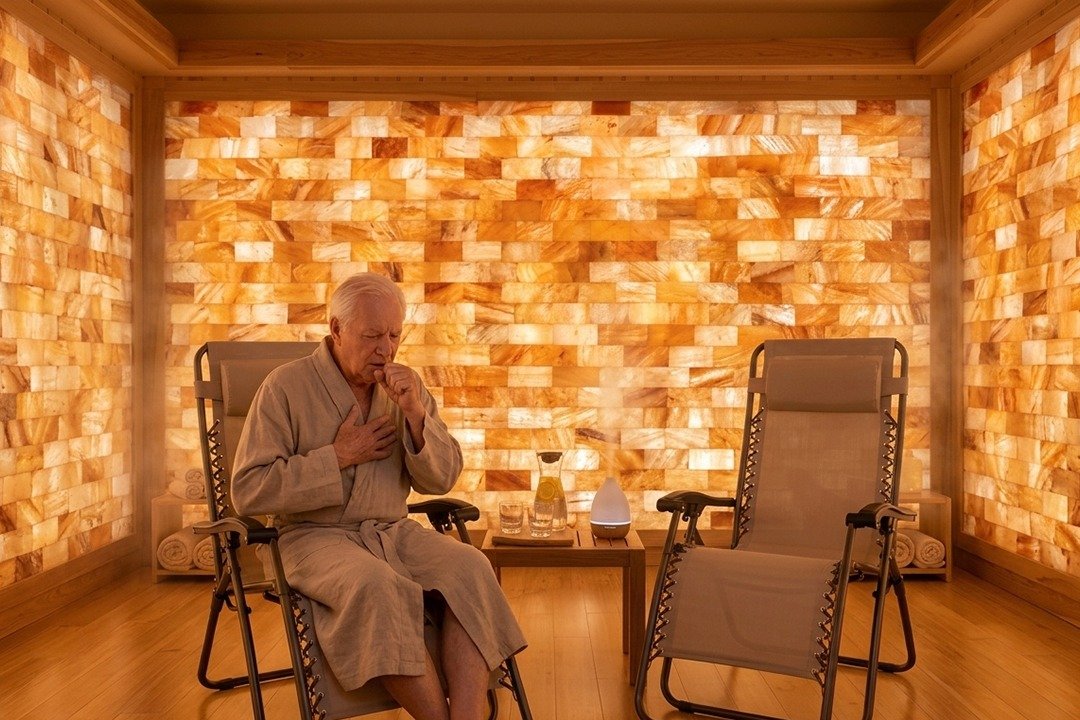
Millions of Americans are living with asthma, and many of them are older than 60. As senior living communities prefer a holistic approach beyond drugs to better support the wellness of residents, a surprising ancient solution is once again becoming popular among the medical profession. It’s the Himalayan salt wall.
These incredible structures are created out of individually carved salt tile imported from the Khewra Salt Mine in Pakistan. What might look like art is, in fact, an effective way to turn a regular room into an accessible and beneficial salt cave. These caves are a common feature of European native medicine and have recently begun receiving increasing attention in the world of wellness.
In this article, we’ll break down the existing research, examine the process, and identify the key factors for senior wellness practitioners and families to consider before implementing salt therapy into a health plan with a Himalayan salt wall.
Why Asthma Is Especially Challenging for Seniors?
The specific requirements of managing asthma in older adults are quite complicated. Undiagnosed asthma, complex airway remodeling, loss of respiratory reserve, and associated diseases like COPD and heart disease all present challenges. It is the respiratory condition with higher rates of hospitalization for the elderly than for any other age group.
The conditions of the living environments also aggravate the situation. Good care of senior housing residences may still lead to the presence of house dust mites, mold, detergent deposits, and dryness of air, which are all asthma inducers. To avoid such consequences, a Himalayan salt wall may offer an alternative solution in nature.
The standard treatments are using inhaled corticosteroids, along with bronchodilators, to manage these symptoms, but these treatments cause long-term adverse side effects. It is these adverse effects that are fueling the interest in complementary and wellness therapies to be used alongside traditional treatments
What Does a Himalayan salt wall Actually Do?
A Himalayan salt wall is a physical construction composed of backlit salt tile. These salt tiles are simply solid blocks of rock salt containing a high percentage of minerals that were extracted from the beds of ancient seas and then squared off. When gently heated by LED or incandescent backlighting, these salt tile release microscopic salt aerosol particles into the surrounding air.
This process is the basis of salt therapy. In the clean environment of the salt room, occupants inhale dry sodium chloride particles generated by the Himalayan salt wall.
The proposed mechanisms of action are well-articulated in the literature:
- By entering the airway surface, salt aerosol forms a hypertonic solution, attracting fluid into the airway surface and thus reducing mucus secretion viscosity. Consequently, the cilia can easily clear particles, microorganisms, and allergens from the airways and expel them back into the airways.
- Some studies argue that inhaling sodium chloride using a salt tile may influence inflammation of the airways by causing desensitization to inflammation provoked by an asthma attack.
- The levels of bacteria and fungi in a ventilated salt room are significantly lower compared to an average room air environment. A quality Himalayan salt wall contributes to these health benefits.
- Natural salt tile also absorbs excess moisture in the air, helping to keep the relative humidity at an ideal 45-55%, thus making it less likely to be beneficial to mold growth and dust mites. These pink salt bricks are essential components of any therapeutic salt installation.
Passive salt environments featuring Himalayan salt walls function differently from systems using halogenerators. Although halogenerators produce higher and better-controlled salt concentrations, the passive Himalayan salt wall still generates good ambient and light aerosol therapeutic value
Evidence-Based Benefits for Seniors with Asthma
The evidence base for salt therapy is still developing, but several meaningful findings have emerged that are directly relevant to older adults:
Improved lung function markers. A clinical study showed that 12 weeks of weekly sessions resulted in a significant improvement in peak expiratory flow (PEF) and forced expiratory volume (FEV1) among asthmatics. These two measurements are important indicators of obstruction in the airways.
Less dependence on drugs. It has been reported that patients who received a course of standard treatment along with regular use of therapy with a Himalayan salt wall required significantly fewer bronchodilators.
Stress Reduction Benefits: When anxiety rises, breathing can become difficult. A soft light from heated salt surfaces may support calmness. Minerals released into the air shift body rhythms gently toward rest. Quiet environments with a Himalayan salt wall often follow such subtle changes.
Conclusion:
The introduction of a Himalayan salt wall provides a revolutionary non-pharmaceutical approach to respiratory health for the senior living communities. This ancient method of treatment can offer residents, regardless of age, a gentle alternative. It works with other medical interventions to benefit those with particular respiratory issues inherent in an aging population by creating an environment abundant with microparticles from salt tile.
Studies have demonstrated that senior citizens who regularly use a salt room environment experience a dramatic boost in their breathing capacity and lung functionality. Additionally, residents who use a salt room with a Himalayan salt wall on a consistent basis can expect a higher quality of sleep and reduced reliance on medication.
A salt-filled living environment may be advantageous for senior living communities wanting a drug-free, yet effective, wellness approach. In light of the increasing acceptance of complementary medicine, facilities that implement this kind of initiative are sure to stand out and provide benefits for the residents.
FAQs
Q1: Is a Himalayan salt wall safe for the elderly with several health issues?
Normally, it is, but patients with serious COPD require prior medical approval. Salt therapy should always be considered a supplement to standard asthma medications rather than their replacement.
Q2: How long until results are achieved?
This will vary from person to person. Some individuals may find their breathing improves with just a few treatments; however, you will experience the total therapeutic effect of salt therapy after a six- to twelve-week treatment period.
Q3: Will the salt tile harm other residents who do not have asthma?
The health benefits of passive salt tile are well known, and it is perfectly safe for non-asthmatic residents to be in the salt environment and, in most cases, enjoy a much better mood, cleaner sinus passages, and much sounder sleep!
