The instinct, when something looks tired or feels outdated, is to replace it entirely. A sofa cushion goes flat — buy a new sofa. A garage fills up with clutter — consider moving to a bigger house. A piece of outdoor furniture fades — throw it out and start over. But in most cases, the structure underneath is perfectly fine. The problem isn’t the thing itself; it’s a specific part of it that has worn out or stopped working.
Your Garage Doesn’t Need More Room — It Needs Better Systems
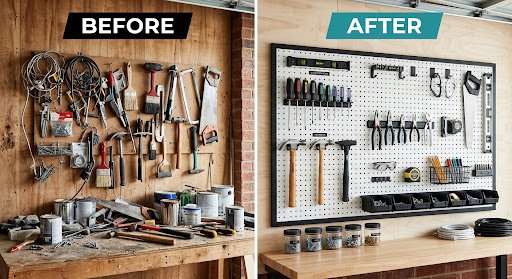
Most garages are bigger than people think. The problem is rarely square footage. It’s that everything is piled on the floor or shoved onto a single shelf that was installed when the house was built and never reconsidered.
Vertical storage changes the equation completely. Pegboards, wall-mounted panels, and hook systems let you move tools, sporting goods, and seasonal items off the ground and onto the walls. The floor opens up, and suddenly the same garage feels twice as large.
This modular, mount-on-the-wall approach works in any space where gear accumulates. Even specialist motorcycle touring suppliers use the same design principle for their luggage and rack systems — bolt-on aluminium frames that organise heavy equipment in a compact footprint without permanent modifications. Whether you’re organising a garage, a garden shed, or a workshop, the idea is identical: assign every item a fixed, vertical home, and the space manages itself.
Old Furniture Doesn’t Need Replacing — It Needs Attention
The frame of a well-made wooden bench, a wrought-iron patio set, or a solid hardwood dining chair can last decades. What fails first is almost always the soft part — the cushion, the fabric, or the finish on the wood.
Before replacing any piece of furniture, ask a simple question: is the frame still sturdy? If you can sit on it, lean on it, or push it without wobbling or creaking, the structure is sound. What it needs is cosmetic and comfort attention, not a trip to the skip.
For wooden pieces, sanding and refinishing restores the look in a weekend. For metal, a wire brush and a coat of rust-resistant paint does the same. The real transformation, though, comes from updating the seating surface. A bench or chair with fresh, properly fitted cushions looks and feels like a completely different piece of furniture — often better than anything you’d find new at a similar price point.
The catch is that older and handmade furniture rarely matches standard cushion dimensions. A bench that measures 134cm doesn’t fit a cushion made for 120cm or 140cm. This is where made-to-order cushion services are genuinely useful — you provide exact measurements and fabric preferences, and the result fits as though it were made with the furniture, because in a way, it was. No overhang, no gaps, no sliding.
Your Wardrobe Isn’t Outdated — It’s Disorganised
The same principle applies to clothing. People feel like they have nothing to wear, but what they actually have is a full wardrobe where everything is crammed together, out of season items are mixed with daily wear, and half the hangers are tangled.
Pull everything out. Sort into three piles: keep, donate, and store elsewhere. Put seasonal items in vacuum bags on a high shelf. Arrange what remains by category — shirts together, trousers together — and face every hanger the same direction. The visual calm this creates is immediate, and you’ll suddenly rediscover pieces you forgot you owned.
This takes two hours, costs nothing, and eliminates the urge to buy new clothes for at least a month.
Outdoor Spaces Need Revival, Not Renovation
A patio, balcony, or garden seating area that’s been neglected for a season or two can look beyond saving. But most of the time, it’s just dirty. Pressure-washing stone or concrete, scrubbing mildew off wood, and cleaning fabric furniture covers brings back 80% of the original appearance with no purchases at all.
After the clean, focus on what’s actually missing. Usually it’s comfortable seating, ambient lighting, or both. String lights overhead and a weather-resistant cushion on each seat are enough to turn a space people walk past into a space people sit down in.
The Mindset That Saves the Most Money
The common thread here isn’t about any particular room or piece of furniture. It’s about resisting the default assumption that worn-out means used-up. In most cases, 90% of the thing still works. It’s the remaining 10% — the surface, the cushion, the organisation — that has failed, and that 10% is almost always cheaper and easier to fix than replacing the whole.
Next time something in your home looks tired, pause before shopping for a replacement. Ask what specifically is wrong. Fix that part. You’ll spend less, waste less, and end up with something that fits your space better than anything mass-produced ever could.