
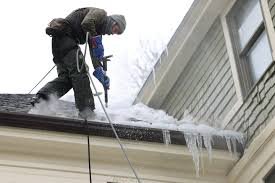
Ice dams are no surprise in your home during winter if you are situated in a region with extreme winter conditions. While some houses quickly develop ice dams, other houses evade the issue entirely. This article breaks down your house’s insulation, attic ventilation, airflow patterns, and roof design to explain why certain houses evade dams, and why others do not.
There are no houses that develop ice dams at random. This issue is highly structural and environmental. Every house with reoccurring ice dam issues undergo the same cycle every winter. On the other end, most home owners who have on going re occurrence issues seek advice from a Seward NE roofing contractor for storm and wind damage on whether the cycle is caused by the ventilation, insulation, or the roof to attic system.
In this article, you are going to find differences, if any, from the housing, insulation and ventilation patterns of houses that develop ice dam issues every winter and houses that do not.
What Exactly Is An Ice Dam?
Ice dams are traditional winter home issues that develop on roofs. An ice dam is a frozen ridge of ice that develops on the edges of your roof. Ice dams trap water and prevent roofs from sliding the melted water. This causes the water to seep down the roof and not only develop more dams, but also seep under the shingles, furthering potential damage to your home.
The process typically follows a predictable pattern:
a. Snow collects on the upper surface of the roof.
b. Heat coming out of the house warms the upper surface of the roof.
c. The snow melts and Water runs to the colder edges of the roof.
d. The water refreezes at the eave edges of the roof.
e. Ice accumulation occurs.
Once the dam is formed, additional melted snow collects behind the dam. This water can cause damage to the roof coverings, insulation, and the building structure including ceilings and walls.
Not all roofs have the same conditions to cause this problem, however.
The Role of Attic Insulation
Among all the factors that can contribute to the prevention of ice dams, insulation is the most significant.
In the case of homes with inadequate insulation at the attic level, the indoor heat escapes upwards, and because the roof deck is warm, snow melts unevenly. When the melted water reaches the colder edges of the roof, it freezes again and the ice dam cycle begins.
This is not the case for homes with adequate insulation because the warm air settles to the living spaces, and the attic remains cold, thus snow can not melt prematurely, allowing it to be evenly distributed and frozen across the roof.Here are some insulation deficiencies that contribute to the creation of ice dams:
– Inadequate thickness of insulation
– Gaps around recessed lighting or access doors
– Insulation that has lost its spring (stiff or aged)
– Seals that are not optimal on the floor of the attic
All of these deficiencies cause warm air to leak into the attic making it warm enough to create a warm roof, even in the winter, when temperatures are freezing.
Ventilation: The Untapped Potential
Good ventilation lowers the temperature in the attic, and thereby, reduces the upper surface temperature on the roof and prevents the melting of the snow that causes the ice dams.
Good ventilation brings outside (cold) air into the attic and allows it to flow out through the roof vents. Because of this flow, the temperature of the attic is approximately the same as the outside air temperature.
An attic that has good ventilation will not experience the ice dams.
Good ventilation often:
– Insulation is removed from the area of the ventilated opening
– The ridge (roof) vent is covered
– The airflow is not adequately controlled.
– The soffit vent is blocked.
Good insulation, combined with good ventilation, will minimize the uncontrolled temperature differences across the surface of the attic.
Attic Airflow and Heat Leaks
Adding insulation to a space will improve the energy efficiency of that area. The downside, in this instance, is that it will increase the ice dam creation tendency.
Because warm air rises, any gaps, cracks, or unsealed spaces in the attic floor allow indoor heated air to escape. As the escaping air rises, the temperature of the attic and roof deck increases.
Attic air leaks come from several sources, including:
– Recessed lighting fixtures
– Exhaust fans
– Electrical wiring
– Plumbing vents
– Attic hatch doors
In winter, seemingly small air leaks can result in significant heat loss. Over time, leaks result in warm patches on the roof, resulting in snow melting faster compared to surrounding areas.
Homes that do not have such leaks result in more uniform temperature on the roof, preventing the roof from melting unevenly.
Differences in Roof Pitch and Design
Ice dams can also be affected by the design and pitch of the roof.
A steep roof is able to shed snow more easily allowing the snow to slide off. This also reduces the chances of melting and refreezing at the edges.
On the contrary, flatter roofs tend to hold snow for a longer period. The longer the snow is present, the higher the chances for uneven melting and the formation of ice.
Some roof elements can make ice dam issues more likely, including:
– Dormers
– Valleys
– Skylights
– Complicated roof intersections
These components create barriers that particularly encourage uneven melting and freezing.
In general, homes with more complex roof structures face more winter roofing problems, as they typically experience more uneven snow distribution.
Untouched Problems Equate to Recurrent Ice Dams
The combination of faulty insulation, poor ventilation, air leaks, and poor roof design results in a home that develops ice dams in the same locations each winter.
The system these conditions create consists of the following steps:
1. Heat escapes into the attic.
2. Snow melts unevenly across the roof.
3. Water drains toward the edge of the roof.
4. Ice builds up and obstructs drainage.
5. Water leaks into the roof under the shingles.
If no changes are made structurally, this system regenerates every year.
Many homeowners believe that ice dams are the result of heavy snowfall. While snow does provide the material, the home’s internal heat dynamics are what determines if an ice dam will form.
How Roofing Professionals Determine the Cause
In the case of repeatedly occurring ice dams, roofing professionals tend to look for the underlying structural issues rather than addressing surface issues.
Evaluation Areas of Roofing Contractors:
Levels of Insulation in the Attic:
The contractor measures the depth of the insulation and looks for gaps or compression that would allow heat to escape through.
Pathways of Ventilation:
The contractor examines the soffit and ridge vents and the airflow channels to make sure that air can move freely in the attic.
Locating Air Leaks:
The contractor will check the common areas of heat leakage through and around electrical fixtures and vents, attic hatches, and around vent pipes.
Roof Structure:
The contractor will examine the pitch and complexity of the dra inage design and patterns of the roof to determine how the snow will behave in the winter.
Taken together, these factors enable the contractor to pinpoint the reasons for the formation of ice dams in that house, while its neighboring houses remain ice dam-free.
Your house shows signs of ice dams
What most homeowners don’t realize is that there are signs that will indicate ice dam formation long before an actual ice dam can be seen forming.
Here are the signs:
– Stalactites on the eaves of the roof
– Snow on the roof melts unevenly
– Ceiling stains after snow events
– Gutter ice
– Ventilation in the attic is inadequate
All of these signs are the result of heat having escaped the roof system.
Ignoring the signs may lead to significant water damage.
Breaking the Ice Dam Cycle
To break the cycle of ice dam formation, the causes need to be addressed instead of just removing the ice itself.
Some common solutions include:
– Better or new insulation in the attic
– Sealing air leaks in the attic
– Improved ventilation via soffits and ridges
– Better baffles in the attic for airflow
– Unblocked ventilation
Sometimes, altering the roof design can be recommended when snow accumulating on the architecture features significantly contributes to the problem.
The objective is to ensure that the roof remains at the same temperature during the winter season so that the snow can melt uniformly and there are no places where water can freeze at the edges.
Understanding That Ice Dams Are More of a Structural Issues than A Weather Issue
While one may be inclined to think ice dams are the result of a long winter or cold weather, the presence of ice dams is the result of a lot of structural issues and more than just the weather.
If two houses are built in the same place, regardless of the same temperature and snowfall levels, one will develop ice dams on the roof while the other will be completely snow free.
The insulation, attic, and roof structure play a really big role in the way snow behaves on the roof. When roof design, insulation, attic structure, and control of balanced ventilation all function properly, ice dams will not form.
Conclusion
Beyond being a seasonal nuisance, ice dams often indicate that some aspect of a home’s roof or attic system is out of balance.
Ice dams indicate some combination of insulation gaps, inadequate ventilation, attic heat leaks, or even challenges in the roof design. These phenomena typically create a cyclical pattern of repeated winter damage year after year.
A Homemaker looking to reduce the risk of ice dams developing year after year must understand the structural issues that create the ice dams. In most cases, the combination of improved insulation, corrected ventilation, and balanced attic airflow will eliminate the conditions that allow ice dams to form.
