As we move through 2026, the global manufacturing landscape is undergoing a profound digital transformation. Industry 4.0, a futuristic idea a few years ago, has become the working norm due to the blistering pace of adopting Artificial Intelligence (AI) and the Industrial Internet of Things (IIoT). However, the high-tech software that is running these smart factories cannot operate without a durable, robust base.
This is why industrial switches have moved from being niche hardware to becoming the essential backbone of modern production lines. Although an average office-grade switch is meant to work in a carpeted, climate-controlled room, industrial-grade networking equipment is made to work where common-day electronics cannot.
Now, let’s explore what industrial switches are and why businesses need them.
What are Industrial Switches?
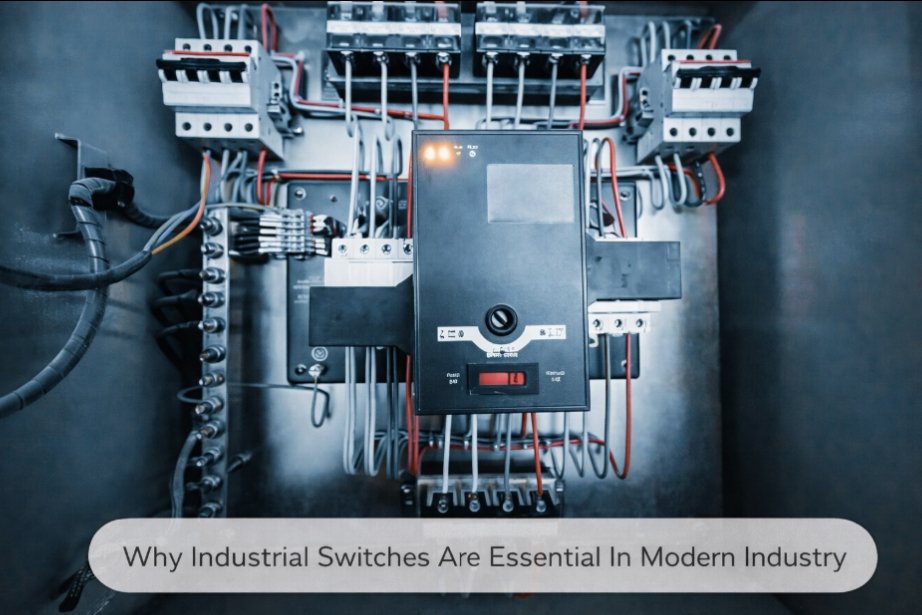
Industrial switches are high-performance network devices designed to operate in harsh environments such as factories, oil refineries, and outdoor utility sites. These devices are built with “hardened” parts and metal enclosures that don’t need fans, unlike commercial switches that use fans and plastic casings.
They are like the “neural hubs” of an automated facility, linking Programmable Logic Controllers (PLCs), robotic arms, and industrial sensors. They are easy to add to standard industrial control panels with other machines because they often use DIN-rail mounting.
Why Industrial Switches Are Essential In Modern Industry
1. Extreme Temperature Resilience
In a modern foundry or a wind farm in the north, temperatures can go from very hot to very cold. Under these conditions, a commercial switch would either fail or overheat its components.
Most industrial switches operate over a wide temperature range, typically -40°C to 75°C (up to 85°C for high-end models). Every part inside, from the capacitors to the circuit board, was chosen because it can keep data flowing smoothly without active cooling fans, which often fail in dusty environments.
2. Immunity to Electromagnetic Interference (EMI)
High-voltage motors, welding machines, and frequency converters that generate significant electromagnetic noise are common in modern factories. This “interference” can mix up data packets on a normal network, causing command errors or lost production data.
Industrial switches are made to protect against high levels of EMI and surges. They are often certified to IEC 61000-4 standards, which means that even when they are only a few inches away from a large electric motor, the data stays clean and the connection stays stable.
This immunity is crucial for maintaining the “deterministic” communication needed for fast robotic synchronization.

3. Redundancy for Zero Downtime
A smart factory can lose a lot of money in lost productivity if a network goes down for even a few seconds. It can cost a business more than $20,000 per hour. Industrial switches have advanced redundancy protocols that are far superior to those in regular office equipment.
These switches can form a “ring” network using technologies such as RSTP (Rapid Spanning Tree Protocol) or ERPS. If a cable is cut or a switch fails, the network “self-heals” by rerouting data in less than 20 milliseconds. This recovery is so rapid that the machines on the floor don’t even “blink,” preventing expensive emergency shutdowns.
4. Supporting the AI and 5G Revolution
The industrial Ethernet market is expected to grow to more than $12 billion by 2026, primarily due to the rise of AI-driven edge computing. Gigabit and 10GbE ports are now standard on modern industrial switches. These ports can handle the large volumes of data from AI vision systems and sensors that predict when maintenance is needed in real time.
Many new switches also serve as gateways for Private 5G networks. This lets mobile robots (AGVs) stay connected as they move around a building. Industrial switches ensure your digital investments really pay off by providing these technologies with the high-speed “pipes” they need.
5. Rugged Physical Durability (Vibration and Shock)
Standard hardware isn’t built for a world that shakes. Constant vibration can loosen the internal connections of a regular switch on a railroad, a ship, or near a heavy stamping press.
There are strict standards for shock and vibration that industrial switches have to meet. They have strong solder joints and tough housings that can handle physical stress. A lot of them also have IP40 or IP67 ratings, which means they are completely sealed against moisture, dust, and oil mist, which are the “silent killers” of electronics in a workshop.
6. Enhanced OT Security and Visibility
Cyberattacks are more likely to occur at more connected industrial sites. A managed industrial switch adds the security layers needed to keep the “Operational Technology” (OT) part of the business safe.
IT managers can “wall off” important machines from the rest of the company using features such as MAC address filtering, VLAN segmentation, and 802.1X authentication. With the rise of self-driving AI agents in 2026, it is no longer optional to have a switch that can detect unusual traffic patterns and automatically isolate a suspicious device. It is now a security requirement.
Final Thoughts
The modern industrial world is harsh, but it is also where global trade is going. Most businesses can no longer afford to risk using office-grade networking hardware to run an automated production line.
When you buy industrial switches, you’re not just getting a piece of hardware; you’re also getting insurance for your uptime. These gadgets have the heat resistance, physical strength, and fast intelligence needed to turn a regular workshop into a world-class smart factory.