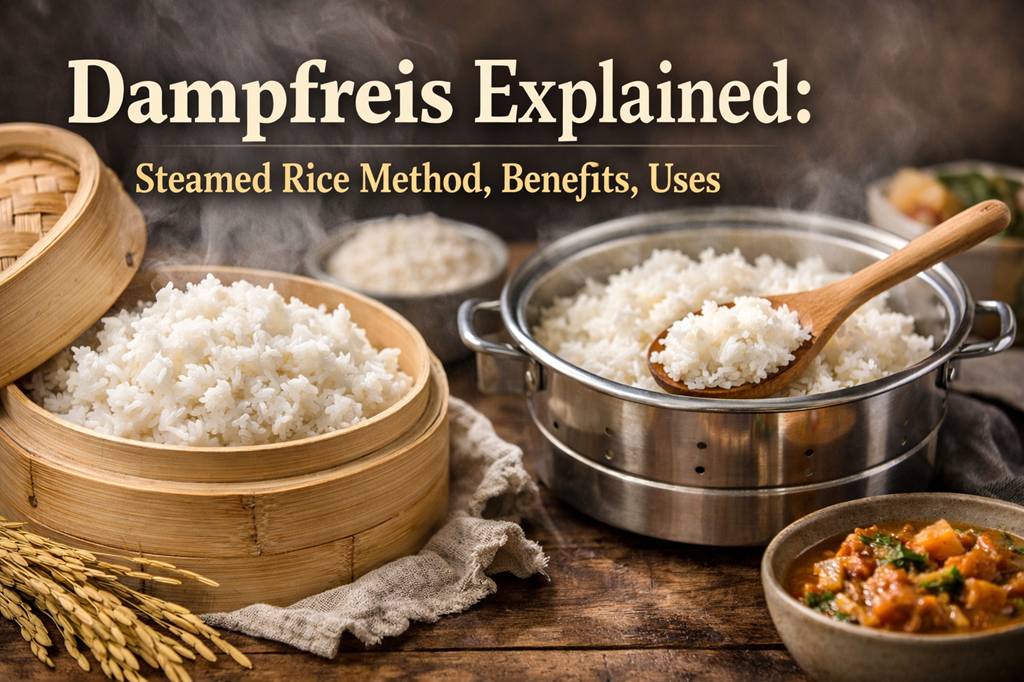
Dampfreis is the German term for steamed rice, a cooking method that uses gentle steam instead of direct boiling. This approach allows the rice to cook evenly, resulting in fluffy grains, a clean aroma, and a naturally balanced texture. While rice is often treated as a simple side dish, Dampfreis shows how careful preparation can elevate it into a nourishing foundation for everyday meals.
This article explains Dampfreis clearly and practically, covering its meaning, background, preparation methods, health value, and everyday uses.
What Is Dampfreis?
Dampfreis literally combines two German words:
- Dampf meaning steam
- Reis meaning rice
Together, they describe rice cooked using steam, not submerged in water. The rice sits above boiling water and cooks slowly as hot vapor surrounds each grain.
In daily use, Dampfreis can mean:
- Rice that is steamed fresh at home
- Rice that has been pre-steamed during processing and then dried for faster cooking
In both cases, the goal is the same: separate grains, clean flavor, and gentle cooking.
Why Dampfreis Is Different From Regular Rice Cooking
Although boiling rice is common, steaming follows a different logic.
Steamed Rice (Dampfreis)
- Rice never touches excess water
- Steam cooks grains evenly from all sides
- Texture stays light and fluffy
- Natural aroma remains strong
Boiled or Simmered Rice
- Rice sits directly in water
- Nutrients may leach out if water is drained
- Texture can become soft or sticky
Because of this, Dampfreis is often preferred when quality, digestion, and simplicity matter.
A Brief Look at the Origin of Dampfreis
Steaming rice is one of the oldest cooking methods in the world, with deep roots in Asia. As rice spread across regions, European kitchens adopted the technique. In German-speaking countries, the term Dampfreis became the natural way to describe rice prepared with steam instead of boiling.
Later, food producers introduced pre-steamed rice for convenience, allowing faster cooking while maintaining texture. Today, Dampfreis represents both tradition and modern practicality.
How Dampfreis Is Prepared
No matter the tool, the principle stays the same: rice cooks above water, not inside it.
Bamboo Steamer Method
This is the most traditional approach.
- Rice is soaked first
- A bamboo basket is lined with cloth or leaves
- The basket rests over gently boiling water
Steam flows freely through the bamboo, cooking rice evenly and enhancing aroma.
Steamer Insert or Metal Basket
A common modern home solution.
- Stainless steel or aluminum steamer insert
- Fits inside a regular pot
- Keeps rice elevated above water
This method is easy, reliable, and ideal for daily cooking.
Commercial Steaming Equipment
Professional kitchens often use:
- Large electric steam cabinets
- Controlled heat and moisture
- Consistent results for large batches
This ensures uniform texture and efficient preparation.
How to Cook Dampfreis at Home (Simple Step-by-Step)
Step 1: Rinse the Rice
Wash the rice until the water looks mostly clear. This removes excess surface starch.
Step 2: Soak the Rice
Soaking helps rice cook evenly during steaming.
- Basmati: 20–30 minutes
- Jasmine: 15–20 minutes
- Brown rice: 40–60 minutes
Step 3: Prepare the Steamer
Bring water to a steady boil. Make sure the rice will not touch the water.
Step 4: Steam the Rice
Place rice in a lined steamer basket. Cover and steam gently.
- White rice: 18–25 minutes
- Brown rice: 35–50 minutes
Step 5: Rest and Fluff
Let the rice rest covered for 5–10 minutes. Then fluff gently with a fork.
Key Benefits of Dampfreis
Fluffy, Separate Grains
Steaming prevents waterlogging, so each grain stays light and distinct.
Better Nutrient Retention
Because rice is not boiled in excess water, fewer nutrients are lost during cooking.
Naturally Low Fat
No oil or butter is needed. Dampfreis fits well into low-fat and balanced diets.
Easy Digestion
Steamed rice feels gentle on the stomach, making it suitable for all age groups.
Best Rice Types for Dampfreis
- Basmati rice for long, elegant grains
- Jasmine rice for soft texture and floral aroma
- Sticky rice for traditional steamed dishes
- Brown rice for nutty flavor and added fiber
Adjust soaking and steaming time depending on the grain.
Common Mistakes and Easy Fixes
- Rice feels hard inside: Increase soaking or steaming time
- Rice turns wet: Ensure water never touches the rice
- Uneven cooking: Spread rice in a thinner layer
Small adjustments make a big difference.
How Dampfreis Fits Into Everyday Meals
Dampfreis works perfectly as:
- A base for curries, stews, and sauces
- A clean side dish for vegetables and proteins
- A meal-prep staple for healthy eating
Because its flavor stays neutral, it adapts to almost any cuisine.
Nutritional Snapshot (per 100 g cooked, approximate)
- Calories: ~120 kcal
- Carbohydrates: ~26 g
- Protein: ~2.5 g
- Fat: ~0.3 g
- Fiber: ~0.4 g
Values vary by rice type, but Dampfreis remains a light, energy-rich option.
Final Thoughts
Dampfreis proves that simple cooking can still be refined and nourishing. By using steam instead of boiling water, this method protects texture, supports digestion, and keeps rice naturally flavorful without added fats.
For anyone who values clean food, gentle cooking, and reliable results, Dampfreis is not just an option. It is a smart, timeless choice.
Frequently Asked Questions About Dampfreis
Is this the same as parboiled rice?
No. Parboiled rice is treated before milling, while this refers to a cooking method.
Can I do this without special equipment?
Yes. A pot with a tight lid or simple steamer insert works well.
Is this cooking style healthy?
Yes. It avoids added fats and supports nutrient retention.
How long does cooked rice keep?
Up to three days in the refrigerator when stored properly.