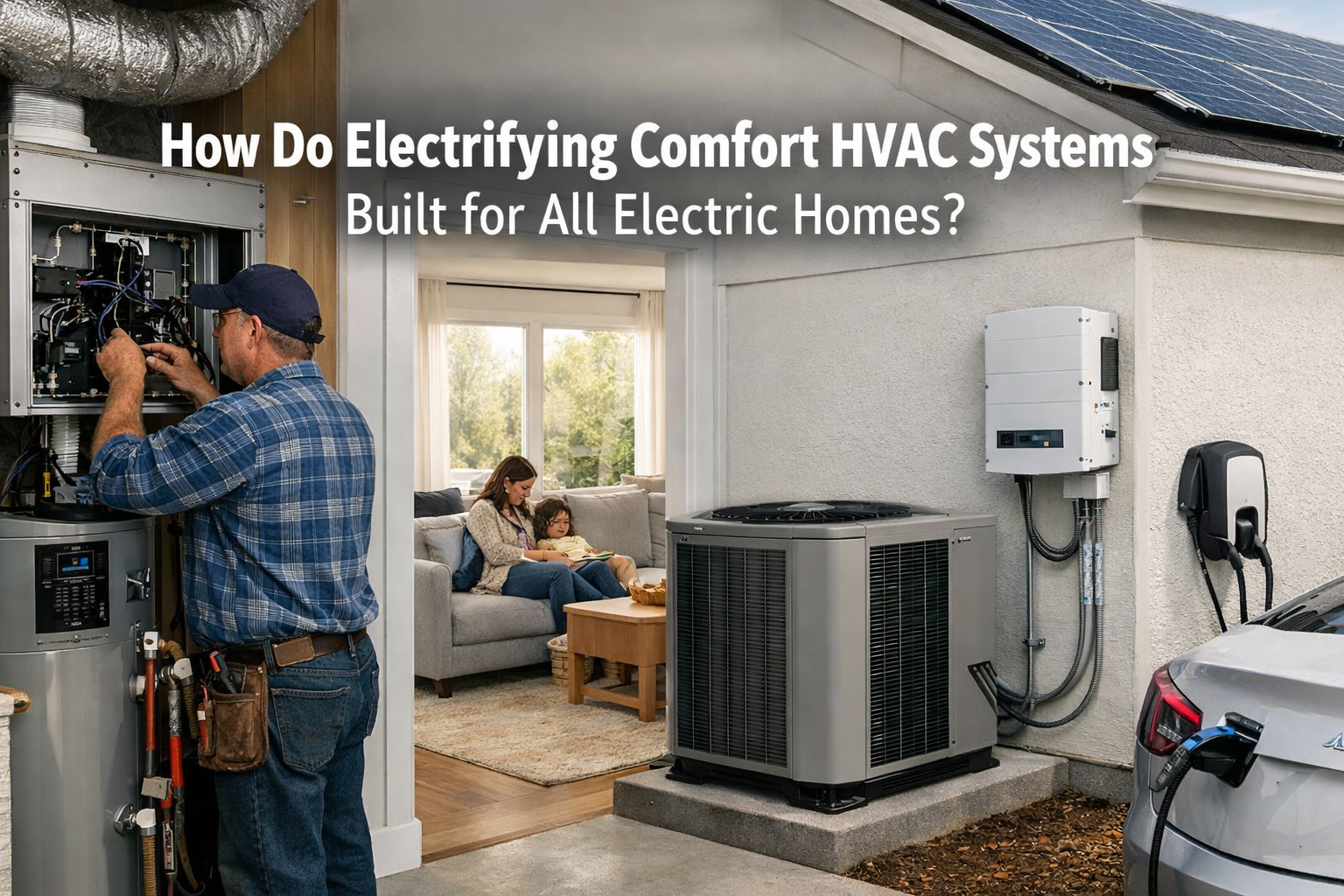
All electric homes are changing how heating, cooling, ventilation, and water heating work together. Instead of relying on combustion equipment, these homes often use heat pumps as the core comfort engine, with controls that coordinate indoor temperatures, humidity, and fresh air in a single strategy. Because heat pumps move heat rather than generate it, their performance depends heavily on envelope conditions, airflow balance, and smart staging. An all-electric design also draws attention to electrical service planning, since winter heating load can coincide with other household demands such as cooking, laundry, and vehicle charging. Comfort goals remain the same, but the pathway is different: steady runtimes, moderate supply temperatures, and tighter control of indoor moisture. A well-planned system considers how rooms gain and lose heat during the day, how sun exposure shifts, and how occupants use doors, showers, and kitchen exhaust. The result is an HVAC approach that feels quieter and more consistent, with fewer sharp temperature swings and less reliance on high-temperature blasts.
All electric design choices that matter
- Heat pump-centered heating and cooling.
A heat pump can serve as the primary heating and cooling source in an all-electric home, but selecting the right type and configuration matters. Air-source heat pumps are common because they can provide cooling in summer and heating in winter using the same equipment. Modern variable-speed compressors and fans help match output to actual conditions, supporting stable indoor temperatures without constant cycling. Ducted systems can deliver whole-home comfort through a well-sealed duct network, while ductless heads can target zones with individual control in areas where ducts are impractical. Cold-weather operation is a key consideration because heating capacity drops as outdoor temperatures fall; designers often carefully size and plan a supplemental strategy. An electric resistance backup can handle extreme conditions, but it should be treated as a safety net rather than the main event. In Chesterfield, MO, many all-electric layouts pair a variable-speed heat pump with thoughtful airflow tuning so the system can run longer at lower output, keeping rooms comfortable while limiting peak electrical demand.
- Ductwork airflow and zoning in electric setups
The performance of all-electric HVAC systems depends on how air moves through the home. Heat pumps generally deliver lower supply air temperatures in heating mode compared to fuel furnaces, so airflow and distribution become even more important. If ducts are undersized, leaky, or poorly balanced, the system may struggle to deliver comfort to distant rooms, and occupants may raise setpoints unnecessarily. Duct sealing and insulation help reduce losses and keep delivered air closer to the intended temperature. Return air pathways also matter, especially in bedrooms with closed doors, because restricted returns can create pressure imbalances that reduce airflow and raise noise. Zoning can be useful, but it needs careful design so the system does not short-cycle when only a small zone calls. Some all-electric homes do better with smart air mixing, longer runtimes, and mild setpoint adjustments rather than aggressive zoning. When zoning is used, it is often paired with variable-speed equipment, pressure-relief options, and dampers that modulate smoothly. The goal is a distribution system that supports steady operation, which is where heat pumps tend to feel most comfortable.
- Ventilation, humidity, and indoor air quality integration
Many all-electric homes are built more tightly, so mechanical ventilation becomes a core part of comfort rather than an add-on. Balanced ventilation with an energy recovery ventilator or heat recovery ventilator can provide fresh air while reducing the energy penalty of bringing in outdoor air. This integration supports healthier indoor air, more consistent humidity, and better control of odors and particulates. Humidity management is especially important because heat pumps can cool efficiently but may not always remove moisture as effectively as a short-cycling, oversized system might. In humid climates or shoulder seasons, standalone dehumidification or dedicated ventilation controls can prevent that slightly clammy feeling. Filtration choices also matter because longer runtimes can move more air through filters, which can improve particle capture when the filter and duct design are appropriate. Kitchen and bath exhaust should be coordinated so they do not create large pressure swings that pull in unconditioned air through leakage paths. A cohesive all-electric HVAC plan treats ventilation and moisture as design targets, not afterthoughts, so the home stays comfortable across seasons with fewer surprises in indoor air quality.
Steady comfort planning
All electric homes benefit from HVAC systems designed around heat pumps, balanced airflow, and integrated ventilation. The most successful setups focus on steady operation, thoughtful distribution, and moisture control so comfort feels even in every room. Electrical planning becomes part of HVAC planning, since peak demand and overlapping appliances can influence how equipment runs during cold snaps or busy evenings. Duct sealing, return pathways, and smart controls help heat pumps perform as intended, reducing cycling and keeping temperatures stable. Ventilation strategies such as ERVs or HRVs can improve indoor air quality while reducing energy waste, especially in tighter construction. Backup heat works best as a safety net, not a primary heat source, and building improvements can reduce the need to rely on high-draw resistance operation. With coordinated design choices, an all-electric HVAC system can keep comfort predictable, energy use sensible, and indoor air cleaner throughout the year.