When homeowners think about air leaks, they usually picture gaps in ductwork—loose connections, torn flex duct, or unsealed joints. Contractors often find something else: air leakage outside the duct system, meaning the home itself is leaking around the building envelope. These leaks let hot, cold, humid, dusty, or polluted air slip in and out, forcing the HVAC system to work harder even when the ducts are tight. The result can look like an equipment problem—long runtimes, uneven temperatures, rooms that never feel comfortable, and higher utility bills. Identifying these leaks requires an approach different from duct inspection, because the “leak” is distributed across dozens of small openings around windows, doors, attic penetrations, and hidden cavities. Understanding how contractors locate air leakage helps homeowners see why comfort problems aren’t always solved by equipment upgrades.
Where leakage really happens in a home
Air leakage outside the duct system usually follows pressure differences created by wind, temperature, and the HVAC blower. Contractors start by thinking about where the home is most vulnerable: attic access doors, recessed lights, plumbing penetrations under sinks, gaps around window frames, fireplace chases, and rim joists where the house meets the foundation. They also consider how air moves vertically, because warm air rises and pulls replacement air from lower levels, a pattern often called the stack effect. This can make the upper floors feel hot in summer and drafty in winter, even when the HVAC equipment is sized correctly. Doorways, stairwells, and open atriums can amplify that effect by making it easier for air to migrate. When an air leak is significant, it can also cause humidity problems because moist outdoor air enters through small gaps and condenses on cooler surfaces. Contractors working with companies like Ranger Air Conditioning often explain that sealing these hidden pathways can improve comfort faster than changing thermostats or adding vents, because the HVAC system can only control the air that stays inside the building envelope.
- How contractors separate duct leakage from envelope leakage
Before chasing leaks, contractors verify whether the problem is duct-related or building-envelope-related. A key clue is where discomfort appears. If one branch line is leaking, the problem tends to be isolated to a zone or a set of rooms. If the entire home feels drafty, smells musty, or swings in humidity, envelope leakage becomes more likely. Contractors also pay attention to pressure behavior: doors that pull shut, whistling around window trim, or a room that becomes noticeably stuffier when the door is closed can suggest pressure imbalances linked to building leakage paths. They may compare the supply airflow and temperature at the vents to confirm that the HVAC system is delivering the expected output. If airflow and temperature splits look reasonable but the home still struggles to maintain comfort, that points to the home losing conditioned air to the outside or pulling in outside air. This “process of elimination” matters because it prevents homeowners from spending money sealing ducts when the bigger loss is happening through attic bypasses or leaky window frames.
- Visual inspection: the first pass that finds the obvious
A detailed walk-through can reveal many leakage points without advanced equipment. Contractors look for cracked caulk lines, daylight around door seals, gaps behind baseboards, and openings around pipe penetrations in cabinets and closets. In attics, they check for disturbed insulation around recessed lights, bathroom fans, and wiring penetrations, as those areas often leak air into the attic. They also inspect attic hatch seals and pull-down stairs, which can act like large open windows when not weatherstripped. In basements and crawl spaces, rim joists and sill plates are common leakage routes, especially where plumbing or electrical lines pass through. Contractors also look for stains or dust “ghosting” patterns near trim, which can indicate airflow carrying particulates through small cracks. While this visual pass won’t quantify leakage, it often identifies a set of high-impact targets. It also helps connect symptoms to locations: a cold draft near a sofa might trace back to a poorly sealed window frame, while a persistent upstairs heat issue may trace back to attic bypasses.
- Pressure testing and blower door diagnostics
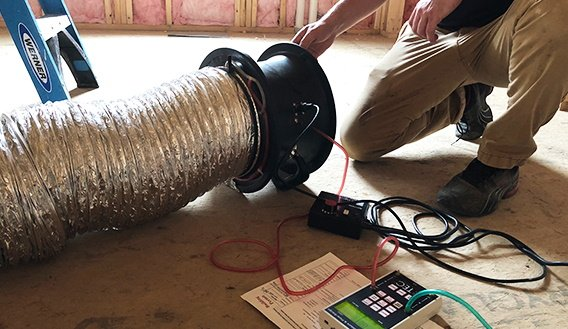
When a problem is stubborn, contractors often use pressure testing to turn invisible airflow into a measurable quantity. A blower door test uses a calibrated fan mounted in an exterior doorway to depressurize or pressurize the home. This exaggerates leaks, making them easier to feel and detect. With the house under pressure difference, contractors can walk through rooms and identify drafts at outlets, trim lines, ceiling penetrations, and attic access points. They may also measure air changes per hour to estimate the home’s overall leakiness. The value of blower door testing is that it doesn’t rely on guesswork; it reveals whether the home is losing air at a rate that would overwhelm normal HVAC operation. It also helps prioritize sealing work by highlighting the largest leaks first. Some contractors combine blower door testing with thermal imaging to see where cold or hot air is infiltrating through the envelope. This method can be especially useful in older homes where leaks are widespread and not obvious from the interior alone.
- Thermal imaging and smoke: making leaks visible
Thermal cameras can help contractors spot leakage patterns that aren’t visible to the eye, especially when there is a strong temperature difference between indoors and outdoors. A cool streak around a window frame in summer, or a warm streak in winter, can indicate air movement through gaps rather than just conduction through materials. Contractors often use thermal imaging alongside a blower door so the pressure difference forces air through leaks while the camera reveals the path. Smoke tools, such as smoke pencils or theatrical fog, are another simple way to visualize airflow. When held near a suspected leak, smoke will drift toward the opening if air is moving through it. This is useful around recessed lights, attic hatches, fireplace surrounds, and plumbing penetrations where the leak is small but persistent. These tools help contractors explain findings to homeowners in a way that feels concrete: instead of saying “your house is leaky,” they can show exactly where air is entering or escaping. That clarity makes it easier for homeowners to agree on sealing priorities and understand why certain fixes matter more than others.
- Common leakage hotspots contractors seal first
Although every home is different, contractors often focus on a few repeated hotspots because they deliver high impact. Attic bypasses—gaps around lights, fans, and top plates—can move large amounts of air due to the stack effect, so sealing them can quickly stabilize upstairs temperatures. Rim joists and sill plates are another major target because they sit at the boundary between conditioned space and the outdoors and often have many penetrations. Window and door weatherstripping is addressed when drafts are obvious, but contractors also check less obvious pathways, such as gaps behind trim and at the rough opening. Electrical outlets on exterior walls can leak surprisingly well, especially in older construction, so gaskets and foam sealing may be used. Fireplace chases and flues can act like chimneys, pulling conditioned air up and out, creating a constant draw. The point of this work is not to make the home airtight in an extreme way; it’s to reduce uncontrolled airflow enough that the HVAC system can maintain stable temperatures and humidity without constantly fighting outdoor conditions.
HVAC contractors identify air leakage outside the duct system by treating the home itself as part of the HVAC equation. They start with symptom patterns and basic inspections to identify common leak paths around doors, windows, attics, and foundations, then use pressure-based testing to confirm the amount of uncontrolled airflow. Tools like blower doors, thermal imaging, and smoke make invisible leakage paths measurable and easy to locate. By separating duct issues from building-envelope leakage, contractors avoid misdirected repairs and focus on the openings that most affect comfort, humidity, and energy use. Once major leaks are reduced, the HVAC system can operate more efficiently because conditioned air stays inside longer and outdoor air enters more controlled. For many homes, sealing envelope leaks is the missing step between “the system runs” and “the house feels comfortable.”