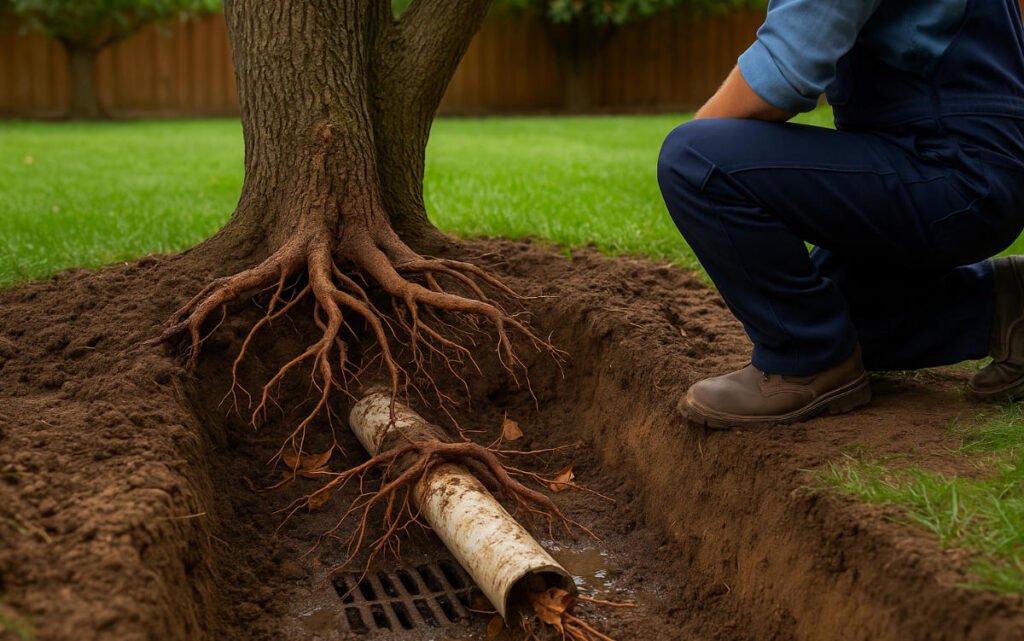
Tree roots are drawn to moisture, oxygen, and nutrient-rich soil, making underground sewer and drain lines an attractive target when tiny leaks or weak joints occur says Berkeley County Property Management. What begins as a hair-thin root intrusion can grow into dense masses that catch waste, slow drainage, and eventually create backups inside the home. These problems often feel sudden to homeowners, but the damage usually develops over months or years as roots expand and pipes deteriorate. Plumbers address root-related issues by confirming the location and severity of intrusion, clearing obstructions without harming the line, and correcting the conditions that allow roots to return. The goal is to restore flow while protecting the pipe system long term.
Finding, Clearing, and Preventing Root Intrusion
- Why Roots Enter Sewer and Drain Lines
Roots typically do not immediately crush intact modern pipes; they exploit openings that already exist. Older clay tile, cast iron, and concrete pipes often have joints that shift over time, creating small gaps where roots can enter. Even newer PVC systems can develop issues if installation quality was poor or soil movement stressed connections. Once roots sense moisture escaping from a joint or hairline crack, they grow toward the source and slip inside the pipe, where water flow and organic material encourage rapid expansion. Inside the line, roots form nets that snag toilet paper and debris, gradually narrowing the pipe until drainage slows and becomes unpredictable. Understanding why intrusion occurs helps plumbers choose the right fix, because simply cutting roots without addressing the entry point often leads to repeated clogs.
- Diagnosing Root Problems With Camera Inspection
A key step in treating root intrusion is accurate diagnosis, and plumbers frequently use sewer camera inspection to see what is happening inside the pipe. This approach identifies whether roots are present, how dense the growth is, and whether the pipe is cracked, offset, collapsed, or simply invaded through joints. A camera inspection also reveals the exact distance to the problem area, which helps determine whether clearing, spot repair, or full replacement is more appropriate. Homeowners looking for a licensed plumber in Pasadena, MD often request confirmation before committing to a repair, and camera footage provides clear evidence of the issue and its severity. This diagnostic step reduces guesswork, prevents unnecessary excavation, and supports a repair plan based on the pipe’s actual condition rather than assumptions based solely on symptoms.
- Clearing Roots Without Damaging the Line
Once roots are confirmed, plumbers choose a clearing method based on pipe material, intrusion density, and overall line condition. Mechanical augers with root-cutting blades can slice through growth and reopen the pipe, restoring flow quickly when the structure is still reasonably intact. Hydro jetting may also be used to flush out cut roots and debris, although pressure settings must be matched to the pipe type to avoid worsening weak sections. The goal is not only to remove roots but to clear the sludge and buildup that roots trap, because leftover debris accelerates re-clogging. A careful clearing process restores full diameter flow, reduces backup risk, and creates a cleaner surface that is easier to inspect afterward. After the line is cleared, plumbers often run the camera again to verify that the obstruction is removed and to evaluate whether the pipe needs further repair to prevent recurrence.
- Repairing the Entry Points That Invite Regrowth
Root removal is often the short-term fix; stopping regrowth requires addressing where roots enter. Plumbers evaluate whether joints are separated, whether there are cracks, or whether a section has shifted enough to create a continuous opening. If damage is localized, a spot repair may replace a short pipe segment, restoring integrity without rebuilding the entire line. In other cases, especially with older clay or heavily deteriorated materials, the damage may be widespread and prone to repeated intrusion. Plumbers then discuss longer-term solutions, including replacing a larger portion of the line or using internal rehabilitation methods where appropriate. The key is preventing water seepage from the pipe, since leaking moisture is what draws roots back. By sealing or replacing the compromised areas, plumbers remove the root’s incentive to grow and reduce the risk of future blockages.
- Trenchless Options and When They Make Sense
Modern plumbing repair often uses trenchless methods that reduce the need for full-yard excavation. Pipe lining can create a new interior surface within an existing pipe, sealing small cracks and joints that roots exploited, while pipe bursting can replace a line by breaking the old pipe and pulling a new one through the same path. These options can be valuable when root intrusion is frequent and the pipe has multiple weak points, but they require certain conditions to be effective. For example, lining generally needs a pipe that is not fully collapsed and can be cleaned thoroughly before installation. Plumbers evaluate the camera findings, soil conditions, and access points to determine whether trenchless repair is appropriate. When it fits, trenchless work can restore pipe integrity, reduce future maintenance, and limit disruption to landscaping, driveways, and hardscaping.
Plumbing issues caused by tree roots are rarely solved by a single drain clearing alone, because roots return if the pipe remains vulnerable. Plumbers address the problem by confirming intrusion with camera inspection, clearing roots safely with methods suited to the pipe’s condition, and repairing the entry points that allowed roots to invade in the first place. When damage is broader, trenchless rehabilitation or targeted replacement can restore the line’s integrity and reduce recurring backups. With the right diagnosis and repair strategy, homeowners can move from recurring clogs to stable drainage, protecting both the plumbing system and the surrounding property.