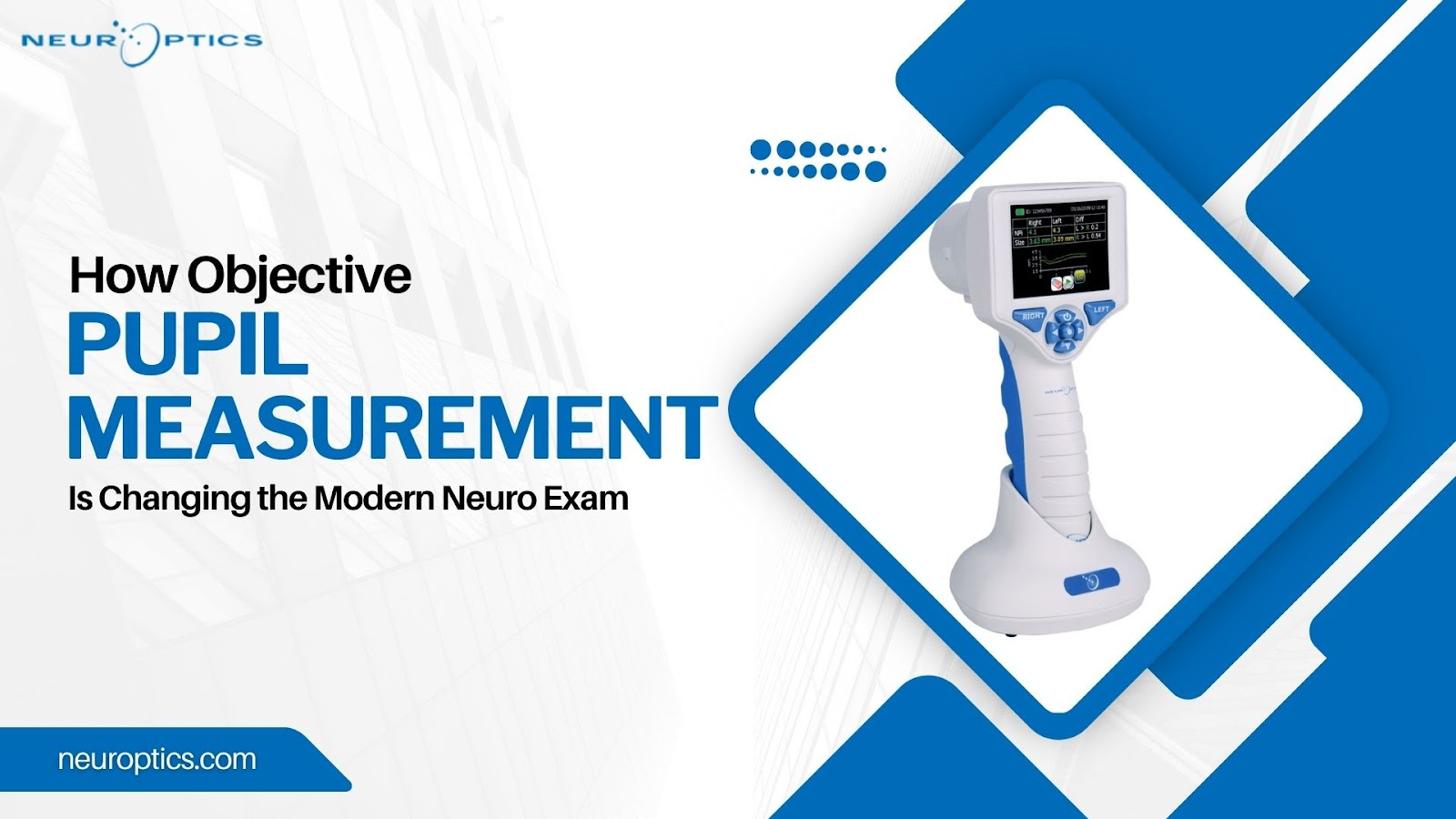
For decades, doctors have relied on pen light to evaluate pupil size and reactivity. The traditional way has always carried a degree of confusion. Two different medical staff members might have different opinions. In today’s data world, this method is no longer sufficient. Objective pupil measurement is a neurological tool that is becoming the cornerstone of the neuro exam.
The Limitations of the Traditional Pupillary Exam
The traditional method completely depends on the examiner’s experience and lighting conditions. Subtle changes are difficult to identify through naked eye. Especially when it comes to emergency departments, the traditional method is of less use. Studies have shown that there is a significant difference in the observation of two different medical staff, leading to confusion and delayed diagnosis.
Every minute matters during critical neurological health conditions. The smallest change in your pupillary response may be the earliest sign of a brain issue. If doctors completely rely on subjective observation, it can be risky.
What Is Objective Pupil Measurement?
Objective pupil measurement is a very useful neurological tools to find precise changes in the pupil. It helps to measure parameters such as pupil size, constriction velocity, dilation velocity, percentage of constriction in your pupil exam, and symmetry between pupils.
Instead of using terms like reactive or non-reactive, medical staff can use the proper data to start the treatment. This shift from qualitative to quantitative data brings decision-making in line.
Improving Accuracy and Consistency
One of the most important benefits of pupil measurement is consistency. Data-driven results remove any kind of biased opinion. It ensures the same measurement is applied every time. Whether the exam is performed by a neurologist or a newly trained medical staff, the results will remain the same and reliable. This consistency is important when multiple medical staff are involved for the same patient across different shifts. Objective data gives clear communication, reducing any kind of confusion in decision-making.
Early Detection of Neurological Deterioration
Objective pupil measurement helps to identify even the smallest change that may not be visible to the naked eye. Researchers have shown that the pupillary light reflex can reveal neurological issues or any kind of abnormality in the brain. For example, patients with brain injury need to go through proper tests for early detection of any kind of minor injury.
Enhancing Stroke and Neurocritical Care
In emergency and ICUs, objective pupillometry is becoming an important monitoring tool. Pupillary abnormalities can help to differentiate between ischemic and hemorrhagic events.
Because these tests are quick and repeatable, it helps for frequent assessment without any burden on medical staff. These data give a dynamic picture of the patient’s neurological status, which helps in quick, effective treatment.
Supporting Evidence-Based Decision Making
Modern medical science is based on evidence. Patients and medical staff both rely on data-driven decisions. Quantitative data is now involved in clinical protocols and scoring systems. Some medical hospitals have already started integrating pupillometry into neurological system care.
Objective data helps to provide clear documentation, which is very important for quality treatment and research. When the medical staff has proper measurable data, it gets easier to justify the treatment to the patient.
The Future of the Neuro Exam
Objective pupil measurement shows how neurology is moving towards more accuracy and technology-driven results. It is not replacing any doctor’s experience or judgement, but it’s helping doctors support their decision. In the same way that oximeters are changing the way breathing is monitored, automated pupillometry is changing how brain function is assessed. As more and more hospitals are adapting to this technology, the results and treatments are getting better. This helps medical staff detect problems early and make better treatment decisions.
Conclusion:
The pupil exam always provides important, vital information about brain health. With objective pupil measurement, results are clearer and more reliable. Guesswork is now replaced with proper data. For healthcare professionals who are providing the best neurological care, an objective pupillometer is one of the most important tools for accurate results and treatment.