
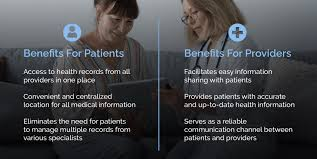
Patient portal software has revolutionized how we access health information. We no longer wait weeks for medical records or play phone tag with the doctor’s office.
These digital platforms provide secure, instant access to lab results, prescriptions, and medical histories anytime you need them. They enable patients to schedule appointments and communicate directly with healthcare providers.
You might be learning about patient portal solutions for your practice or curious about how patient portal systems work. We’ll walk you through everything you need to know about instant medical record access.
What Is Patient Portal Software
A patient portal software is a secure web-based platform that connects you to your health information stored in your healthcare provider’s electronic health record system. Think of it as your personal window into the medical data that doctors and nurses see on their screens.
These platforms are tethered to EHR systems and pull information from the same databases that healthcare professionals use to document your care.
The technology has gained momentum in recent years. More than half of individuals nationally accessed their health information online through portals or apps offered by healthcare providers by 2022. Usage jumped by 50 percent between 2020 and 2022, which shows how patients have embraced digital health tools quickly.
Patient portal software functions as a bridge between clinical systems and patient access at its core. Your portal account makes information available when your doctor orders a blood test or updates your medication list. Nearly all non-federal acute care hospitals and two-thirds of office-based physicians now have EHR systems that enable this kind of patient access.
Lifepoint Informatics patient portal software provides instant access to medical records. It offers secure web and mobile patient portals that enable healthcare organizations to provide patients with real-time access to lab results, medication records, and other essential health information.
Core Components Of Patient Portal Systems
Patient portal systems provide access to selected health information from your healthcare organization’s EHR. This includes medications, discharge summaries, lab results, immunizations, and allergies. These represent the baseline features that most portals offer.
More advanced systems expand beyond simple record viewing. You can send secure messages to clinical staff and access educational materials specific to your health conditions. The systems also let you schedule appointments, request prescription refills, and manage medical bills.
The messaging feature is the most used function. Secure messaging operates as a closed-loop process. Your messages get responses from non-clinical staff, nurses, or providers, depending on the type of inquiry.
Patient portal systems also enable different levels of interaction. Some allow you to complete registration forms and paperwork online before clinic visits. Others connect to medical IoT devices and wearables, and let you track health data like blood pressure readings in one centralized location. The systems can provide access to diagnosis information, laboratory results, diagnostic imaging, medication lists, and appointment booking capabilities.
Appointment scheduling emerged as the most common feature. Studies identified it in 19 out of 22 reviewed implementations. This functionality saves time by eliminating phone calls during business hours. You spend less time in waiting rooms when you schedule visits through the portal.
Educational content represents another component that 18 out of 22 systematic reviews included in portal designs. Portals help answer your questions without requiring additional provider time when they provide disease-specific information online. Research showed that 86 percent of patients requested this feature, which highlights its importance.
How Patient Portals Differ From Traditional Medical Record Access
Traditional medical record access required phone calls, written requests, and weeks of waiting time. You’d call your doctor’s office, sit on hold, leave a message, wait for a callback, and then wait again for records to arrive by mail or fax.
Patient portals flip this model. You access your health information 24 hours a day through a secure website with a username and password. No phone tag. No business hour restrictions. No waiting for someone to pull files from storage.
The change represents more than convenience. Traditional methods created barriers that prevented timely healthcare decisions. You might not get lab results in time if you need them before a specialist appointment. You’d need to call and request copies if you wanted to review discharge instructions after leaving the hospital.
Portal access removes these friction points. Your test results appear online, often before you leave the clinic. Your visit notes become available for review whenever you need them. Prescription histories stay updated live as your doctors make changes.
The difference extends to communication patterns as well. Traditional access meant one-way information flow. You received what providers chose to share and when they chose to share it. Patient portals create two-way exchanges. You message providers with questions, they respond through the same system, and the entire conversation stays documented in your record.
The patient-provider dynamic has changed from a hierarchical model to something closer to a partnership. You’re no longer just a recipient of care but an active participant with access to the same information that guides your treatment decisions.
How Patient Portal Software Connects To Medical Records
The technical connection between patient portal systems and medical records relies on three foundational elements: integration with electronic health record platforms, standardized data exchange protocols, and cloud-based infrastructure. Each piece works together to deliver the instant access we explored earlier.
EHR Integration And Data Synchronization
Patient portals integrate directly with EHR platforms within hospitals, general practices, and primary care centers. This integration is fundamentally different from personal health records, which require patients to manually input their own health information. Portal data flows automatically from the same clinical systems that physicians and nurses use during your care instead.
Application programming interfaces often handle the integration process. These APIs act as translators between different software systems. Your doctor updates your medication list in the EHR, and the API transmits that change to your portal account right away. The synchronization happens bidirectionally, meaning data can flow both ways.
Modern integration architectures sync patient demographics, insurance information, and documents automatically. You schedule an appointment through your portal, and that information pushes back into the EHR, so your care team sees it right away. Completed form submissions from patients get sent directly into the clinical system without staff needing to reenter data.
Integration eliminates redundant data entry and retrieval tasks. Studies show that live charting practices see up to a 30% improvement in processing times. Healthcare organizations using analytical strategies have seen up to a 20% reduction in hospital readmissions and a 15% improvement in clinical outcomes.
Live Data Exchange Protocols
Live data exchange relies heavily on HL7 FHIR standards. FHIR APIs use web-based technology to read and write patient data, search for specific information like lab results or diagnoses, and update records in real time. These APIs are cloud-friendly, scalable, and fast, built on RESTful architecture.
FHIR makes it easier for EHRs, patient apps, labs, and pharmacies to share information without complex custom setups. Providers can pull up key data like lab results, medications, and vitals right when they need it quickly. The standard defines interaction patterns using HTTP for reading resources by ID, searching with parameters, creating new resources, and modifying existing ones.
Security measures built into FHIR include OAuth2 for secure access and SMART on FHIR to control what apps can view. All data exchanged through modern FHIR APIs is encrypted. Custom middleware services can synchronize EHR and patient platform data in under 500 milliseconds.
The Office of the National Coordinator for Health Information Technology mandated that certified health IT developers adopt standards-based APIs by the end of 2022. This regulation accelerated the move toward instant patient access through apps without special effort.
Live synchronization addresses coordination challenges in siloed medical information environments. Physicians no longer waste time searching multiple databases or waiting for information transfers. Synchronized systems can notify pharmacies to prepare prescriptions when providers enter orders automatically.
Cloud-Based Storage Architecture
Cloud-based storage has become the backbone for instant medical record access. Cloud storage maintains patient data and medical records in a more available way, unlike traditional on-premise servers. Users gain instant access to updated clinical data from different locations.
This explosive growth stems from cloud storage’s ability to handle high-resolution medical images efficiently. Radiologists and pathologists can access images from any location while maintaining image quality essential for accurate diagnosis.
Cloud platforms host both Hospital Information Systems and Electronic Medical Record systems. The architecture joins different clinical data stored within various HIS and EMR systems, whether placed in local data centers or hosted in cloud platforms. This unified approach creates a patient-oriented model that supports better governance of healthcare systems.
Healthcare-compliant cloud storage solutions offer automated backups, live synchronization across multiple devices, advanced encryption protocols, and detailed audit trails. Companies like Lifepoint Informatics develop patient portal solutions leveraging these cloud capabilities to connect patients with their health data securely.
Instant Access Features In Patient Portal Solutions
Modern patient portal solutions deliver health information exactly when you need it, not when office hours permit. The move from scheduled access to on-demand availability has changed how we interact with medical data.
24/7 Medical Record Availability
Secure online websites give you round-the-clock access to personal health information from anywhere with internet access. You can log in at midnight to review visit summaries or check medication instructions before an early morning dose. The convenience extends beyond simple viewing.
Healthcare organizations now make portals available in multiple languages. MyChart, to cite an instance, offers both English and Spanish versions. This accessibility matters when you manage care for family members or understand complex medical information in your preferred language.
Patient portal systems maintain continuous availability through secure username and password authentication. Your health records remain available whether you access the portal from home, work, or while traveling. Proxy access features allow parents, guardians, or caregivers to manage family health information. They can view medical records, schedule appointments, and communicate with providers.
Mobile App Access To Health Information
App-based access to online medical records jumped from 38% in 2020 to 57% in 2024. This represents a most important move in how we consume health information. The growth reflects a broader pattern where convenience drives adoption.
People who use apps to access their online medical records check them more often compared to those using only web-based portals. App users accessed their records six or more times in the past year at a rate of 42%, while only 28% of web-only users did the same.
The difference suggests apps make health information tracking easier and more convenient.
Half of individuals who accessed their online medical records used an app either alone or combined with a website by 2022. The MyChart mobile app exemplifies this trend and lets you manage care from your phone. You can view messages, test results, medication information, and appointments without opening a laptop.
Direct Viewing Of Lab Results And Test Reports
Test result viewing stands out as the most popular portal feature. 90% of individuals who accessed their online medical records viewed test results in 2022. The access eliminates phone calls and follow-up appointments.
Many standard lab results become available within 24-48 hours. Results get delivered to your portal account at the same time they’re reported to your healthcare provider. Some specialized tests, like genetic screening, may take up to 21 days, but you can check status updates by logging into your account.
Advanced patient portals incorporate visual aids such as charts or graphs to help you understand results. These tools indicate whether results fall within normal ranges and help you comprehend your health status without medical training. Viewing lab reports in detail allows you to track progress over time and see how medications or lifestyle changes affect your wellness goals.
Prescription And Medication History Access
Medication management features provide consolidated views of current and past prescriptions, including dosage and frequency. This complete access helps medication adherence and management. You can request prescription refills through the portal and increase convenience while reducing gaps in medication usage due to lapsed prescriptions.
Lifepoint Informatics develops patient portal solutions that integrate these instant access features and connect patients with their health data through secure, user-friendly interfaces. Knowing how to review prescription histories proves valuable when you see specialists or visit emergency departments where providers need complete medication information quickly.
Conclusion
Patient portal software has changed how we interact with medical information. What once took weeks of phone calls now happens instantly with a few clicks. You get 24/7 access to lab results, prescriptions, and complete health histories from any device.
Healthcare providers should prioritize portal implementation that balances security with usability. The technology works best when patients and providers welcome it together.
If you’re ready to implement patient portal solutions for your practice, Lifepoint Informatics offers platforms that connect your patients easily with their health data and maintain the highest security standards.
