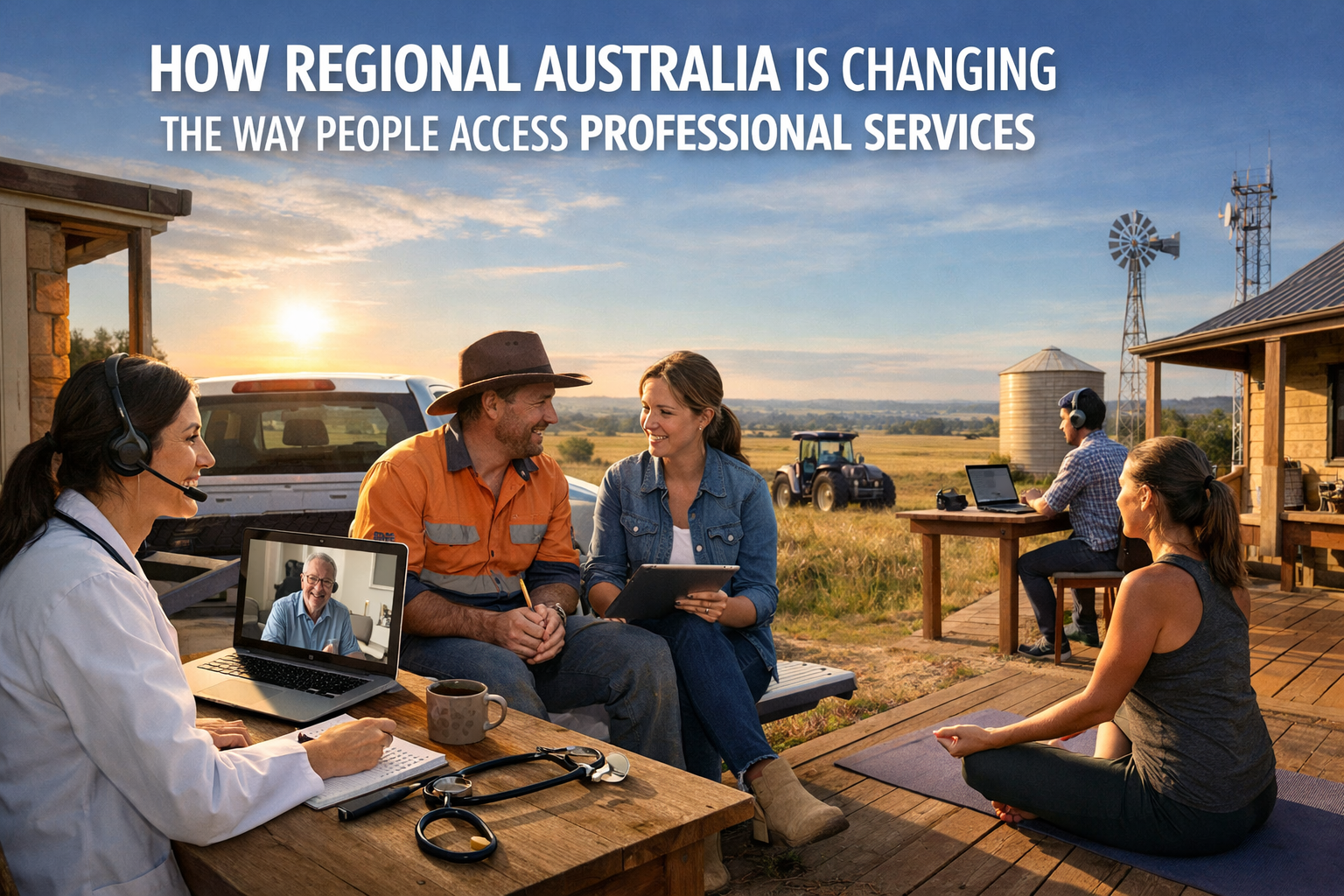
There was a time when living outside a major city meant settling for fewer options. Fewer specialists, longer wait times, and a general sense that quality professional services were reserved for those in Sydney, Melbourne, or Brisbane.
That narrative is shifting fast. Regional communities across Australia are seeing a surge in skilled professionals setting up shop locally. From healthcare to legal services to financial planning, the gap between metro and regional access is narrowing in ways that matter.
The Rise of Regional Professional Hubs
Towns like Townsville, Cairns, and the Gold Coast have grown well beyond their tourism reputations. They’re now home to thriving professional sectors that rival what you’d find in much larger cities.
A big part of this shift comes down to lifestyle. Talented professionals are choosing to leave crowded capitals in favour of communities where the pace of life is more manageable. They’re bringing their expertise with them, and local residents are the ones benefiting.
This trend has been accelerating since the pandemic, when remote work proved that geography doesn’t have to dictate career quality. Many professionals who relocated during that period have stayed, building practices and businesses that serve their communities long-term.
Why Local Access to Services Matters More Than People Realise
It’s easy to take local services for granted until you need them urgently. A medical emergency, a legal dispute, or a financial crisis can all demand immediate, face-to-face professional support.
When those services are hours away in a distant city, the delay can have real consequences. There are some other reasons for claim delays, but most result in legal deadlines get missed. Medical conditions worsen. Financial problems compound. Having qualified professionals within your own community removes those barriers and gives people a better chance at positive outcomes.
There’s also the trust factor. Local professionals understand the unique dynamics of their region. They know the local courts, hospitals, industries, and networks. That kind of embedded knowledge is hard to replicate from a capital city office hundreds of kilometres away.

Legal Services Leading the Regional Charge
One sector where regional growth has been particularly noticeable is legal services. For a long time, people in smaller cities felt they had to look to Brisbane or Sydney for serious legal representation. That’s simply not the case anymore.
Regional law firms have expanded significantly over the past decade. Many now offer the same breadth of services you’d expect from a big-city practice, covering everything from personal injury and workers’ compensation to family law and commercial disputes.
In Far North Queensland, this has been especially evident. Residents dealing with workplace injuries, motor vehicle accidents, or disputes with insurers can now find experienced lawyers Cairns locals rely on for strong, dedicated representation. Having that level of expertise available locally means people don’t have to travel or settle for less when the stakes are high.
The growth of regional legal practices has also created healthy competition, which benefits consumers. When multiple quality firms operate in the same area, service standards rise and clients get more choices.
The Technology Factor
Technology has played a massive role in levelling the playing field for regional professionals. Cloud-based systems, video conferencing, and digital document management mean that a law firm in Cairns or an accounting practice in Toowoomba can operate with the same efficiency as one in the CBD.
Clients benefit from this too. Many regional firms now offer virtual consultations alongside in-person meetings, giving people flexibility in how they access services. You can have an initial phone call from your living room and only visit the office when it’s truly necessary.
This hybrid approach has proven especially popular in areas with large geographic footprints. In regions like Far North Queensland, where clients might be spread across vast distances, the ability to handle parts of a matter digitally saves everyone time and money.
Healthcare and Allied Services Following Suit
Legal services aren’t the only sector experiencing this regional renaissance. Healthcare has seen similar growth, with specialists increasingly choosing to practice outside capital cities.
Towns that once relied on visiting specialists flying in once a month now have permanent practitioners in fields like orthopaedics, cardiology, and mental health. Allied health services such as physiotherapy, occupational therapy, and psychology have also expanded significantly in regional areas.
This matters enormously for people recovering from injuries or managing chronic conditions. Having your physio down the road instead of a plane ride away makes consistent treatment far more achievable. And consistency is often the difference between a full recovery and a lingering problem.

What to Look for in a Regional Professional
Whether you’re choosing a lawyer, a doctor, or a financial adviser, the basics of finding a good one don’t change just because you’re in a regional area. But there are a few things worth keeping in mind.
Experience in your specific issue matters more than general reputation. A firm that handles hundreds of compensation cases a year will likely serve you better than a generalist, even if the generalist has been around longer. Ask about their track record with cases similar to yours.
Communication style is another big one. Regional practices tend to offer a more personal touch, but that’s not universal. Pay attention to how responsive they are during your first interaction. If they’re hard to reach before you’re a client, that’s unlikely to improve afterwards.
Finally, look for transparency around fees. The best professionals are upfront about costs from the start. In the legal space, many personal injury firms work on a no-win, no-fee basis, which removes the financial risk for clients. Don’t be afraid to ask direct questions about how billing works before you commit.
The Community Ripple Effect
When skilled professionals establish themselves in regional towns, the benefits extend far beyond the services they provide. They create jobs, support local businesses, and contribute to the overall economic health of the community.
A thriving legal practice, for example, employs paralegals, administrative staff, and support workers. Those employees spend their wages locally, eat at local restaurants, and send their kids to local schools. It’s a cycle that strengthens the entire community.
There’s also a mentorship effect. Established professionals in regional areas often take on graduates and trainees, building a pipeline of local talent. This means the next generation of lawyers, doctors, and advisers won’t have to leave their hometowns to build careers.
The Bottom Line
Regional Australia is no longer playing second fiddle when it comes to professional services. The quality, accessibility, and range of expertise available in towns outside the major capitals has improved dramatically, and the trend shows no signs of slowing down.
If you live in a regional area, take the time to explore what’s available on your doorstep. You might be surprised at the calibre of professionals working right in your community. And if you ever find yourself in a situation where you need expert help, knowing that it’s close by can make all the difference.