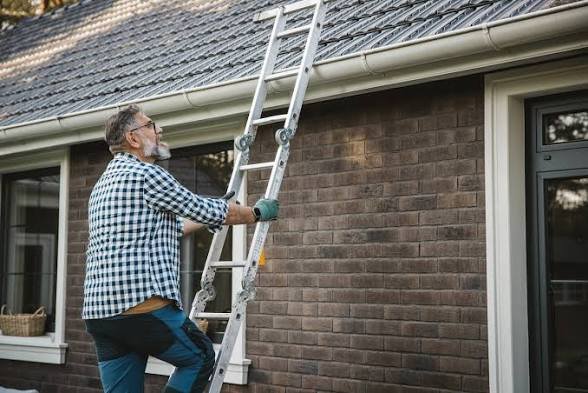
As a homeowner, your property is likely your most significant financial investment. Maintaining its “curb appeal” isn’t just about pride—it’s about structural integrity. However, many people avoid inspecting their homes because they dread the idea of climbing a 20-foot extension ladder. The good news is that you don’t need to risk a fall to perform a professional-grade exterior audit. Your home constantly leaves “clues” about its health, many of which are hidden in plain sight at ground level.
By mastering the art of observation, understanding how lighting affects surfaces, and knowing what seasonal signs to look for, you can spot early warning signs of buildup, discoloration, and surface wear. This guide will walk you through a comprehensive, ladder-free inspection process to ensure your home stays protected.
1. The Foundation of Observation: Timing and Lighting
Before you even look at a wall, you must understand that when you look is just as important as what you look at. Professional inspectors know that flat, midday light is the enemy of detail because it washes out the subtle textures and contours of your siding.
The Power of Low-Angle Light (The Golden Hour)
The best time for a ground-level inspection is during the “Golden Hour”—the hour after sunrise or the hour before sunset. When the sun is low on the horizon, it creates long, directional shadows. These shadows act as a natural magnifying glass for architectural flaws that are invisible at noon.
- Siding Irregularities: From the ground, look along the length of your siding panels. If there is any warping, buckling, or “oil-canning” (a wavy appearance in metal or vinyl), the low-angle light will create a dark shadow behind the protruding section.
- Textural Changes: If you have stucco or wood siding, this lighting will highlight “alligatoring”—fine cracks that look like reptile skin. These indicate that the paint or sealant has become brittle and is no longer water-tight.
The Overcast Advantage
While the Golden Hour is great for textures, a cloudy or overcast day is perfect for spotting color-based issues. Without the glare of the sun, your eyes can more easily distinguish between different types of stains. For example, you can see the subtle difference between brown dirt and the dark-green hue of early-stage algae growth.
2. Reading the “Biological Map”: Identifying Organic Buildup
One of the most common reasons a home’s exterior needs attention is the growth of organic organisms. From the ground, you can identify exactly what is growing on your house and how much of a threat it poses to your materials.
Green Algae and Moss
If you notice a green tint on your siding, it is almost certainly algae. It typically grows on the north-facing side of a house or in areas heavily shaded by trees where moisture lingers. While algae itself doesn’t “eat” vinyl siding, it traps moisture against the surface. If you have wood, cedar shake, or fiber-cement siding, this trapped moisture can lead to rot, softening, and eventually structural failure of the boards.
Black Mold and Mildew
Black, streaky stains are often mistaken for common dirt, but they are usually mildew or a specific type of hardy algae called Gloeocapsa magma. These organisms feed on the limestone fillers used in many modern building materials. If you see these black streaks starting near the roofline and moving down the siding, it’s a sign that your drainage system is failing to redirect water, allowing “bio-films” to take root on your walls.
Lichen and Fungal Growth
From the ground, look for small, crusty, or leaf-like patches that are gray, white, or bright orange. This is lichen. Lichen is much more aggressive than algae because it has “roots” (rhizines) that can physically attach to and pit the surface of masonry, brick, and shingles. If you can see lichen clearly from the sidewalk, it means the infestation is deep and needs immediate care.
3. Categorizing Discoloration: It’s Not Just Dirt
Beyond organic growth, your home may show signs of chemical or environmental wear. Distinguishing these from the ground helps you determine the root cause of the problem without needing a hands-on inspection.
The “Chalking” Phenomenon (Oxidation)
If your siding looks “dull” or “faded” in large patches, it might be suffering from oxidation. This happens when the sun’s UV rays break down the factory finish of your paint or vinyl. You can test this without a ladder: simply reach as high as you can on a reachable section of the wall and swipe your finger across the surface. If a white, chalky powder comes off on your hand, your siding has lost its protective topcoat. This leaves the material porous and more likely to stain or crack.
Rust and Metallic Staining
Red, orange, or deep brown streaks usually indicate a metal failure. Look upward from the ground—are these streaks originating from a shutter hinge, a chimney flashing, or an old nail head? Rust doesn’t just look bad; it’s a sign that a structural fastener is corroding. If the fastener fails, the siding panel or trim could become loose, allowing wind-driven rain to enter your home’s interior walls.
4. The “Safety First” Gutter Audit
Gutters are your home’s first line of defense against water damage, yet they are the hardest to see without a ladder. However, you can perform a 90% accurate gutter check just by looking at the “secondary” signs on the ground and the building’s trim.
Tiger Striping
Look at the front face of your gutters. Do you see vertical black stripes? These are called “Tiger Stripes.” They occur when dirt, pollen, and pollutants mix with water and overflow over the edge of the gutter because the interior is clogged with leaves. If you see stripes on the outside, the inside is definitely full of debris and needs cleaning.
Soil Erosion and “The Trench”
Look at the landscaping directly beneath your roofline. If you see a line of eroded soil, flattened mulch, or a “trench” in the grass, it means water is bypassing your gutters entirely. This “curtain of water” during storms can eventually lead to foundation cracks, basement flooding, and costly mold issues in the crawlspace.
5. Surface Wear: Identifying Material Fatigue
Each type of siding has its own way of “breaking down.” You can spot these specific failures from the safety of your lawn with a keen eye.
Vinyl Siding: Cracks and Gaps
Vinyl is durable but becomes brittle with age. Look for small “V-shaped” cracks near the bottom of panels, often caused by lawnmower debris or stone chips. Also, check the “overlap” where two panels meet. If you can see a visible gap or the panels look like they are “unzipping,” the siding has contracted too much, leaving your house vulnerable to moisture.
Brick and Mortar: The Shadow Depth Test
For brick homes, the mortar (the cement between bricks) is the weakest link. From the ground, look at the joints. Healthy mortar should be relatively flush with the brick. If you see deep, dark shadows in the joints, it means the mortar is “recessing” or crumbling away. This is known as “spalling,” and it allows water to sit inside the wall, which will eventually crack the bricks themselves during winter freeze-thaw cycles.
6. Seasonal Clues: What the Weather Teaches You
Your home reacts differently to every season. Use the changing weather as a diagnostic tool to see how well your exterior is performing.
- Spring: Look for “efflorescence”—a white, salty powder on brick or stone. This occurs when water evaporates and leaves minerals behind. It’s a sign that your masonry is absorbing too much moisture from the ground or leaky gutters.
- Winter: Look for “Ice Dams.” Large icicles hanging from the gutters are a sign of heat escaping your attic. This heat melts snow, which then refreezes in the cold gutters, potentially tearing them away from the house and damaging the roof edge.
7. Restoration and Maintenance: The Ground-Level Solution
Once you have identified these signs—whether it’s the green haze of algae, the white powder of oxidation, or the black streaks of “Tiger Striping”—the next question is how to fix it.
Many homeowners assume that visible wear means they need a new paint job or expensive siding replacement. However, in many cases, the material is still structurally sound; it is simply buried under layers of environmental pollutants.
When you notice these signs, the most effective and affordable first step is to seek a professional pressure washing service. A professional knows how to use the right balance of pressure and specialized cleaning solutions to strip away organic growth and oxidation without damaging the delicate surfaces of your home. Taking care of these issues through high-quality cleaning often prevents the need for a full renovation or repainting for several years.
8. Utilizing Technology: Binoculars and Phone Zooms
If you want a closer look at your roof shingles or second-story soffits without leaving the ground, use modern tools.
- Binoculars: From the sidewalk, you can easily spot curled shingles, missing granules, or bird nests in the eaves.
- Smartphone Cameras: Take a high-resolution photo of a suspicious area and zoom in on your screen. You will be able to see cracks in the wood or gaps in the caulking that are impossible to see with the naked eye from 20 feet away.
Conclusion
You don’t need to be a daredevil or a professional climber to be a responsible homeowner. By training your eyes to look for shadows, color changes, and environmental clues, you can stay ahead of the curve. Performing a ground-level inspection once every season allows you to catch minor buildup before it becomes a major structural failure.
Stay safe, stay on the ground, and keep your home’s exterior in peak condition by simply paying attention to what it’s trying to tell you. If your inspection reveals that your home’s exterior is struggling under the weight of dirt, mold, or oxidation, remember that a professional restoration is often just a phone call away.