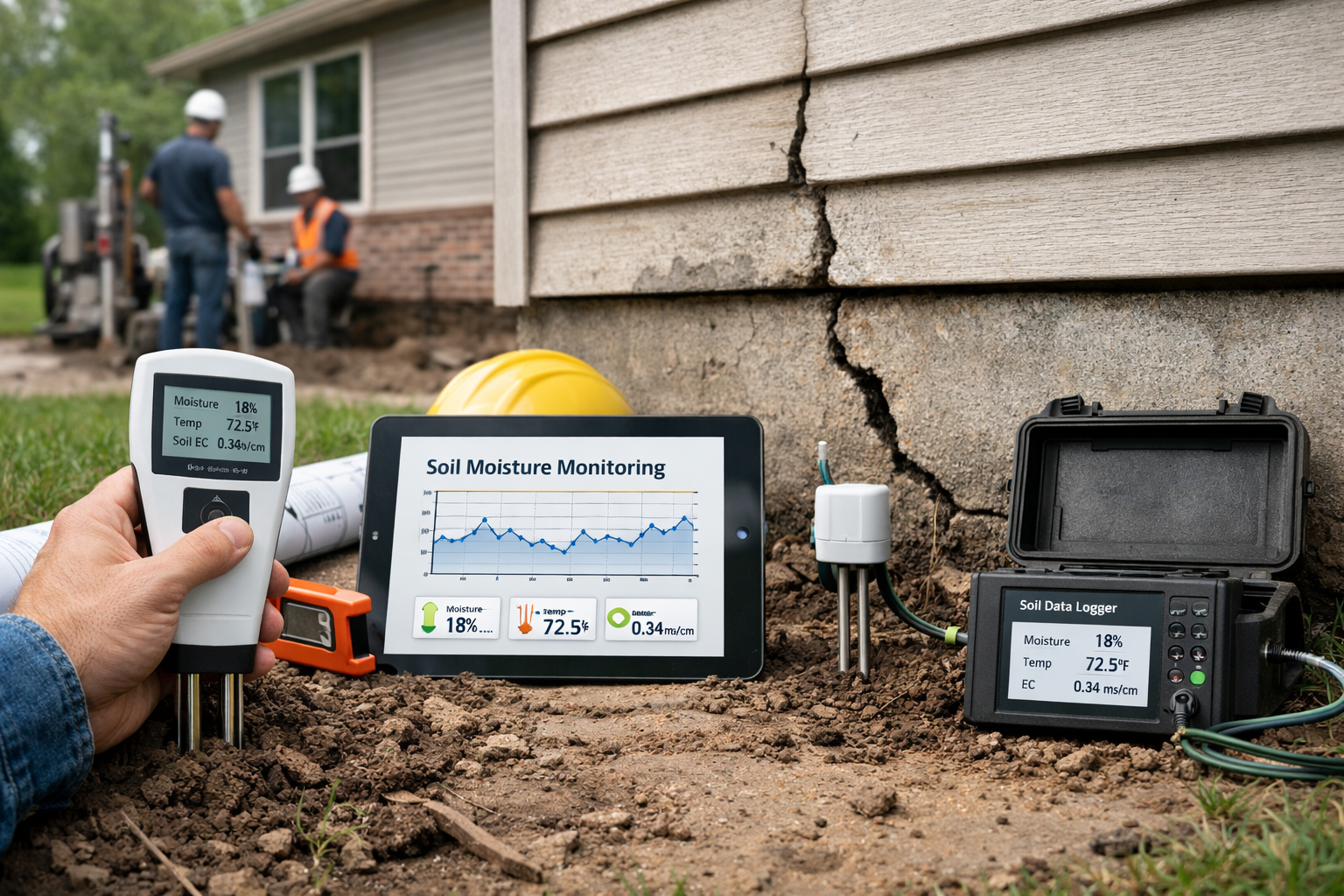
Foundation movement is often driven by changes in soil moisture, especially in clay-rich ground that swells when wet and shrinks when dry. Many homeowners see cracks, sticking doors, or uneven floors and assume the next step is structural work. Soil moisture monitoring can slow the process by showing whether the ground is shifting due to seasonal moisture swings, poor drainage, irrigation leaks, or localized dry zones caused by trees. When you measure moisture consistently around the home, patterns become visible. You can see which sides of the foundation stay wet, which corners dry out first, and how quickly the soil responds to storms or heat waves. That information supports smarter repair planning by separating one-time settlement from ongoing differential movement. It also helps you test mitigation steps before committing to major work. If moisture control reduces movement, repairs can be smaller and more targeted. If the data shows a persistent imbalance, you have a stronger justification for stabilization and a clearer way to verify results afterward.
Turning readings into a plan
- Where to monitor and what readings reveal
Soil moisture monitoring works when it captures the variability around a foundation rather than averaging it away. Moisture rarely changes evenly across a home because sun exposure, roof runoff, grading, landscaping, and irrigation create wet and dry zones. A practical layout places monitoring points on all sides, with extra attention at corners where differential movement is more likely to occur. Many homeowners measure at consistent distances from the foundation, such as a near zone near the perimeter and a farther zone near the drip line, where soils may behave differently. Depth matters too. Shallow soil responds quickly to rain and evaporation, while deeper soil changes more slowly and can influence long-term support under footings or slabs. Even simple tools, such as a handheld probe, can reveal that one side remains saturated after storms, while the other dries rapidly in summer. That imbalance often shows up in interior symptoms, such as diagonal cracks near a corner or a door that sticks more in one season. Monitoring also helps detect hidden causes. A consistently wet area near one wall may indicate a downspout discharge problem or a slow plumbing leak, while a consistently dry strip near a large tree may indicate root-driven moisture extraction.
- Setting baselines and tracking changes over time
The value of monitoring comes from trends, not from single readings. Start by establishing a baseline for at least a few weeks, ideally capturing a weather event such as a heavy rain followed by a dry stretch. Record readings on a simple schedule, such as two or three times per week, then increase frequency during major weather swings—consistency matters. Take readings at the same locations and similar times of day, because midday heat can influence surface moisture. Pair the readings with notes about rainfall, irrigation schedules, and visible drainage behavior, such as puddling near the foundation. If you already have cracking or door issues, add a simple symptom log: measure crack width with a paper gauge and note when doors bind. Over time, you may see that certain cracks widen after heavy rain and narrow during dry spells, which suggests heave-and-shrink behavior rather than steady settlement. Many homeowners working with AAA Foundation Service use this type of logging to determine whether moisture control should be addressed first, because a stable moisture profile can reduce movement and make later structural work more predictable.
- Using moisture data to guide drainage and watering corrections
Soil moisture monitoring is most useful when it helps you correct the drivers of imbalance. If one side of the house stays wet, the first steps are often water management: extend downspouts, clear gutters, regrade to slope water away, and address hardscape that sheds water toward the foundation. If another side stays too dry during hot months, controlled watering may reduce shrinkage in expansive soils, but it must be applied evenly to avoid creating a wet corner that heaves. Monitoring helps because it shows whether watering is achieving consistency or accidentally worsening the difference between zones. Irrigation systems are a common culprit. A broken head or a misaligned spray can soak one foundation wall while the other side stays dry, causing alternating heave and settlement. With moisture readings, you can test changes such as adjusting sprinkler arcs, moving emitters farther from the wall, or splitting zones so each side receives an appropriate amount. This approach turns moisture control into a measured process rather than guesswork. The goal is not to keep soil permanently wet, but to reduce abrupt swings and maintain a more uniform support condition around the perimeter.
Using moisture monitoring for smarter repair outcomes
Soil moisture monitoring helps foundation repair planning by making soil behavior visible, measurable, and easier to manage. By tracking moisture on all sides of a home, you can identify wet and dry zones that drive differential movement and connect those patterns to symptoms such as cracked and sticking doors. Establishing a baseline and logging readings through weather swings turns foundation concerns into clearer trends rather than uncertain guesses. The same data can guide drainage fixes, downspout extensions, irrigation corrections, and controlled watering strategies to keep soil conditions more uniform. When moisture is stable, but movement continues, monitoring supports the decision to pursue structural stabilization and helps target repairs to the most affected areas. After any repair, continued monitoring verifies that conditions remain balanced and reduces the risk of repeated seasonal stress. With steady measurement habits and gradual adjustments, homeowners can plan foundation work with greater confidence, reduce unnecessary interventions, and protect the structure by addressing the soil conditions that often drive movement in the first place.