
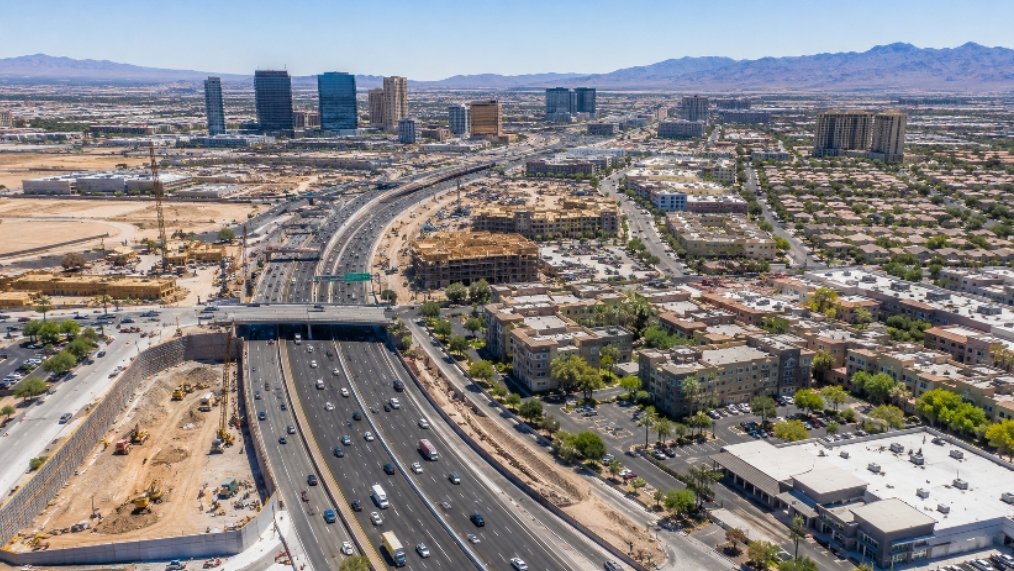
Las Vegas has never really stopped growing. What started as a desert outpost has turned into one of the busiest metro areas in the country, drawing in newcomers, remote workers, retirees, and families who are all drawn by its relatively low cost of living and tax-friendly environment. But with that growth come some very real, everyday challenges that residents have to navigate.
Roads get more congested. New neighborhoods push farther into the desert. Commutes get longer. And the cost of owning and driving a car shifts alongside everything else. For anyone living here or considering a move, understanding how the city is changing is more practical than it might seem.
How Fast Is Las Vegas Actually Growing?
The numbers tell a clear story. According to U.S. Census Bureau data, the Las Vegas metro area had close to 2.4 million residents as of 2024, up more than 5 percent from 2020. That represents roughly 123,000 additional people in just four years. North Las Vegas saw some of the sharpest growth in the region, with its population rising by over 12 percent during that same period.
Clark County has consistently ranked among the fastest-growing counties in Nevada and remains one of the more active growth corridors in the western United States. Much of this is driven by people relocating from California, seeking more affordable housing and no state income tax. Add to that a growing tech and healthcare sector, and it becomes clear this is not a passing trend.
Roads, Highways, and the Pressure to Keep Up
More people means more vehicles on the road, and Las Vegas infrastructure has been playing catch-up for years. The Nevada Department of Transportation (NDOT) oversees highway planning and maintenance across the state, including its busiest district centered in Las Vegas. Their District 1 transportation planning resources offer insight into ongoing and upcoming projects designed to ease traffic on major corridors.
Stretches of the 215 Beltway, Interstate 15, and US-95 have all seen significant investment in recent years. New interchanges, widened lanes, and improved on-ramps are part of a broader effort to keep pace with population demand. Summerlin, Henderson, and North Las Vegas have also seen major road construction tied to new master-planned communities pushing into previously undeveloped land.
Even with these improvements, peak-hour congestion remains a daily reality for most residents. Those who commute from newer suburbs into the urban core often face long stretches of stop-and-go traffic, which creates additional wear on vehicles and, for many drivers, a closer look at what their auto coverage actually protects.
New Housing, New Neighborhoods, New Driving Patterns
One of the most visible effects of population growth is the rapid expansion of residential neighborhoods. Areas like Skye Canyon, Inspirada, and Cadence are relatively new communities that did not exist a decade ago. Residents in these neighborhoods often drive longer distances for work, school, and errands, simply because services have not yet caught up with the housing.
That shift in driving patterns matters when it comes to auto insurance. Longer daily mileage, unfamiliar roads, and higher-traffic areas can all affect risk levels. For people moving to Las Vegas from smaller cities or states with different insurance requirements, it helps to research what local coverage options look like before getting behind the wheel here. Drivers looking for cheap coverage in Las Vegas often find that rates vary quite a bit depending on which part of the valley they live in and how far they commute.
What Infrastructure Investment Actually Looks Like Day to Day
Beyond highways, the city has been expanding public transit options, building out bike paths, and investing in pedestrian infrastructure. The Regional Transportation Commission of Southern Nevada (RTC) has expanded bus rapid transit routes and studied light rail options as congestion worsens.
Water infrastructure is also a priority given the desert environment. The Southern Nevada Water Authority has pushed major conservation programs as the metro area grows, recycling nearly all indoor water back into the system. It is a quietly impressive operation that most new residents do not think about until someone brings it up.
For drivers, road construction is an almost constant backdrop. New traffic signals, updated lane markings, and changing speed zones are all part of living in a city that is still building itself. Being familiar with NDOT updates and keeping insurance current matters more than ever in a city where road conditions change frequently.
Car Insurance in a Growing City
Nevada requires all drivers to carry minimum liability coverage, but minimum coverage does not go far in a serious accident. With more cars on the road and more unfamiliar drivers navigating new streets, accidents happen at higher rates in rapidly growing urban areas.
Credit history is one factor that can push insurance rates up for some drivers, which catches people off guard when they are already stretched by a recent move. There are options specifically designed for drivers dealing with this situation. Understanding cheap car insurance for bad credit can help drivers in Las Vegas find coverage that fits their budget without leaving them underprotected.
Another thing worth knowing: some drivers who move here from other states may need temporary coverage while sorting out Nevada registration. The state has specific requirements around the timeline for updating your insurance and registration after establishing residency, and gaps in coverage can lead to fines or complications after an accident.
What to Expect Going Forward
Population projections suggest the Las Vegas metro area could approach 3.3 million residents by the early 2040s. That would represent one of the largest regional growth rates in the country over a 30-year span. Schools, hospitals, utilities, and roads will all need to expand to match that growth.
For current and future residents, the takeaway is fairly simple: Las Vegas is a city in motion. Infrastructure will keep improving, but the pace of growth tends to outrun it in the short term. Staying informed about road changes, understanding your driving habits in the context of a growing valley, and keeping your auto insurance up to date are the kinds of practical steps that make everyday life here a little smoother.
The city that never sleeps is also, apparently, the city that never stops building. That energy is part of the appeal. It just helps to go in with both eyes open.
