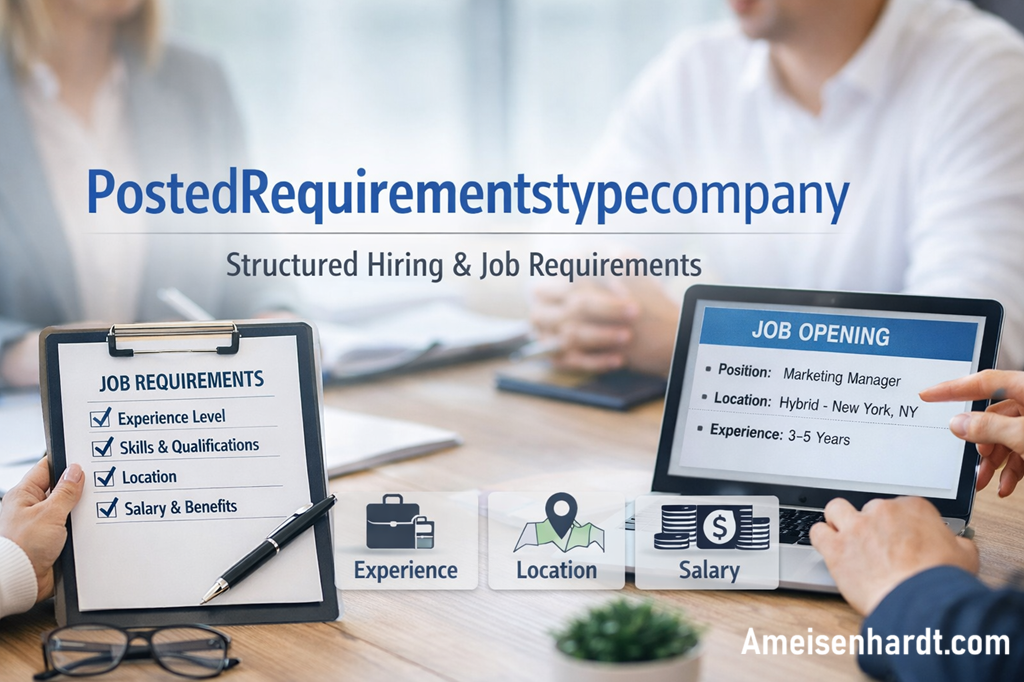
PostedRequirementstypecompany refers to a structured way companies describe and publish their hiring needs and job expectations. It works as a framework that helps organizations clearly communicate what skills, experience, and responsibilities they need from candidates.
This approach connects business planning and recruitment, so companies can hire the right people at the right time. Instead of posting simple job ads, organizations use structured requirements that include role details, skills, work conditions, and salary information.
Companies often use this method on professional platforms and hiring portals where job requirements appear in standardized formats. Because of this structure, job seekers can easily compare roles and understand expectations before applying.
Key purposes include:
- Clear communication of job expectations
- Better alignment between hiring and business goals
- Faster recruitment decisions
- Improved candidate matching
- Transparent job information
In simple terms, PostedRequirementstypecompany helps businesses organize hiring requirements and helps candidates understand job roles clearly.
Understanding PostedRequirementstypecompany in Simple Words
PostedRequirementstypecompany is not a single company or software. Instead, it describes a systematic method companies use to post job requirements in a structured format.
Traditional job postings often look different from one company to another. However, structured requirements follow similar patterns so applicants can quickly find key details.
For example, a structured requirement usually includes:
- Job title
- Responsibilities
- Required skills
- Experience level
- Work location
- Salary range
- Benefits
- Application steps
Because the information follows a clear structure, candidates can decide quickly whether the role fits their goals.
Why Businesses Use PostedRequirementstypecompany
Modern companies need efficient hiring processes. As businesses grow, recruitment becomes more complex. A structured requirement system helps reduce confusion and saves time.
Main Benefits for Companies
1. Clear Hiring Communication
Companies describe roles in a consistent way. As a result, candidates understand what the job involves before applying.
This reduces unsuitable applications and improves hiring quality.
2. Better Planning
Businesses can connect hiring needs with long term goals.
For example:
- Expansion into new markets
- Launching new products
- Growing technical teams
- Replacing key staff
Because of structured requirements, managers know exactly what type of talent they need.
3. Faster Recruitment
Recruiters work more efficiently when job details follow a standard format.
Therefore, they can:
- Screen candidates faster
- Compare applicants easily
- Make decisions quickly
4. Professional Presentation
Structured requirements make job postings look professional and trustworthy.
Candidates often prefer roles with clear information.
Core Elements of PostedRequirementstypecompany
Most structured requirements follow similar categories.
Basic Job Information
| Element | Description |
|---|---|
| Job Title | Name of the position |
| Department | Business unit or team |
| Employment Type | Full time or part time |
| Job Purpose | Main reason for the role |
These details help candidates understand the position quickly.
Experience Level Categories
Companies often define experience levels clearly.
Common levels include:
- Entry level positions for beginners
- Mid level positions for experienced workers
- Senior level positions for experts
- Leadership roles for managers
Because of this classification, candidates can easily identify suitable roles.
Work Location Types
Modern job postings often specify where employees will work.
Common location types include:
- On site jobs at company offices
- Remote jobs from home
- Hybrid jobs combining both
Location details help applicants plan their work style.
Skills and Qualifications
This section explains what the company expects from candidates.
Typical requirements include:
- Education level
- Technical skills
- Professional certifications
- Industry experience
- Soft skills
Clear skills requirements help candidates prepare stronger applications.
Compensation and Benefits
Structured requirements usually include compensation details.
Typical information includes:
- Salary range
- Bonuses
- Health benefits
- Paid leave
- Retirement plans
Salary transparency builds trust between employers and applicants.
How PostedRequirementstypecompany Works in Real Hiring
Modern recruitment platforms use structured formats that match this framework.
Companies fill structured fields when creating job posts.
Typical workflow:
- Company identifies hiring need
- Managers define job requirements
- Recruiters structure the information
- Job requirements are published
- Candidates apply
- Recruiters review applications
Because each step follows a clear structure, hiring becomes more predictable.
Connection Between Business Strategy and Hiring
One important feature of PostedRequirementstypecompany is strategic alignment.
Companies hire employees based on business goals.
For example:
| Business Goal | Hiring Need |
|---|---|
| Build software product | Software developers |
| Expand marketing | Marketing specialists |
| Improve operations | Operations managers |
| Enter new region | Local sales staff |
Structured requirements help connect these goals with real hiring decisions.
PostedRequirementstypecompany as a Business Model
Some organizations use posted requirements as part of their business operations.
These companies:
- Collect hiring requirements
- Process job needs
- Publish structured listings
- Match candidates
- Support recruitment workflows
This model appears in:
- Recruitment agencies
- Hiring platforms
- Talent marketplaces
- Outsourcing companies
Because requirements are standardized, these services operate more efficiently.
Examples of Structured Posted Requirements
A typical structured job requirement might include:
Example: Marketing Specialist
Role Overview
- Manage marketing campaigns
- Analyze customer data
- Improve brand awareness
Requirements
- Two to five years experience
- Digital marketing skills
- Communication ability
Work Type
- Hybrid position
Compensation
- Salary range listed
- Performance bonuses
This structure allows candidates to understand the role quickly.
Where PostedRequirementstypecompany is Commonly Used
Structured requirement frameworks appear in many hiring environments.
Professional Job Platforms
Job platforms often require structured information.
Typical categories include:
- Experience level
- Job function
- Industry
- Skills
- Location
Because of these fields, job listings remain consistent.
Corporate Career Pages
Large companies use structured templates on their websites.
These pages often include:
- Role description
- Required skills
- Benefits
- Application process
This improves the candidate experience.
Recruitment Agencies
Agencies use structured requirements to match candidates with employers.
As a result:
- Matching becomes faster
- Candidate quality improves
- Hiring costs decrease
How Job Seekers Can Use PostedRequirementstypecompany
Understanding structured job requirements helps candidates apply smarter.
Read Requirements Carefully
Candidates should focus on:
- Required skills
- Experience level
- Job responsibilities
This helps avoid unsuitable applications.
Match Skills to Requirements
Applicants should highlight matching skills.
For example:
- Work experience
- Certifications
- Technical skills
This improves application success.
Compare Job Opportunities
Structured listings make comparison easier.
Candidates can compare:
- Salary
- Location
- Experience level
- Benefits
Therefore, they can choose better opportunities.
Professional Events and Structured Hiring
Career events often use structured hiring frameworks.
For example, workshops and career fairs allow companies to present clear requirements to candidates.
These events help job seekers:
- Understand employer expectations
- Meet recruiters
- Learn industry standards
Because of direct interaction, candidates gain useful insights.
Advantages and Limitations
Advantages
- Clear job expectations
- Better hiring accuracy
- Faster recruitment
- Improved transparency
- Professional job listings
Limitations
Although useful, structured requirements have some limits.
- Some roles require flexible descriptions
- Creative jobs may not fit strict formats
- Requirements can become outdated
- Over structured postings may reduce personalization
Companies should balance structure and flexibility.
Future of PostedRequirementstypecompany
Structured hiring continues to grow as recruitment becomes more digital.
Future trends may include:
- AI assisted job matching
- Skills based hiring
- Automated job descriptions
- Data driven recruitment
As hiring tools improve, structured requirements will likely become more common.
PostedRequirementstypecompany vs Traditional Job Postings
| Feature | Structured Requirements | Traditional Job Posts |
|---|---|---|
| Format | Standardized | Different formats |
| Clarity | High | Often unclear |
| Comparison | Easy | Difficult |
| Screening | Faster | Slower |
| Transparency | Strong | Limited |
Structured requirements provide a clearer hiring process.
Conclusion
PostedRequirementstypecompany represents a modern structured approach to hiring communication. It helps companies clearly publish job requirements while helping candidates understand roles quickly.
By connecting business goals with recruitment planning, structured requirements improve hiring efficiency and transparency.
As digital recruitment continues to grow, structured job requirements will likely remain an important part of modern hiring systems.
Stay informed with Ameisenhardt guides.