
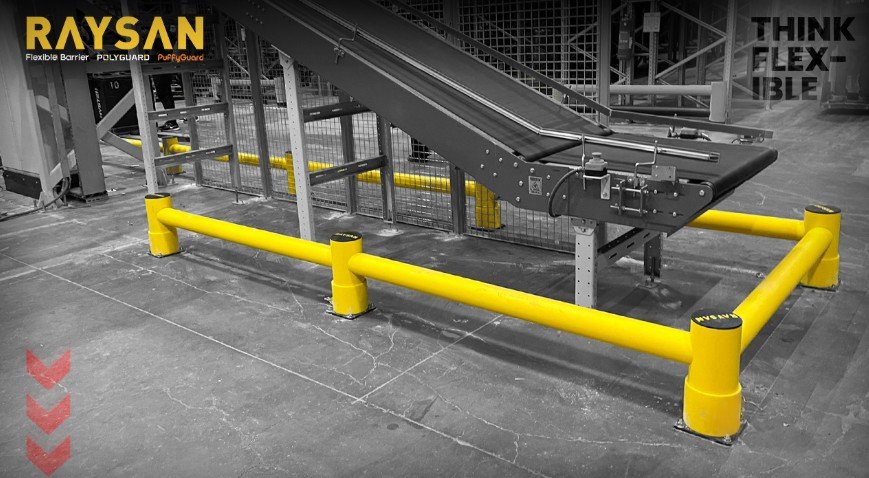
In busy warehouses and production sites, movement is constant. Forklifts pass through aisles, goods are transferred between zones, and employees move from one work area to another throughout the day. When all of this happens in the same shared space without clear physical guidance, small mistakes can quickly turn into serious safety issues. For that reason, many facilities now look beyond warning signs and floor markings, focusing instead on structural systems that help organize movement in a practical and visible way.
This is where Raysan becomes relevant in industrial planning. In environments where both people and vehicles need to move efficiently, the right protective layout can reduce confusion, support safer habits, and help the site operate with fewer avoidable disruptions.
Why movement control matters in industrial areas
A large percentage of workplace incidents happen in spaces where routes overlap. Corners, loading points, temporary staging zones, and aisle crossings often become the most sensitive areas in a facility. In these locations, speed, limited visibility, and repeated traffic create conditions where risk builds naturally unless the layout actively controls it.
The most effective safety strategies are usually the ones built directly into the site plan. When facilities define where people should walk and where vehicles should operate, daily routines become easier to follow. Instead of depending only on reminders, the environment itself starts guiding behavior.
Creating more reliable routes for people on site
In facilities with regular forklift activity, one of the most important goals is keeping foot traffic predictable. A pedestrian barrier helps create this predictability by forming a visible and physical boundary between people and moving equipment. That kind of separation makes walkways easier to respect and reduces the likelihood of sudden crossings in active vehicle lanes.
Well-defined pedestrian routing also improves orientation for contractors, visitors, and newly trained staff. When movement paths are obvious, people spend less time guessing where it is safe to walk, and operators can work with more confidence in shared environments.
Protecting infrastructure from routine impact
Even in well-managed facilities, contact events can still happen. Tight turns, limited clearance, and fast-paced handling create pressure points throughout the site. That is why a safety barrier is not only a protective feature but also a practical operational tool. By shielding racks, machinery, wall edges, and structural columns, it helps limit the consequences of impact before they develop into repairs, downtime, or broader workflow interruptions.
Barrier systems used for impact control support site stability over the long term. They help preserve valuable assets, reduce maintenance issues, and make it easier for teams to maintain normal operations during high-activity periods.
A more resilient approach to workplace safety
Facilities tend to perform better when pedestrian protection and infrastructure protection are considered together rather than separately. When people have clear routes and critical assets are shielded from vehicle strikes, the environment becomes easier to navigate and safer to manage under pressure.
Over time, that kind of planning supports more than compliance. It contributes to smoother workflows, better spatial discipline, and a stronger sense of control across the site. In industrial settings where movement defines the rhythm of the day, physical separation and impact planning are often the difference between reactive safety and proactive safety.
