
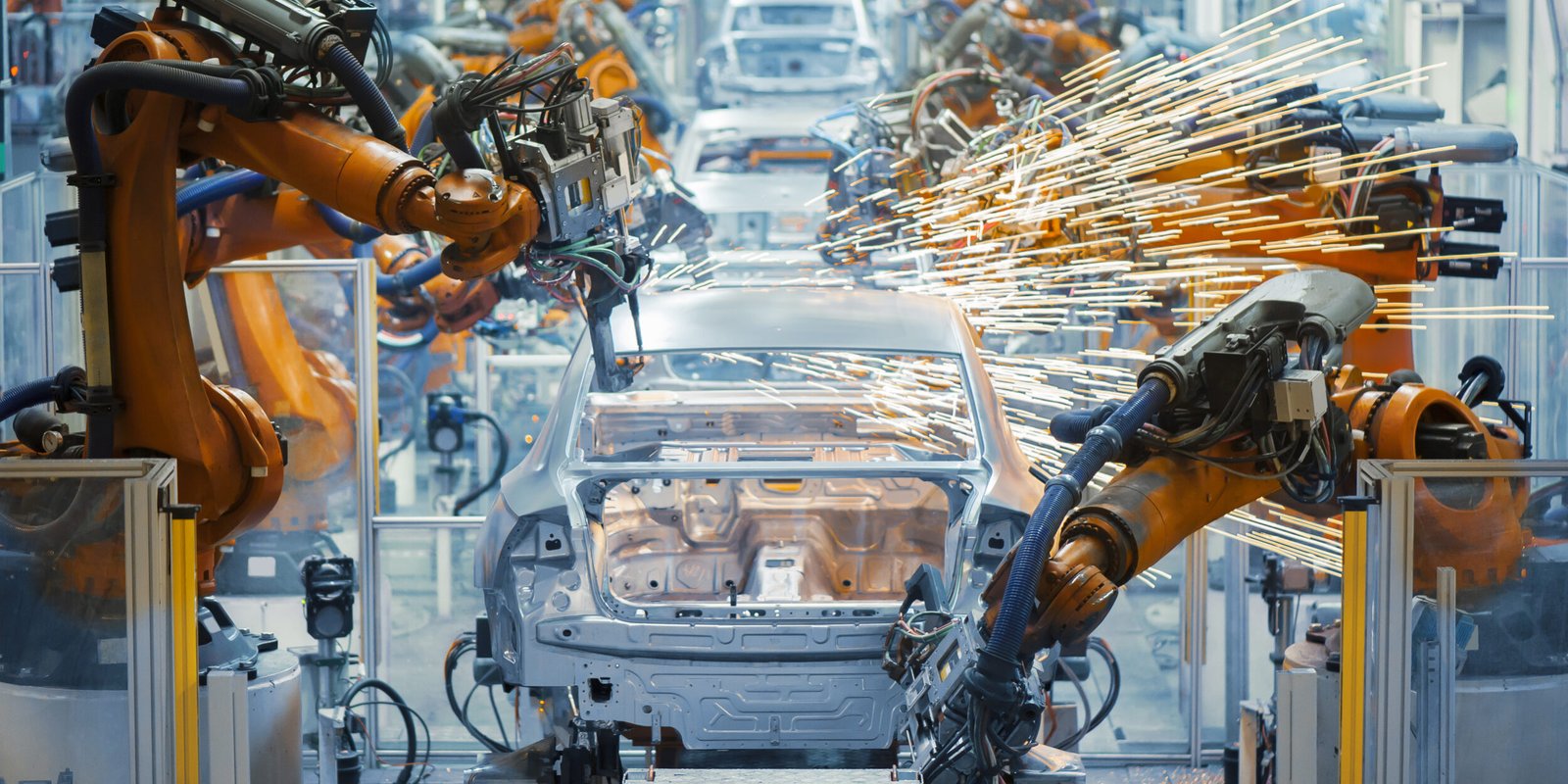
The fabricated world has long since outgrown mere automation. The modern robotic welding machines are smart, networked, and more collaborative. What used to be hard-coded is now dynamically organized and talks to detectors and quality control software, and even human beings. The automotive and structural steel industries that are undergoing this shift are the ones that are concerned with precision and efficiency as fundamental factors. This post discusses how the current robotic welding systems are redefining manufacturing through smarter integration.
1. The History of Fixed Automation to Adaptive Intelligence.
Simple early robotic welding systems were tracked on fixed paths- when a component was moved, quality was compromised. The current systems install adaptive technologies such as seam tracking and laser vision. These sensors measure the differences in the position of the joints and modify the weld path in real time to produce flawless pieces with flawed components. This ensures that hard automation has been successfully replaced by intelligent adaptability, which has reduced the rate of rework and ensured that high mix low volume production is now economically viable to both automotive and fabricators of structural steel.
2. Collaborative Robots: Humans Work with Robots.
The emergence of collaborative robots, also known as cobots, is one of the most thrilling trends in robotics welding systems. Cobots are safe to work with human welders, unlike traditional industrial robots, which need safety cages. They deal with repetitive, ergonomically demanding jobs, as operators work on complicated arrangements and quality inspections. This productivity synergy does not replace skilled workers, and thus, robotic welding systems can be made available to small and medium-sized fabrication shops.
3. Predictive Maintenance and Real-Time Monitoring.
The modern robotic welding machines are fitted with a set of various sensors that constantly monitor the values of such parameters as voltage, current, speed of wire feed, and angle of the torch. This information is processed into cloud-based analytics that identify anomalies prior to the creation of defects. Predictive maintenance algorithms give an operator a warning of an associated problem, like contact tips that wear out, long before a breakdown strikes. These intelligent robotic welding machines provide quantifiable reliability and throughput improvements to industries that depend on production uptime.
4. Effortless Co-location with Digital Manufacturing.
The present-day robotics welding systems are no longer isolated. They are completely embedded in the digital manufacturing system, which is connected with CAD software, enterprise resource planning systems, and quality management platforms. Offline programming gives engineers the ability to simulate and optimise weld sequences before a single arc is struck. Such kind of integration minimizes the time required to set up the systems, speeds up the changeover process, and makes robotic weld systems part of an efficient, paperless manufacturing process.
5. Motivating Productivity in Major Sectors.
Robotic welding systems have been used in automotive manufacturing since it is critical in high body-in-white assembly at high speed. They also allow the flexible production of the components of electric vehicles, now with smart integration. Structural steel construction, used in the fabrication of advanced robotic welding machines, involves complex beams and columns that are welded with high quality and minimize on-site repair, which is costly. In both industries, the development of smarter and connected systems is equivalent to increased first-pass yields, reduced energy usage, and shortened time-to-market.
The development of robotic welding equipment into mere automation efforts and intelligent combined systems is redefining the potential of accurate manufacturing. Through the adoption of collaborative robots, real-time monitoring and digital integration, industries such as automotive and structural steel are attaining new efficiency and quality.
