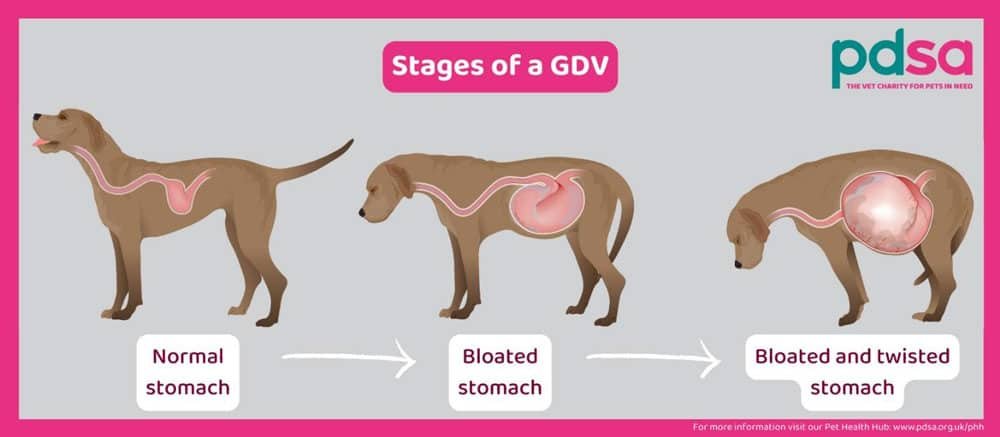
Canine bloat doesn’t get nearly as much attention as it deserves, especially considering how fast it can escalate. It’s one of those health topics that tends to get glossed over until something goes wrong, and that’s a problem. Dog parents who understand the basics are in a much better position to respond quickly, and that speed genuinely matters here.
Recognizing dog bloat symptoms early can be the difference between a routine vet visit and a life-threatening emergency. A distended abdomen, unsuccessful attempts to vomit, restlessness, excessive drooling, and visible signs of pain are the most common signals. Dogs experiencing bloat may also seem unusually anxious, pace without settling, or adopt a hunched posture. None of these should be monitored at home for extended periods.
What’s Actually Happening Inside
The clinical term is gastric dilatation-volvulus, commonly called GDV. The stomach fills with gas and, in more serious cases, rotates on its axis. That rotation cuts off blood supply to surrounding tissue and can compress major blood vessels. The condition progresses fast, and without veterinary intervention, it can be fatal within hours.
According to the American Kennel Club, GDV ranks among the most serious emergencies in veterinary medicine. Large and giant breeds with deep chests, like Great Danes, Saint Bernards, and Standard Poodles, face a statistically higher risk, though the condition isn’t exclusive to any size or breed.
The Role of Gut Health
This is where a lot of dog parents get tripped up. Bloat and general digestive discomfort share some overlap in their contributing factors, but they’re not the same condition. While gut health doesn’t prevent bloat, maintaining digestive balance supports overall gastrointestinal function.
Poor digestion, inconsistent stool quality, and excessive gas production are all signs that something in the gut isn’t functioning well. A microbiome that’s out of balance can contribute to fermentation of undigested food in the intestines, leading to gas accumulation that can cause digestive discomfort. Feeding practices matter too. Dogs that eat too fast or exercise immediately after large meals are at greater risk, according to most veterinary guidance on the subject. Breaking meals into smaller portions throughout the day may help reduce the volume of air a dog takes in while eating.
What Fiber and Digestive Support Actually Do
Fiber gets talked about constantly in the human wellness space, but it’s equally relevant for dogs. Soluble fiber slows digestion in a way that supports more consistent nutrient absorption. Insoluble fiber helps move waste through the digestive tract at a healthy pace. Together, they support stool consistency, reduce fermentation-related gas, and help the gut microbiome stay balanced.
Research published through the National Institutes of Health has highlighted the connection between dietary fiber, gut microbiota diversity, and overall digestive function across multiple species, dogs included. What a pup eats directly shapes the bacterial environment in their gut, which affects everything from stool quality to how much gas they produce.
Probiotic and prebiotic supplements formulated specifically for dogs may also help support a balanced microbiome over time. They’re not a treatment for bloat, but maintaining good digestive health as a daily practice gives the gut a better foundation to work from.
When to Go Straight to the Vet
No supplement, dietary adjustment, or home remedy addresses active bloat. If a dog is showing signs of gastric distension, failed attempts to vomit, or acute abdominal pain, that’s a veterinary emergency. There’s no watching and waiting on this one.
Dog parents who pay close attention to their pup’s normal baseline are best equipped to spot when something’s off. Regular attention to stool quality, eating habits, and energy levels creates the kind of context that makes changes easier to catch early. That awareness, paired with consistent daily nutrition, is the most practical thing any dog parent can do for their pup’s long-term health.