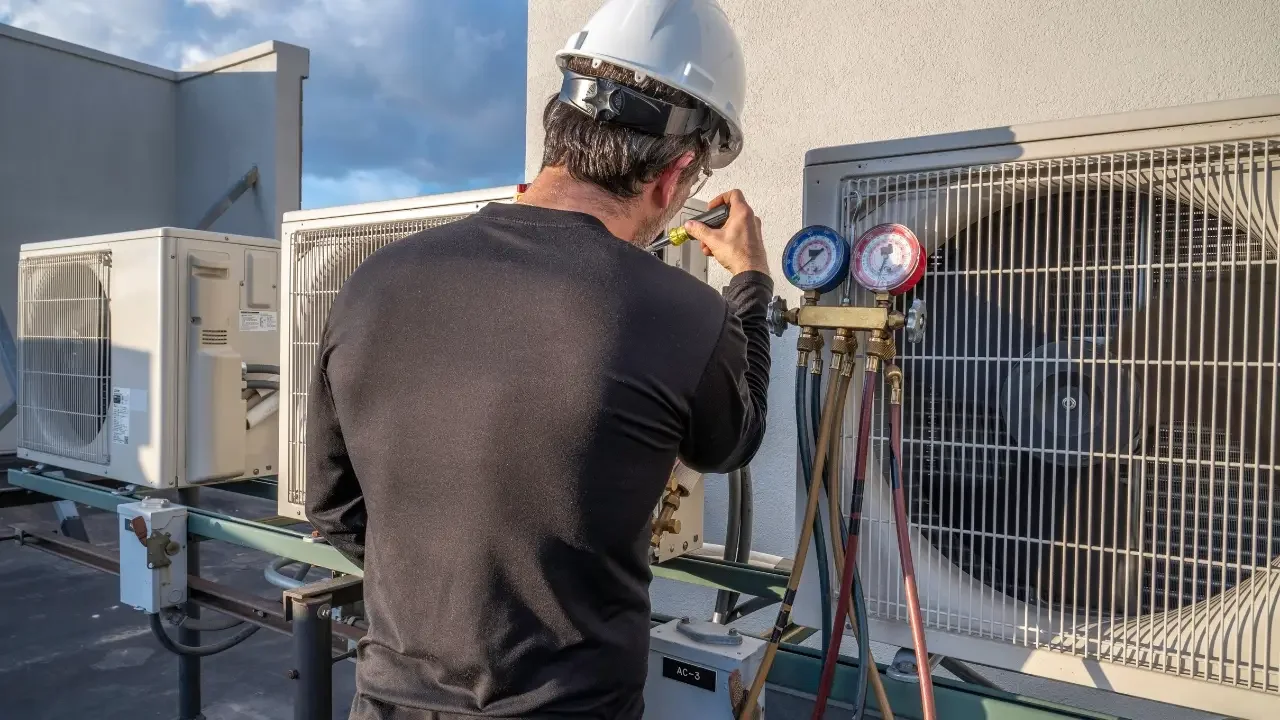
When homeowners think about HVAC performance, they often focus on output: how cold the air feels, how quickly the house warms up, or whether the unit sounds powerful when it turns on. Contractors think differently. They know comfort and efficiency come from balance—how evenly air moves through the home, how consistently temperatures hold across rooms, and how smoothly the system operates without strain. A high-output system can still leave one bedroom hot, another room drafty, and the humidity uncomfortable if airflow and pressure are not right. It can also burn more energy and wear down components faster if it encounters resistance in the ductwork or cycles too frequently. Balance means the system’s airflow, refrigerant behavior, duct design, and controls are working together so the equipment can do its job within safe limits. Contractors focus on balance because it addresses the root causes of comfort complaints, noisy operation, and rising utility bills, even when the equipment itself is functioning properly.
Comfort Comes From Balance
- Output Can Be Strong, Yet Comfort Still Feels Wrong
A system can produce very cold supply air and still fail to make the home feel comfortable. This happens when the air is not delivered where it is needed or when it is delivered unevenly. One floor may receive most of the airflow while another floor starves, leading to thermostat battles and constant adjustments. A system can also cool the air quickly but leave humidity high if it short-cycles, creating a clammy feeling even at the “right” temperature. Contractors see this often in homes with oversized equipment, restrictive duct runs, or poor return pathways. Output-focused thinking can push homeowners toward bigger units, but bigger units do not fix airflow imbalances; they often amplify them. If ducts are undersized, higher airflow demands raise static pressure, making the blower work harder and reducing actual delivered air. If returns are limited, pressure differences can keep conditioned air from reaching closed-door rooms. Contractors focus on diagnosing these distribution problems because comfort is not the temperature at one thermostat location; it is the lived experience in every room, during every season, without constant tweaking.
- Airflow and Pressure: The Quiet Drivers of Performance
System balance starts with airflow and pressure because these determine how effectively heating or cooling is delivered. HVAC equipment is designed to operate within a specific airflow range, and when airflow drops, performance suffers even if the system is technically “running.” High static pressure can come from dirty coils, restrictive filters, tight ductwork, or too many closed vents. It can lead to noisy airflow, weak supply at distant rooms, frozen evaporator coils, and overheating in heating mode. Contractors measure static pressure, check blower settings, and look at return pathways because pressure imbalances can cause air to “short-circuit” back to the return without circulating through the home properly. They may adjust dampers to balance supply, add returns, or recommend duct changes when the system’s delivery network is limiting performance. Homeowners searching for reliable solutions often hear about Barrie heating and cooling providers emphasizing airflow testing, because airflow is what turns equipment output into whole-home comfort. When air movement is balanced, the system runs steadier, feels quieter, and meets setpoints without forcing the equipment into stressful operating conditions.
- Refrigerant, Coil Temperatures, and Why Balance Prevents Strain
Balance is not only about ducts; it also includes how refrigerant and coils behave under real operating conditions. Airflow across the evaporator coil affects coil temperature. If airflow is too low, the coil can become excessively cold and freeze, reducing cooling and forcing the compressor into an unhealthy cycle. If airflow is too high for certain setups, temperature removal may feel weak, and comfort can suffer even when the system runs continuously. Contractors consider temperature split, line temperatures, and refrigerant pressures alongside airflow measurements, as these factors interact. A refrigerant charge that looks “close enough” in mild weather may cause issues under high heat if the condenser is dirty or airflow is restricted. Similarly, a home with duct leakage can reduce airflow at the coil and change refrigerant readings, making it easy to misdiagnose the problem if balance is ignored. By focusing on system balance—airflow, heat transfer, and refrigerant behavior—contractors reduce the risk of recurring breakdowns. This approach also protects compressors, blower motors, and heat exchangers from operating outside their intended ranges, a common cause of early system failure.
- Control Strategy: Longer, Smoother Cycles Beat Short Bursts
Many comfort complaints are tied to how the system cycles. Short, frequent bursts may feel powerful, but they often create uneven temperatures, higher humidity, and unnecessary wear. Balanced systems are designed to run steadier cycles that maintain comfort instead of constantly recovering from temperature swings. Contractors consider thermostat placement, staging settings, and equipment sizing because these influence cycling behavior. In multi-stage systems, incorrect staging can cause the system to jump to higher output too quickly, overshoot, and shut off, repeating the pattern all day. In older single-stage setups, oversized equipment can cool rapidly but stop before dehumidification is effective. Contractors may recommend control adjustments, airflow tuning, or equipment that better matches the home’s load so the system can run longer at a lower intensity. This is why balance matters more than raw output; comfort is usually better when the system maintains conditions gently rather than blasting and stopping. A stable cycle also reduces noise, prevents hot and cold spots, and lowers the likelihood of issues like coil freezing or heat exchanger limit trips.
- Room-by-Room Balance and the Real Meaning of “Comfort”
Whole-home comfort is built from room-level conditions. Contractors focus on balance because people do not live at the thermostat—they live in bedrooms, kitchens, offices, and living rooms, each with different sunlight, insulation, and occupancy. A home can be “at temperature” while specific rooms remain uncomfortable due to duct layout and pressure differences. Contractors evaluate supply delivery to each zone or room, confirm doors and returns allow air to circulate properly, and identify where air is being lost to attics or crawl spaces. They may recommend balancing dampers, additional returns, or duct sealing to improve distribution. In multi-story homes, they often address the stack effect, where warm air rises and creates temperature differences between floors. They may also evaluate attic insulation and leakage paths, as these affect how hard the HVAC system must work to maintain comfort in top-floor rooms. When room balance is corrected, homeowners often stop constantly adjusting thermostats, because the home feels consistent. That consistency is a stronger sign of HVAC success than any single measurement of supply air temperature.
- Efficiency and Equipment Life Improve When Balance Is Prioritized
Balanced systems typically use less energy and last longer because they operate with less stress. When airflow is correct and pressure is within safe limits, blowers draw less power and deliver more air. When coils stay clean and refrigerant behavior is stable, compressors run at safer pressures and temperatures. When cycling is smooth, components avoid repeated hard starts and thermal stress. Contractors focus on balance because it supports both comfort and long-term cost control. A homeowner might think output equals savings—cool faster, shut off sooner—but an inefficient balance often causes longer total runtime due to uneven delivery and repeated recovery cycles. It can also drive hidden costs through frequent repairs: replacing capacitors, blower motors, or contactors that fail under strain. Balance-centered service often includes commissioning steps that verify airflow, temperature rise or split, and static pressure after adjustments are made. This ensures the system is not just producing output, but producing it efficiently across the home. Over time, this approach reduces emergencies, stabilizes monthly bills, and makes comfort feel more predictable rather than fragile.
Balance Turns Equipment Into a Comfort System
HVAC contractors focus on system balance rather than output because output alone does not guarantee comfort, efficiency, or reliability. A system can blow cold or hot air and still struggle if airflow, pressure, duct distribution, refrigerant behavior, and controls are not aligned. Balance creates even room temperatures, steadier cycles, better humidity control, and quieter operation, while reducing strain on major components. It also helps homeowners avoid the cycle of constant thermostat changes, repeated repairs, and rising energy use that often results from chasing “more power” rather than better delivery. When balance is restored, the equipment can operate within safe ranges, and the home feels consistently comfortable across rooms and seasons. That is why contractors treat balance as the foundation—because it turns a machine that makes hot or cold air into a system that actually supports daily living.