Electric vehicles are rapidly becoming a common sight in office parking lots. What was once considered a niche technology has now moved firmly into the mainstream, and commercial buildings are beginning to adapt their infrastructure to support this shift.
Across major cities, office complexes are installing EV charging stations to meet growing demand from employees, tenants, and visitors who drive electric vehicles. For property managers and developers, EV charging is no longer viewed as an experimental upgrade. Instead, it is becoming a practical investment that improves building competitiveness, supports sustainability goals, and prepares workplaces for the future of transportation.
The global expansion of electric vehicles explains why this change is happening. According to the International Energy Agency, global EV sales exceeded 14 million vehicles in 2023 and continue to grow each year. As EV ownership increases, the need for convenient charging infrastructure grows alongside it.
Office complexes are uniquely positioned to support this demand because they provide something EV drivers need most: predictable parking time.
The Workplace Is One of the Most Practical Charging Locations
For the average EV owner, the charging patterns can be summarized as follows: EVs tend to charge at home overnight or for long periods during the day.
For the average employee, the workplace is an optimal location for charging an EV. Employees park their EVs for long periods, typically between six to nine hours, while they are at work.
The long parking hours ensure that the EV’s battery gets charged significantly through the working hours. Unlike fast charging stations along highways, the workplace does not require fast charging. Therefore, the charging infrastructure at the workplace is optimal for charging EVs.
Workplace charging stations can be regarded as an optimal charging environment for EVs. Employees can charge their EVs in the morning, which gets charged enough for the return commute home. Therefore, the workplace charging stations eliminate the need for charging stations, making the lives of EV owners easier.
From the building management’s point of view, the charging patterns for EVs are optimal. The charging infrastructure does not require the demand for electricity to surge at any one time.
EV Charging Is Becoming a Workplace Amenity
In the past, commercial buildings were always designed according to the changing needs of the workplace. For example, in the past, internet connectivity was one of the key aspects of the workplace. Later, gyms, working areas, and efficient lighting were added to commercial buildings.
Currently, the installation of EV chargers is following the same pattern.
Currently, employees who own electric vehicles consider the installation of EV chargers in the workplace one of the most important benefits. This is because the installation of EV chargers in the workplace provides employees with peace of mind during their working hours. This way, the employees do not need to spend time searching for EV chargers in the public domain. As more employees in the country own electric vehicles, the installation of EV chargers in the workplace is one of the key aspects of the workplace that employees consider. This is especially because the installation of EV chargers in the workplace will affect the perception of the employees about the workplace.
In addition, the installation of EV chargers in the workplace is one of the key aspects of the workplace for companies that value the environment.
Charging Infrastructure Can Increase Property Value
From a commercial real estate perspective, EV charging stations are becoming a differentiating feature in competitive leasing markets.
Modern tenants increasingly evaluate office buildings based on sustainability credentials and infrastructure readiness. Charging stations signal that a property is forward thinking and capable of supporting emerging transportation technologies.
For property owners, this perception can influence tenant attraction and retention. Businesses that encourage employees to drive electric vehicles often prefer office spaces equipped with charging infrastructure. In some cases, EV charging capabilities are included in leasing negotiations, particularly in technology sectors and environmentally focused industries.
Installing charging infrastructure can therefore improve the long term appeal of a commercial property.
Buildings that invest early may avoid the costly retrofits that will likely become necessary as EV adoption continues to expand.
Corporate Sustainability Goals Are Accelerating Adoption
Many companies have incorporated environmental goals into their business strategies. These strategies have included measures such as reducing carbon emissions, conserving energy, and adopting green transport.
The provision of EV charging points at work is an important contribution to these strategies.
By providing employees with access to EV charging points, companies can increase their chances of convincing their employees to purchase an EV. This is because, by removing this barrier, employees will find it easier to purchase an EV, thereby contributing to their adoption by other commuters.
As companies focus on becoming more environmentally friendly, changes to commercial buildings have reflected this.
Government Incentives Are Supporting Workplace Charging
Public policy is another factor influencing the rapid expansion of EV charging infrastructure.
Many governments are introducing incentives designed to accelerate the deployment of charging networks. These programs frequently include tax credits, grants, or rebates that reduce the cost of installing EV charging equipment in commercial buildings.
Some regions are also updating building codes to require new developments to include EV ready parking spaces. These policies aim to ensure that charging infrastructure grows at the same pace as electric vehicle adoption.
According to the International Energy Agency, government incentives have played a significant role in expanding charging networks worldwide. Public policy continues to influence how quickly commercial properties adopt EV infrastructure.
For office complexes considering EV charging installation, these incentives can significantly improve project feasibility.
Understanding the Electrical Infrastructure Behind EV Chargers
Installing EV charging stations in office complexes requires careful planning and electrical design.
Most workplace charging systems rely on Level 2 chargers, which operate at higher voltages than standard household outlets. These chargers provide a balance between charging speed and electrical efficiency, making them suitable for locations where vehicles remain parked for several hours.
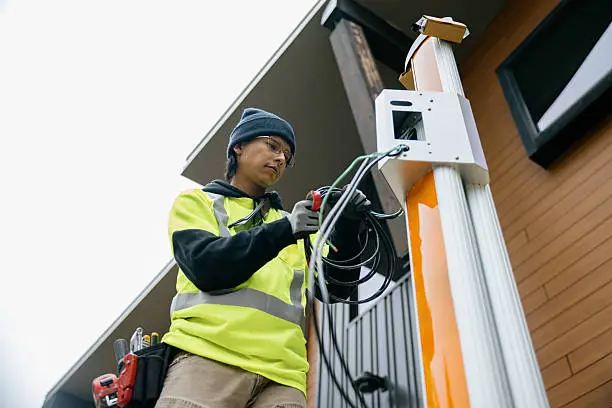
However, adding multiple chargers can place additional demand on a building’s electrical system. Before installation begins, electricians typically evaluate the existing electrical capacity to determine if upgrades are required.
This assessment may include reviewing:
- transformer capacity
- switchboard load availability
- electrical distribution systems
- parking layout and wiring routes
In some cases, buildings may require electrical upgrades before supporting large charging networks. Installing load management systems can also help distribute electricity efficiently across multiple chargers.
These systems monitor electricity usage and automatically adjust charging speeds to prevent excessive demand on the building’s electrical infrastructure.
Planning Charging Infrastructure for Future Growth
One of the most important decisions property managers face when installing EV chargers is determining how much infrastructure to install initially.
EV adoption is expected to increase steadily over the coming years. As a result, demand for workplace charging will likely grow as more employees transition to electric vehicles.
To prepare for this future demand, many commercial developments install EV ready infrastructure during the initial installation phase. This may involve running conduit, wiring, or electrical capacity to additional parking spaces even if chargers are not installed immediately.
This strategy allows property managers to expand charging networks later without reopening walls or conducting major electrical upgrades.
Planning for scalability ensures that buildings remain adaptable as transportation technology continues to evolve.
What Businesses Should Consider Before Installing Chargers
While EV charging infrastructure offers many benefits, successful installations depend on careful planning.
Property owners typically evaluate several factors before moving forward with installation.
Electrical capacity is one of the most important considerations. Buildings must have sufficient electrical supply to support chargers without compromising other operations.
Parking design also matters. Chargers should be placed in locations that allow easy access for drivers while maintaining safe traffic flow within the parking area.
Businesses may also consider how chargers will be managed. Some systems allow property managers to set pricing structures, track electricity usage, or restrict charging access to employees and tenants.
Working with experienced commercial electricians helps ensure that installations comply with electrical regulations and operate safely within the building’s energy infrastructure.
The Future of Workplace EV Charging
As the world changes with the advent of electric vehicles, the face of the transportation network is also changing. And the commercial buildings of the world are changing to suit the new environment.
As the number of EV owners increases, the number of charging stations in office buildings is expected to become as ubiquitous as bike parking stations or green lighting systems. Office buildings that invest in charging stations today are preparing for the future of transportation.
For office buildings, EV charging stations are more than just the latest technology. It’s the latest paradigm for the changing relationship between the workplace, the changing nature of energy consumption, and the new face of the modern commute.
The parking lot of the office building is no longer just a parking lot. It’s becoming the new face of the energy network that powers the future of the commute.