
Efficient fertilizer production is critical for modern agriculture, helping farmers improve crop yields, maintain soil health, and support sustainable farming. Two essential components in this industry are bentonite granules and NPK compound fertilizers. Advanced machinery such as a bentonite granules making machine and an NPK compound fertilizer granulation production line allows manufacturers to produce high-quality fertilizers efficiently, ensuring consistent nutrient delivery and scalable operations.
This article explores the features, benefits, and applications of these technologies, demonstrating why they are vital for fertilizer manufacturers.
Bentonite Granules Making Machine: Producing High-Quality Soil Amendment
What Are Bentonite Granules?
Bentonite is a natural clay known for its high absorbency and binding properties. In fertilizer production, bentonite acts as a granulating agent, helping powdered materials stick together to form uniform granules. Granulated bentonite improves soil structure, water retention, and nutrient delivery.
How a Bentonite Granules Making Machine Works
- Raw Material Preparation
Bentonite powder is collected and prepared to remove impurities. Moisture content is adjusted to optimize granulation. - Granulation
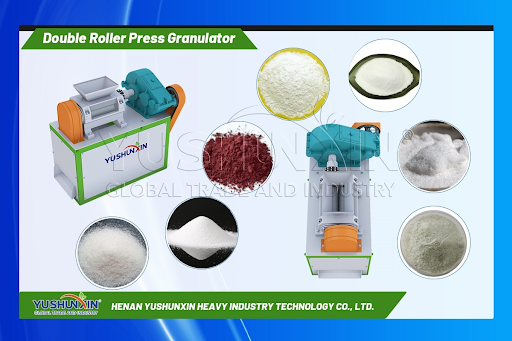
The prepared bentonite powder is fed into a bentonite granules making machine, which compresses the material into uniform granules. The machine uses advanced rollers or discs to shape and densify the granules. - Drying and Cooling
Granules are dried to remove excess moisture and cooled to maintain structural integrity. Proper drying ensures the granules remain hard and durable during storage and application. - Screening and Packaging
Finished granules are screened for size consistency. Oversized or undersized granules are recycled into the process. The final product is then packaged for use in fertilizer production or direct soil amendment.
Advantages of Using a Bentonite Granules Making Machine
- Uniform Granules: Ensures consistent size and density for optimal fertilizer blending.
- Efficient Production: Reduces labor and improves production speed.
- Cost-Effective: Uses bentonite efficiently and minimizes waste.
- Environmental Benefits: Reduces dust and ensures cleaner handling.
- Scalable: Suitable for small, medium, or large fertilizer plants.
By using a bentonite granules making machine, manufacturers can improve product quality while maintaining cost efficiency.
NPK Compound Fertilizer Granulation Production Line: Producing Balanced Fertilizers
What Is an NPK Compound Fertilizer Production Line?
An NPK compound fertilizer granulation production line is a complete system designed to produce nitrogen (N), phosphorus (P), and potassium (K) fertilizers. These macro-nutrients are essential for plant growth, contributing to root development, flowering, and fruiting.
Workflow of NPK Fertilizer Granulation
- Raw Material Blending
Fertilizer-grade urea, ammonium phosphate, potassium chloride, and other materials are crushed and mixed in precise ratios to ensure balanced nutrition. - Granulation
Blended powders are fed into a granulator, producing uniform granules. Granulation ensures dust-free, high-quality NPK fertilizer that is easy to store and apply. - Drying and Cooling
Granules are dried to remove moisture and cooled to stabilize structure, ensuring durability during transport and storage. - Screening and Packaging
Granules are screened for uniform size, with off-size granules recycled. Finished NPK fertilizers are packaged for distribution to farmers, cooperatives, or retail outlets.
Benefits of an NPK Compound Fertilizer Granulation Production Line
- High Efficiency: Automated systems reduce labor requirements and increase output.
- Consistent Quality: Precise mixing ensures even nutrient distribution in every granule.
- Custom Formulations: Machines allow production of fertilizers tailored to specific soil and crop needs.
- Reduced Costs: Efficient use of raw materials and energy lowers production expenses.
- Environmentally Friendly: Modern equipment minimizes dust and emissions during production.
Investing in an npk compound fertilizer granulation production line ensures reliable, high-quality fertilizer production capable of meeting growing market demands.
Combined Advantages of Bentonite and NPK Fertilizer Production
- Improved Fertilizer Quality
Bentonite granules enhance binding in NPK fertilizers, producing uniform, dust-free granules that are easy to store, transport, and apply. - Increased Production Efficiency
Modern granulation machines and production lines streamline operations, reducing manual labor and downtime. - Customizable Formulations
Fertilizer producers can adjust NPK ratios and granule composition to match local soil and crop requirements. - Cost-Effective Manufacturing
Efficient use of bentonite and other raw materials reduces waste, energy consumption, and operational costs. - Sustainability
Automated production lines minimize dust, improve raw material utilization, and promote eco-friendly manufacturing practices.
Applications in Agriculture
- Crop Fertilization: Balanced NPK fertilizers support cereals, vegetables, fruits, and cash crops.
- Soil Amendment: Bentonite improves soil structure, water retention, and nutrient availability.
- Custom Fertilizer Production: Machines allow formulation of fertilizers tailored to specific crops and regions.
- Export Opportunities: High-quality NPK fertilizers and bentonite-based granules can meet international market standards.
Using modern granulation equipment expands production capability and ensures consistency across all products.
Choosing the Right Equipment
When selecting a bentonite granules making machine or an NPK compound fertilizer granulation production line, consider:
- Production Capacity: Match equipment to current and future demand.
- Automation Level: Higher automation reduces labor costs and increases efficiency.
- Customization Options: Machines should allow flexibility in granule size and nutrient formulation.
- Supplier Support: Ensure suppliers provide installation guidance, maintenance, and spare parts.
- Energy Efficiency: Equipment that optimizes energy consumption lowers long-term operational costs.
Selecting reliable and efficient equipment ensures a productive, profitable, and sustainable fertilizer manufacturing operation.
Conclusion
A bentonite granules making machine and an NPK compound fertilizer granulation production line are essential for modern fertilizer production. Bentonite granules improve fertilizer binding, while NPK production lines ensure balanced nutrition for crops.
By investing in these technologies, manufacturers can produce high-quality, uniform fertilizers efficiently, reduce production costs, and meet growing agricultural demand. Advanced fertilizer production equipment ensures long-term profitability, sustainability, and competitiveness in the global market.
