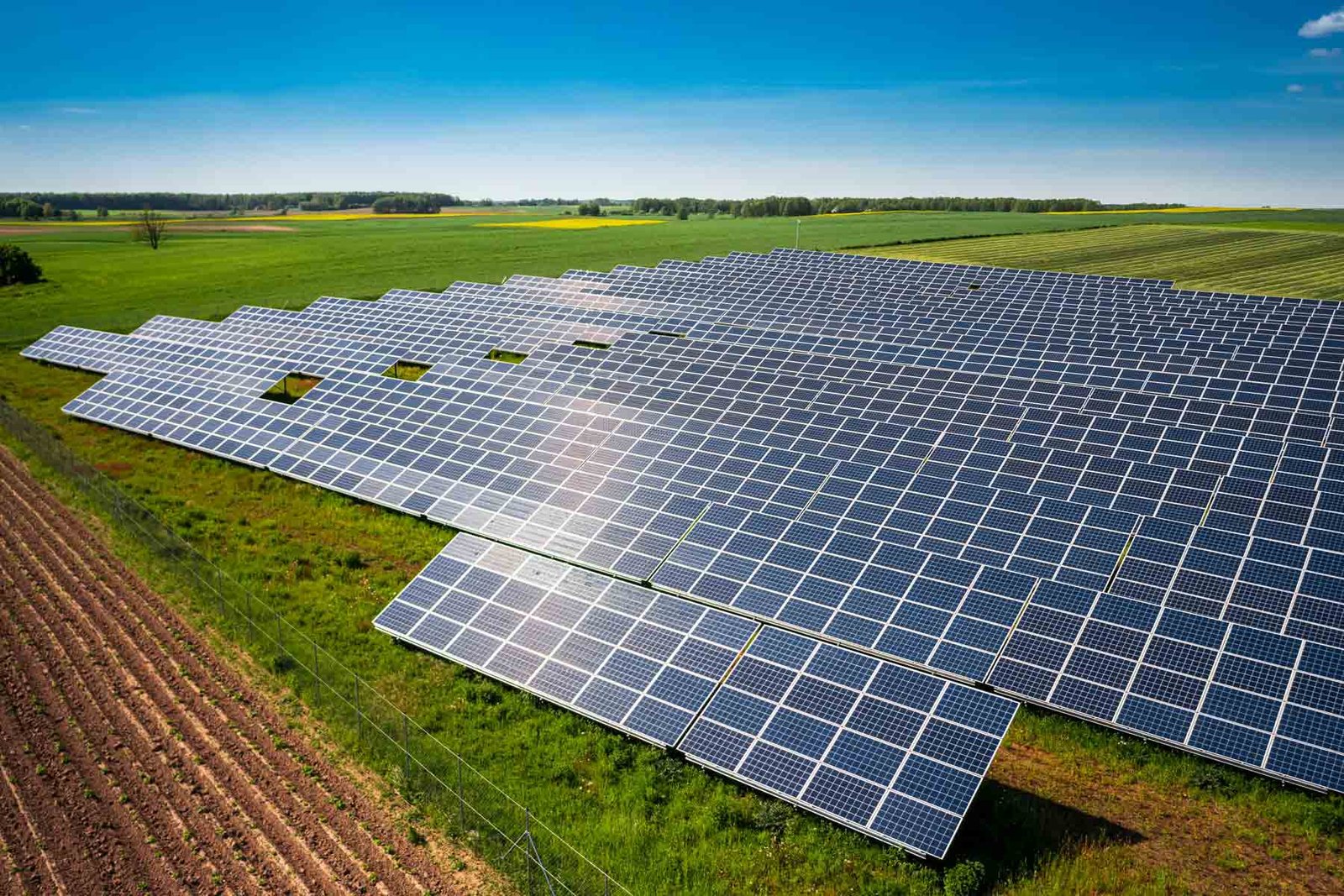
Solar energy is becoming a long-term option for businesses all over Arizona as a way of controlling the costs of electricity and enhancing energy efficiency. Although rooftop solar systems are prevalent, ground-mount solar systems are also an option in many commercial properties in Phoenix, AZ, in case there is extra space. Ground-mounted systems enable companies to produce solar energy, avoiding the use of the rooftops of buildings alone.
The first step in assessing a ground-mount solar system that is a commercial one in Arizona is to understand the land requirements.
What Are Ground Mount Solar Systems?
Ground mount solar systems are solar arrays that are mounted on the ground as opposed to being mounted on a building structure. The panels are fixed on engineered racking systems that hold them steady, and it is these racking systems that position the panels to optimally receive sunlight.
In commercial applications, ground mounts are commonly placed in unused areas adjacent to warehouses, industries or large commercial properties. It enables companies to utilise open space to generate energy as normal buildings proceed with their operations.
Typical Land Requirements for Ground-Mounted Solar
The size of the land required depends on the size of the solar system and the amount of energy the business requires. Overall, business solar facilities demand the use of multiple acres of land to facilitate the production of large-scale power.
The factors that affect land requirements include:
- Energy capacity and system size.
- Panel layout and spacing.
- Inverter location and equipment.
- Maintenance access pathways
The spacing of solar panels should be done well so that they are not shaded, and space should be available to access them during inspections and maintenance.
Why Spacing Is Important
Solar panels should not be spaced too far apart. The spacing will be done properly so that each panel gets enough sunlight during the day. The position of the sun in Phoenix varies with the season, and hence the spacing calculations should take into consideration the shadow angles and the optimum panel orientation.
Proper spacing also enables the technicians to access the panels and electrical components safely during inspection or repair.
Site Conditions That Affect Land Use
The site evaluation is normally done before ground-mounted solar systems are installed in Phoenix, AZ. The land situation depends on several factors:
Terrain and Grading
Ground mount systems tend to be most suitable on flat or gently sloped land since it is easy to install and line up the panels.
Soil Stability
Racking systems and mounting structures are supposed to be supported by the ground.
Shading Conditions
Trees, buildings or other structures should not be placed next to the panels where sunlight cannot reach them.
Accessibility
The location should be safe where the equipment can be installed, and the installation teams, as well as the future maintenance teams, can access it.
Advantages of Ground Mount Solar for Commercial Properties
Arizona commercial ground mount systems are considered by many businesses due to various operational benefits that they provide:
- Flexibility in system design and layout
- Capacity to construct bigger solar arrays.
- More convenient maintenance and inspection.
- Fewer restrictions than rooftop installations.
Ground-mounted systems are also easy to expand in case the energy requirements grow in the future.
Planning for Long-Term Performance
Ground-mounted systems are also intended to operate over a long period of time, like other commercial solar installations. These systems are capable of stable energy generation over decades with the right engineering, installation and monitoring.
Regular checks and maintenance are used to make sure that panels, inverters, and electrical connections remain efficient during the lifespan of the system.
Conclusion
The solar systems mounted on the ground give businesses in Phoenix an opportunity to produce renewable energy flexibly by utilizing the available land. The proper area of land varies according to the size of the system, layouts and site conditions. When designed and engineered correctly, ground mount systems can provide a consistent energy production and be cost-effective in terms of the longevity of operation.