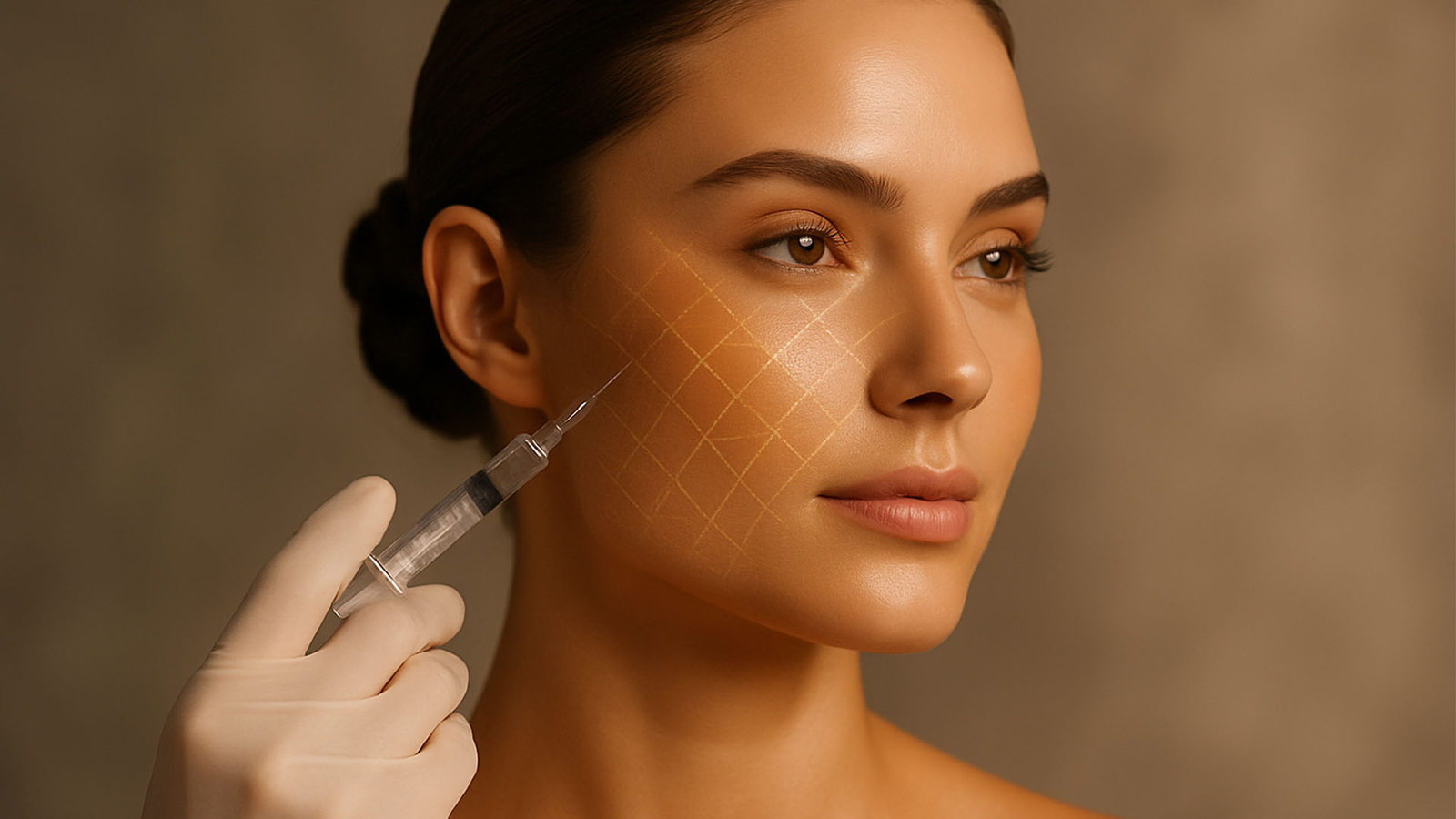
We tend to think about aging as a surface-level problem. A fine line here; a bit of a sag there. But it is actually a structural failure. Think of your face like a house. You can repaint the walls as often as you like, but if the wooden beams behind the drywall start to rot, the whole thing eventually shifts. That is where we are with collagen. It is the literal scaffolding of the face. By the time we hit our thirties, that scaffolding starts to splinter.
Traditional fillers have always been the quick fix. They are the “polyfilla” of the cosmetic world; you put them in, they take up space, and you look different immediately. But there is a shift happening in how we treat the skin. We are moving away from just filling holes and toward teaching the body how to repair its own foundation. This is the world of bio-stimulation. It is less about adding volume and more about biological renovation.
The Slow Decay of the Scaffolding
Collagen is not just a buzzword on a supplement tub. It is a dense, rope-like protein that gives skin its snap. When you are young, your body produces it in abundance. Your skin is thick. It bounces back. Then, the production line slows down. We lose about one percent of our collagen every year starting in our mid-twenties. It sounds small; it feels negligible. Until one day you catch your reflection in a certain light and realize the structural integrity just isn’t there anymore.
The skin starts to thin out. It becomes more like tissue paper and less like cardstock. This is not just about wrinkles; it is about the “drape” of the skin. When the scaffolding fails, the skin slides. Most people try to fix this with heavy creams, but topical treatments cannot reach the dermis where the actual construction happens. You need something that speaks the language of your cells.
Re-triggering the Wound Healing Response
Bio-stimulators work on a bit of a clever trick. They use biocompatible materials, often Poly-L-lactic acid, to sit quietly under the skin. They don’t just occupy space; they act as a signal. Your body sees these tiny particles and decides it needs to surround them. It triggers a controlled, very subtle inflammatory response. This sounds scary, but it is actually exactly what you want.
This response wakes up the fibroblasts. These are the “construction workers” of your skin. For years, they might have been lounging around, doing the bare minimum. The presence of a bio-stimulator gives them a reason to get back to work. They start weaving new strands of Type I collagen around the particles. It is a slow, methodical process. You don’t see the result in a week. You see it in three months. It is the difference between wearing a padded jacket and actually building muscle.
If you are looking for a way to secure these professional-grade tools for a clinic, you can order sculptra filler online to ensure the supply chain remains consistent. Having the right material is half the battle when you are trying to reset the biological clock of the dermis.
Why Biology Beats Chemistry
Most people are familiar with Hyaluronic Acid (HA) fillers. They are great for a lip plump or a sharp jawline. But HA is a sugar. It holds water. Eventually, the body breaks it down and it disappears. Bio-stimulators are different because the material itself eventually goes away, but the collagen it leaves behind is yours. It is homegrown.
This leads to a much more “stealth” look. You know that look where someone clearly has filler? That “over-filled” puffiness? That usually happens because people are trying to use HA to lift sagging skin. It doesn’t work well for that; it just adds weight. Bio-stimulators, on the other hand, thicken the skin itself. It creates a tightness that looks natural because it is natural. You aren’t looking at a gel; you are looking at denser, healthier skin tissue.
The Key Differences in Approach:
- Longevity: HA fillers last six to twelve months; bio-stimulators can provide structural support for up to two years or more.
- Result Time: Fillers are instant; bio-stimulators require patience as the body builds the protein.
- Skin Quality: Bio-stimulators improve the actual texture and “glow” of the skin, whereas fillers only change the shape.
The Depth of the Treatment
The placement of these stimulators is everything. You aren’t just placing them anywhere. They go deep, often right near the bone or in the deep dermis. This is where the heavy lifting happens. By reinforcing the skin at this level, you get a “liquid facelift” effect. It is subtle. People might ask if you’ve been sleeping better or if you changed your diet. They won’t necessarily know you’ve had “work” done.
This is particularly effective in the mid-face and the temples. These are areas that hollow out as we age. When the temples hollow, the brow drops. When the mid-face loses its scaffolding, the jowls start to form. By rebuilding that support in the cheeks, you effectively “re-hang” the skin of the lower face. It is a mechanical solution achieved through a biological process.
The Long Game of Aesthetics
We live in a culture of “now.” We want the wrinkle gone before we leave the office. But the best results in aesthetics almost always come from the long game. Think of bio-stimulation like an investment account. You put the work in now, and you reap the dividends for years.
Because the collagen is built gradually, the change is graceful. You don’t wake up one morning with a different face. Instead, you notice over the course of several months that your skin feels firmer. It looks less tired. The “crepiness” around the cheeks starts to smooth out. It is a restorative process rather than a transformative one. You are just reclaiming the skin density you had ten years ago.
Why This Matters for the Future
The industry is moving away from the “frozen” or “inflated” look. We are seeing a massive trend toward “regenerative aesthetics.” This is the idea that we should be helping the body stay young, rather than forcing it to look young. Bio-stimulators are the poster child for this movement. They represent a partnership between medical science and our own natural healing abilities.
The beauty of this method is its versatility. It can be used on the face, but also on the neck, the décolletage, and even the hands. These are areas where traditional fillers often look “off” or lumpy. Because bio-stimulators create a uniform sheet of new collagen, the result is smooth and even. It addresses the “crepe-paper” skin that often gives away someone’s age even if their face looks taut.
Final Thoughts on the Scaffolding
If you are considering a refresh, think about the foundation first. Is your skin thin? Does it lack that “snap”? If so, jumping straight to a volumizing filler might be like putting a heavy roof on a weak house. You need to shore up the beams first.
Bio-stimulation is a commitment to your future self. It requires a few sessions and a bit of waiting, but the payoff is a structural integrity that looks authentic. It isn’t about being perfect; it is about being robust. When your skin has a solid scaffold, everything else—your skincare, your lifestyle, even other minor treatments—works better. It is the ultimate “reset” button for the biological architecture of your face.