You’ve decided you want to get fitter. Good. Now comes the harder bit: do you train with an online coach from your living room, or book yourself into an in-person cardio class and sweat it out with a room full of strangers?
It’s not a trivial choice. involves who tends to do better with
Get it wrong, and you’re looking at a cancelled membership three weeks in, a pile of unused kit gathering dust, and the same frustration you started with. Get it right, and you’re the difference between “I tried that once” and “I’ve kept this up for two years.”
So let’s actually break down what each option involves, who tends to do better with which, and how to work out where you fit before you spend anything.
What an online fitness trainer actually means
A decent online fitness trainer isn’t someone who emails you a PDF of exercises and vanishes. The good ones run a proper coaching relationship: a call to assess your goals and any injuries, a programme built around your equipment and your schedule, regular check-ins, and form feedback on videos you send through.
The appeal is obvious. You can train at 6 am or 9 pm, no driving, no parking, no doing the same class as everyone else in the room, because the plan is built around you.
It asks a lot of you, though. Nobody’s standing next to you making sure you actually log on. There’s no group energy carrying you through a hard session. If you’re someone who needs other people around to show up, training alone in your spare room can fall apart fast and quietly.
What in-person cardio classes actually involve
A cardio class, spin, HIIT, boxercise, Zumba, whatever your local studio runs, gives you a fixed time, a fixed place, and an instructor watching the room. You turn up, you’re told what to do, you do it next to other people who are also out of breath and also regretting their life choices around minute fifteen. That shared misery is, oddly, part of what keeps people coming back.
Classes also take the decision-making off your plate. You don’t have to plan anything or pick exercises; you just show up and follow along, which matters a lot if planning is genuinely the hardest part of exercising for you.
The trade-off is flexibility. Missed the 6.30 pm Tuesday slot because work overran and that’s it, you’ve missed the class. The programming is also generic by design, built for forty people, so it can’t account for your dodgy knee or the fact you’re six months postnatal.
So which one actually gets you better results?
Here’s the part most articles dodge: results depend far less on the format and far more on whether you keep showing up. That’s the whole game.
Still, some patterns are worth knowing.
For general fitness and weight loss, both formats work about as well as each other, assuming similar intensity and consistency. The format that actually matters is the one you won’t quietly abandon by February.
If you need accountability, in-person classes usually win. There’s a mild social cost to skipping a class your instructor and the regulars expect you to attend, and that pressure does real work.
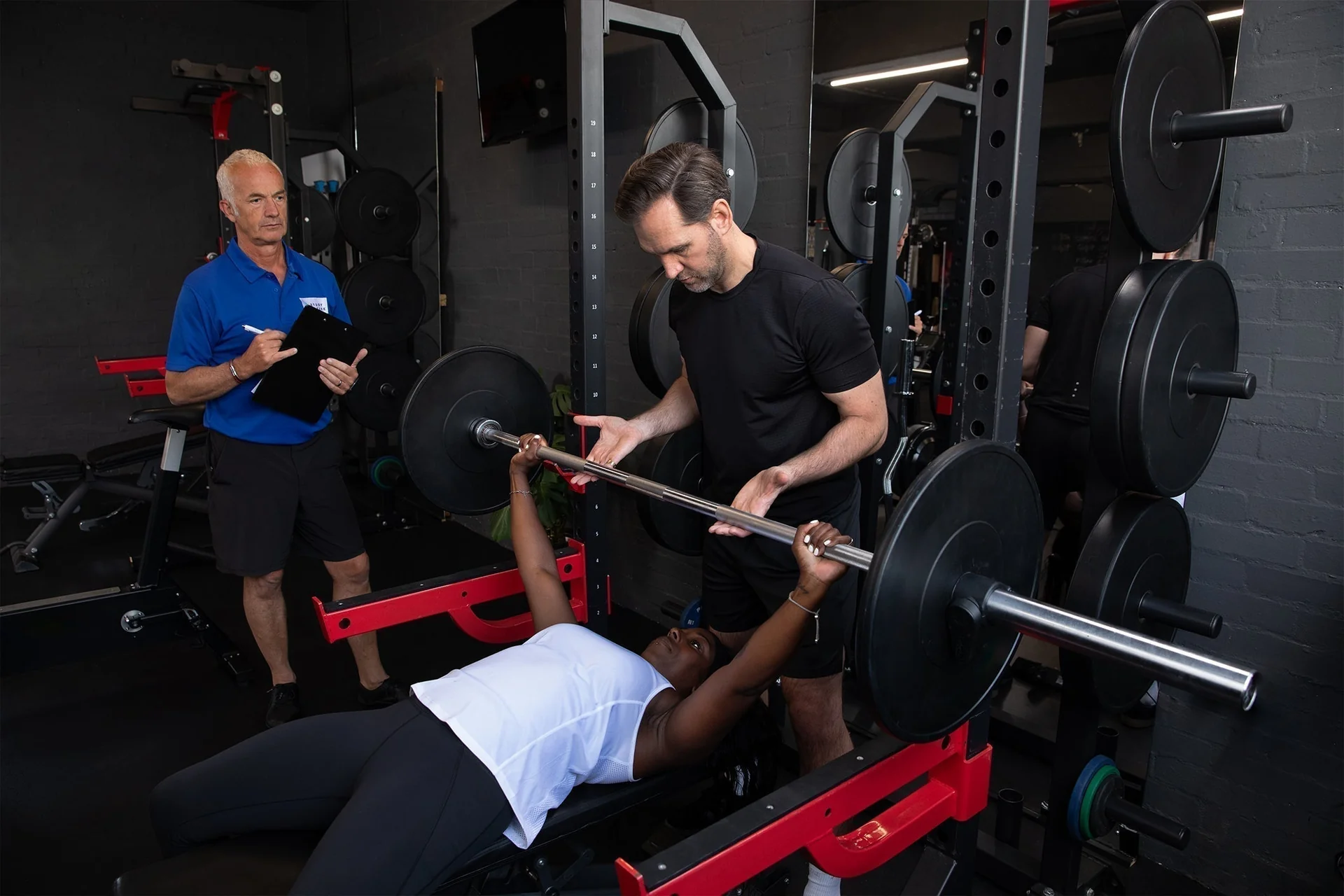
If you’ve got an injury, a specific goal, or an odd schedule, an online trainer usually wins. A 1:1 coach can adjust around a sore shoulder mid-session, push your programme as you improve, and work around shift patterns in a way a fixed class never will.
On tough days, classes tend to pull more out of you. Music, an instructor shouting encouragement, a room full of people grinding through the same set, it’s hard to replicate that energy training alone.
What you’re actually paying for
UK pricing varies a fair bit by region, but roughly: a drop-in cardio class runs £10 to £18, a monthly studio membership with unlimited classes lands somewhere between £60 and £120. Online coaching with proper 1:1 programming usually starts around £80 to £150 a month, though basic app-based plans can be a lot cheaper than that.
It’s not really a pound-for-pound comparison. A class is paying for the room, the instructor’s time split across a group, and the equipment. Online coaching is paying for individual attention and a plan built specifically for your body and your life.
Which one suits you better
If something needs to fit around your day rather than the other way round, and you’ve got a specific issue that needs individual attention, an old injury, a sport you’re training for, postnatal recovery, you’re probably better off with an online trainer. Same if you don’t mind training without a crowd and you’re reasonably self-motivated once there’s a plan in front of you.
If you’ve tried solo training before and it fizzled out within a month, an in-person class is probably the better bet. Having a fixed slot in your diary that you can’t easily talk yourself out of helps. So does group energy, if that’s the kind of thing that motivates you rather than puts you off. And if you’re newer to exercise and want someone to correct your form in real time, a class beats a video review every time.
Can you do both?
Plenty of people do, and it tends to work well. A common setup is an online trainer handling strength work and a structured plan, with one or two in-person cardio classes a week for the social side and the kind of cardio push that’s hard to replicate alone. If budget’s tight, even one class a week alongside a self-led plan can give you a decent consistency boost without paying full price for both.
How Meridian Fitness helps you
If you’re still on the fence, the honest answer is that the format matters less than getting proper guidance either way. Meridian fitness works with people across both ends of this, offering structured in-person sessions for those who want the accountability of a class, and more tailored coaching support for people who need a plan that flexes around their life. Rather than pushing one format over the other, the focus is on working out which one actually fits how you live, train, and recover, because that’s what decides whether you’re still going in six months.
Bottom line
There’s no universally “better” option here. There’s a better option for you, based on your schedule, your personality, your injuries, and what’s actually kept you consistent in the past. Be honest with yourself about that last bit; it matters more than any class timetable or trainer’s qualifications. Pick the one you’ll still be doing in three months, not the one that sounds best on paper.