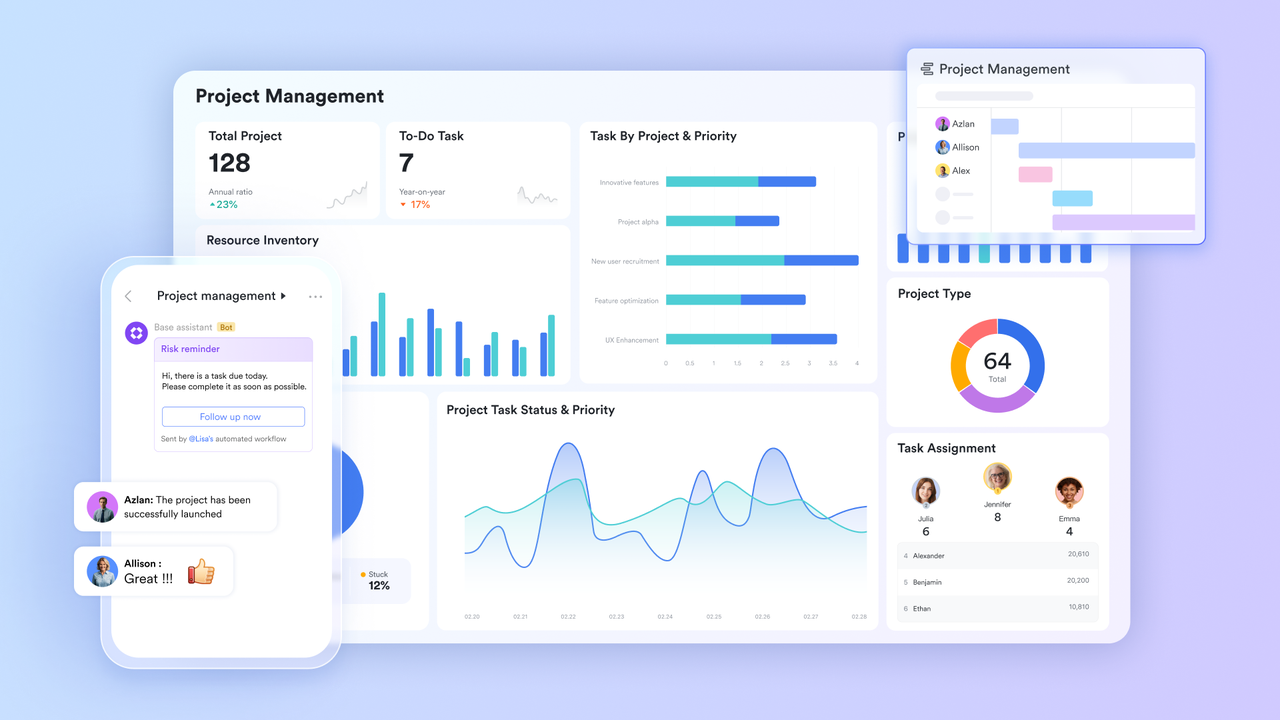
There is a hidden line item in every growing organization’s operating costs that never appears on a budget report. It is the sum of every hour a manager spends answering questions that should not require a manager to answer. Where is this project at? Has that approval come through yet? What did we decide in Tuesday’s meeting? Who owns this task? Each question takes two minutes to answer and twenty minutes to answer well, and by the time a mid-level manager has fielded eight of them before lunch, the work they were hired to do has not started yet. This is the manager tax, and it scales with headcount. Every person added to the organization adds potential questions, and every question that should be answerable from the workspace but is not adds to the manager’s bill. The organizations that grow without compounding this tax do not have unusually capable managers. They have built an environment where project management tools answer the routine questions automatically, so managers can spend their time on the ones that actually require judgment.
Strategic direction that answers itself with Lark OKR
The single most common category of upward question in growing organizations is some version of “is this still the priority?” A team member is halfway through a piece of work when news of a strategic shift reaches them informally. They are not certain whether the shift affects their current task. They message their manager to check. The manager answers, or passes the question up if they are also uncertain. The exchange takes time, generates follow-on clarification, and the original question could have been avoided entirely if the strategic picture had been visible to the team member before they felt the need to ask.
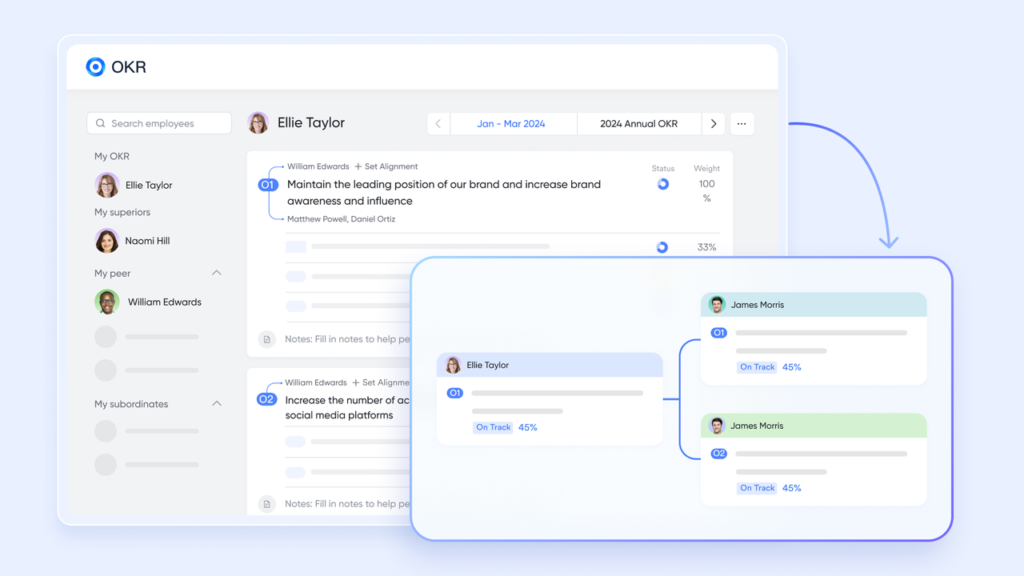
Lark OKR makes the strategic picture visible and current for every team member at all times. Company objectives and their connected key results update in real time as priorities shift, and every team member can see how their own key results connect to the layer above them. When a strategic change is made at the leadership level, it is visible to the entire organization immediately rather than cascading down through a chain of manager briefings that each introduce a small delay and a small risk of misinterpretation. The manager who used to field a dozen priority questions every week fields none, because the OKR view has already answered them.
Live project data that replaces the status request with Lark Base
The status request is the manager tax’s most common expression. It arrives in chat, in email, and in passing conversations, and every instance of it represents a failure of the operational infrastructure to communicate a piece of information that should already be visible. The project record exists. The status field has been updated. But the stakeholder who needs that information does not know where to look or does not have convenient access to the system that holds it, so they ask a human instead.
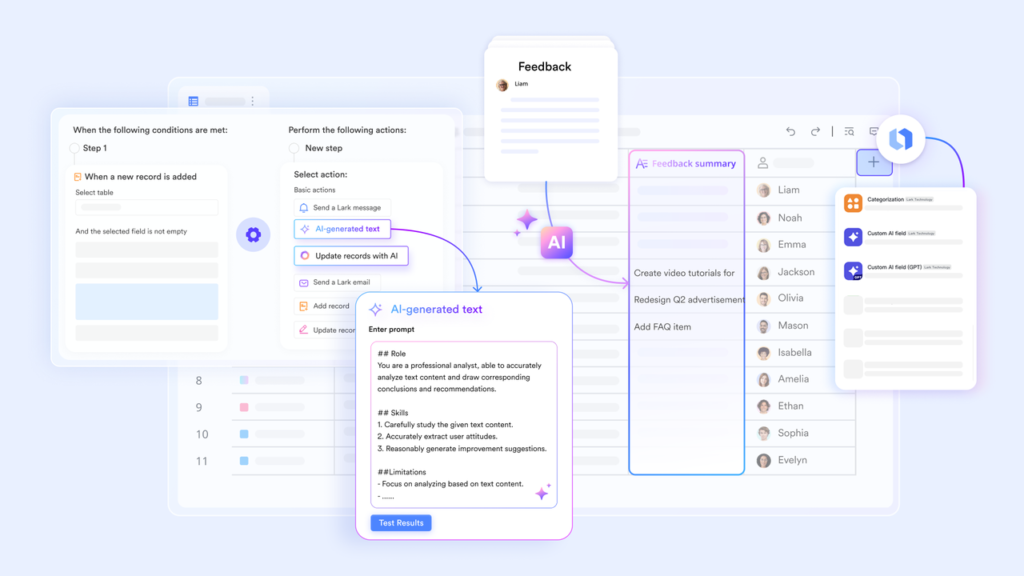
Lark Base makes project status visible to every relevant stakeholder from within the same workspace where they are already working, without requiring a separate login or a separate application. Shared Kanban, Gantt, and grid views give anyone with access a live picture of every project’s current state. Automated notifications trigger when a record changes status, so the stakeholder who would have sent a status request instead receives the update automatically at the moment it becomes relevant. The manager who previously served as a human relay between the project tracker and the team member who wanted to know if something was done becomes unnecessary for that function entirely.
Decisions that do not need a manager to relay them with Lark Approval
A significant portion of the manager tax is paid in the approval category. A request sits in an email queue. A team member cannot see whether it has been reviewed. They message their manager to ask. The manager checks, responds, and follows up with the approver. The approver responds to the manager. The manager relays the answer to the team member. Five messages and two people have been involved in communicating a decision that should have flowed directly from the approval system to the person who submitted the request.
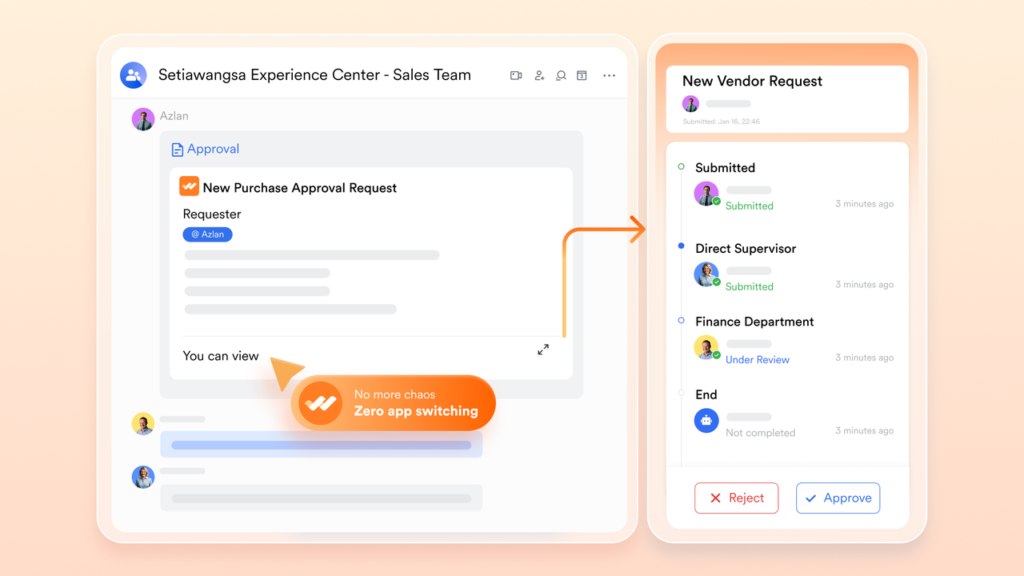
Lark Approval removes the manager-as-relay entirely by making approval status visible to the submitter in real time. The person who submitted the request can see exactly which stage it is at and which approver currently holds it without asking anyone. “Approval Notifications” reach every relevant party automatically at each stage transition, so the outcome of a decision travels directly to the people who need it without a manager having to forward the information. “Conditional Branches” mean the routing logic handles escalation and complexity automatically, so the manager is not needed to decide which approver should receive which type of request. The approval workflow manages itself, and the manager’s inbox stays clear.
Priority signals that reach the team without a briefing with Lark Messenger
Managers in growing organizations spend a disproportionate amount of time communicating information that should travel through the workspace rather than through them personally. An update from leadership arrives in the manager’s inbox. They recompose it for their team. They send it to the relevant group. Some team members read it. Others do not. The manager follows up to check who has seen it. The whole cycle repeats the next time something changes. The communication overhead is not the manager’s fault. It is a symptom of a communication infrastructure that routes information through people rather than through the platform.
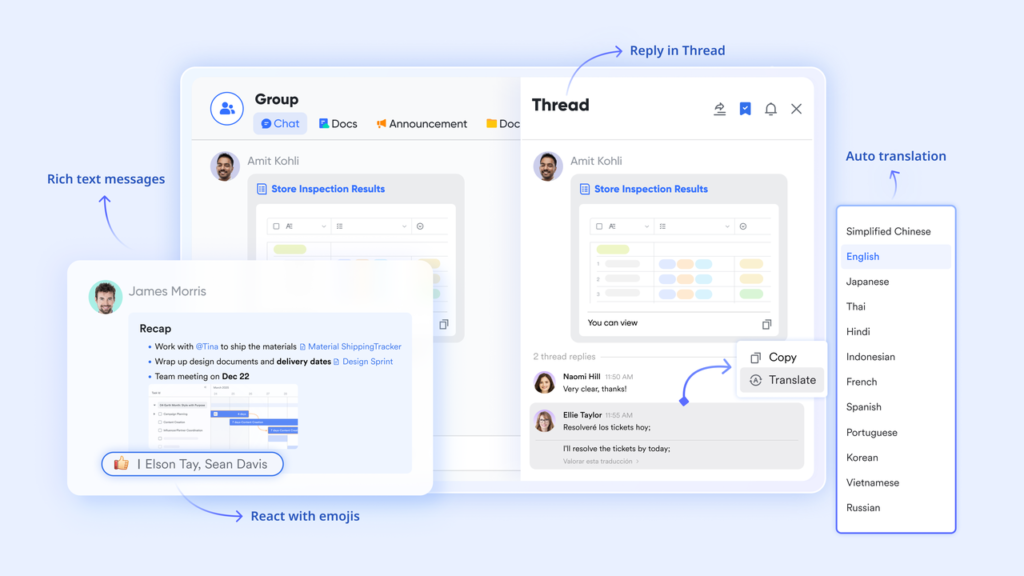
Lark Messenger gives organizations the tools to route information directly to the right people without a manager acting as the distribution node. “Scheduled Messages” allow leadership to compose and schedule priority communications that arrive for each team at the most useful moment in their working day, bypassing the manager-relay step entirely. “Read/Unread Status” confirms that time-sensitive updates have been seen without requiring the manager to chase confirmation. Group folder organization with independent notification rules means that urgent operational communications reach their intended recipients with appropriate urgency, while lower-priority updates accumulate quietly without generating a wave of notifications that consumes everyone’s attention simultaneously.
A record that makes verbal briefings optional with Lark Docs
The verbal briefing is the manager tax at its most time-intensive. A team member joins a project mid-flight, or returns from leave, or picks up a handoff from someone who has moved on. They need context. Without a documented record of how the project evolved, who decided what, and what the current state of the work is, the only way to get that context is to ask someone who was there. The someone is usually the manager, and the briefing that follows is a significant withdrawal from the manager’s working day.
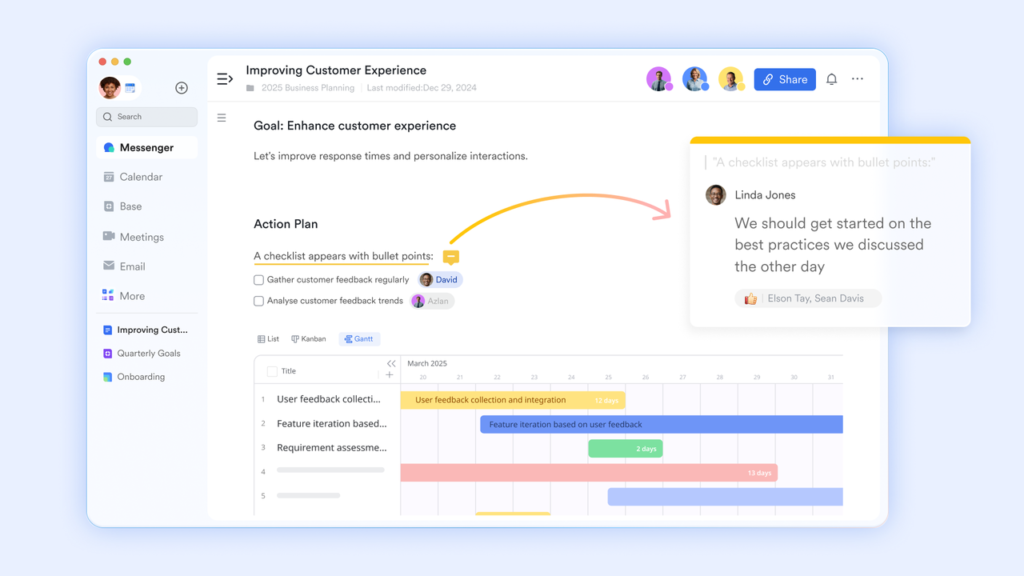
Lark Docs eliminates the need for the verbal briefing by making the project’s full operational history permanently available in the document itself. “Version History” shows every change with the editor’s name and timestamp, so the person joining a project mid-flight can read the evolution of the work from the document record rather than asking the manager to reconstruct it. “@mention” in prior discussions shows exactly who was assigned each task and why, providing the accountability thread that gives the new team member immediate orientation. “Comment” threads that have not been resolved travel with the document as visible flags of outstanding questions, so the incoming person’s first view of the project includes not just what was decided but what still needs resolution.
Bonus: What happens when manager time is reclaimed
The manager tax is not just a cost. It is an opportunity cost. Every hour a manager spends answering operational questions they should not have to answer is an hour they are not spending on the work that only a manager can do: developing their team, making strategic judgment calls, removing genuine blockers, and building the relationships that hold the organization together under pressure.
Most organizations that have tried to reduce management overhead have done so by adding dedicated coordination roles, adopting platforms like Asana or monday.com for task visibility, or implementing weekly update rituals through tools like Notion or Confluence. These interventions reduce the symptom without addressing the structural source of the problem. Evaluating them alongside Google Workspace pricing and similar foundational platforms reveals the same pattern: each tool covers one category of the manager’s information relay function while leaving the others intact. Lark covers all of them in one environment, so the full manager tax disappears rather than being reduced by one category at a time.
Conclusion
The manager tax is not a management problem. It is an infrastructure problem. When the information that team members need to answer their own questions is visible in the workspace by default, the questions stop traveling upward and the managers who were fielding them get their time back. A connected set of productivity tools that makes priorities visible, project status current, approvals transparent, communications direct, and project history accessible is how organizations stop charging their best leaders for a function the platform should be performing.