
Industry Background
In Canada, warehouse managers, equipment operators, logistics teams, and industrial buyers often need covered space that can be added faster than a permanent building. This is especially relevant in regions where snow, rain, wind, and freeze and thaw cycles affect tools, vehicles, palletized goods, and outdoor workflows. An Arch Wall Peak Ceiling Storage Shelter is useful in this setting because it provides enclosed overhead protection for staging, storage, and light work activity while allowing more flexibility than conventional construction. As warehouse demand and site utilization continue to evolve across Canada, practical outdoor storage solutions remain important for many industrial operations.
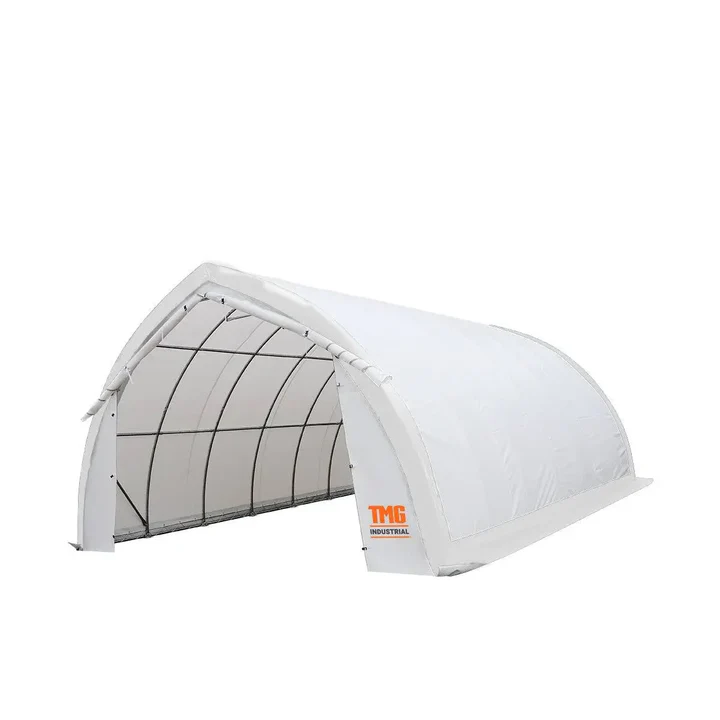
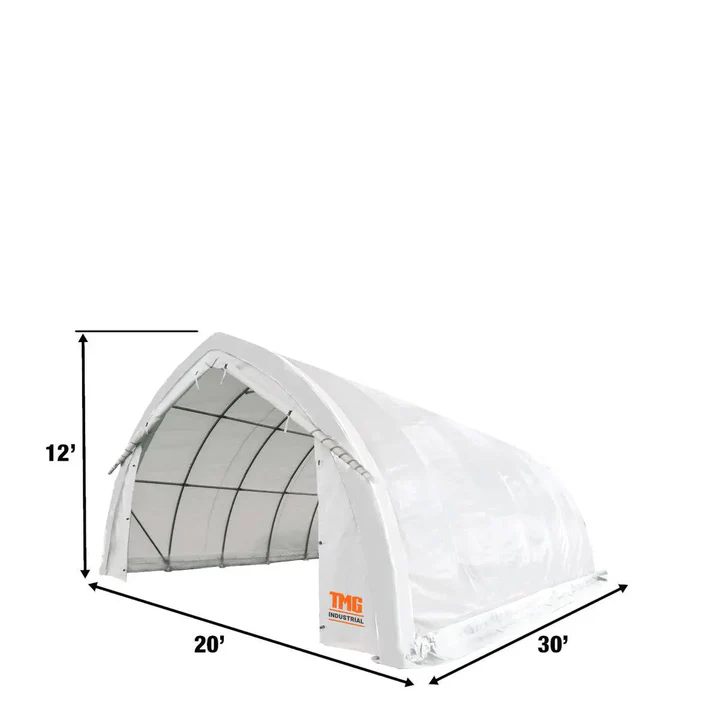
One example is the Arch Wall Peak Ceiling Storage Shelter, listed as a 20 foot by 30 foot structure with about 600 square feet of covered space, a 12 foot peak ceiling height, 14 foot wide by 10 foot high end-wall door clearance on both ends, an 11 ounce polyethylene cover, and a galvanized steel frame. These features show why this type of shelter is commonly considered for equipment protection, stockpiling, service support, and temporary covered work areas.
How This Type of Shelter Is Used
Basic function
A peak ceiling storage shelter creates covered space for assets that should not remain exposed to weather. Compared with open yard storage, it helps reduce direct contact with rain, snow, sunlight, and debris. Compared with a fully enclosed permanent building, it can be deployed with less time and less site disruption, provided the location has a suitable base and the local requirements are reviewed in advance.
Common industrial use cases
· Protecting forklifts, utility vehicles, and trailers
· Creating overflow storage for palletized goods or seasonal stock
· Supporting light maintenance or inspection activity
· Holding tools, attachments, and project materials near the work zone
· Providing sheltered staging space in rural or mixed-use industrial yards
Why Efficiency, Safety, and Productivity Matter
Outdoor exposure often creates hidden costs. Wet materials, snow-covered equipment, blocked access, and repeated relocation of stock can slow work and increase handling time. A well-placed storage shelter can improve workflow by keeping selected assets closer to the point of use while reducing weather-related interruption. In practical terms, this can support faster equipment access and more predictable daily planning.
Safety matters just as much as efficiency. Canadian outdoor work guidance emphasizes the need to control exposure to cold and severe weather, and sheltered areas can help reduce these risks when used properly. At the same time, a shelter is only effective when traffic routes remain clear, loads are stored safely, and the structure is installed and maintained in line with its intended use.
Technical Fundamentals and Capacity Considerations
Before selecting a storage shelter, buyers should review a set of basic technical questions:
· Is the footprint large enough for the actual equipment and turning space?
· Does the door clearance match the vehicles or loads that will pass through?
· Is the foundation suitable for anchoring and long-term stability?
· Will the cover material and frame fit the expected weather exposure?
· Can the site drainage prevent standing water and ice buildup?
For this model, the truss spacing, galvanized frame, pre-drilled footplates, and heavy-duty polyethylene cover are all relevant because real-world performance depends on structure, anchoring, and site conditions together. The manufacturer also states that a solid concrete slab or equivalent base is required, which is an important planning point for industrial users.
Factors That Affect Performance and Effectiveness
Performance depends on more than size. Wind exposure, snow accumulation, installation quality, traffic pattern, and how the interior space is used all affect safety and service life. In Canada, this is especially important because seasonal weather can change quickly. Even a strong shelter may perform poorly if drainage is weak, doors are obstructed, or snow is allowed to build up around the perimeter.
Natural light transmission through the cover can improve visibility during daytime use, but users should still assess whether additional lighting is needed for safe loading or maintenance work. Shelter placement should also account for nearby vehicle routes, overhead clearance, and emergency access.
Safety Best Practices
· Install on a level, durable foundation with correct anchoring
· Inspect the cover, frame connections, and footplates regularly
· Keep entrances and drive-through paths clear of snow, mud, and debris
· Store materials with stable spacing and safe stacking height
· Review local building and weather requirements before installation
· Do not treat the shelter as equivalent to an engineered permanent building
Related Equipment, Advantages, and Limitations
Useful related items may include anchors, drainage gravel, pallet racking sized for sheltered use, weather-resistant lighting, wheel stops, and signage for vehicle movement. The main advantages of an TMG Industrial Arch Wall Peak Ceiling Storage Shelter are faster deployment, flexible storage use, and improved weather protection for many site assets. The limitations are also clear. This type of structure depends heavily on foundation quality, local weather suitability, and disciplined maintenance. It may not be appropriate where engineered building certification is required for a specific use.
Real-World Example and Future Direction
A realistic example is a Canadian distribution yard that needs sheltered overflow space for seasonal materials and service equipment during winter. Instead of leaving these assets exposed, the site adds a peak ceiling storage shelter near the loading area. This helps protect equipment, shorten retrieval time, and support safer outdoor workflow. Looking ahead, demand for flexible covered storage is likely to remain strong as industrial sites look for practical ways to improve yard efficiency, weather resilience, and space utilization without committing immediately to full permanent expansion.
