
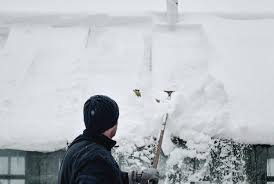
Winter’s effects on a home’s exterior can be detrimental, particularly at the rooftop edges and detailing. Homeowners’ primary concern is usually the shingles or gutters. The roof edges like soffits, fascia boards, and other detailing see the most seasonal exposure and damage. A home’s roof edge is impacted by the winter’s freeze and thaw cycles, ice build up, and strong winds, and even the way winter decorations are hung can accelerate the damage. For the winter, some services like Best holiday light installers in Perrysburg OH can help winterize your home, and also, help provide peace of mind in terms of proper installation techniques that help provide a longer term benefit to the home.
Vulnerable Roof Edges
In winter, roof edges and trim detailing are the most vulnerable and most impacted areas of the home exterior. They receive the full force of icy winter weather and wind driven snow. Soffits and fascia boards are located at the top edge of the main walls of the home. They are extremely vulnerable to the infiltration of moisture.
Winter weather is not uniform in term of snow fall. A cycle of melting and re-freezing takes place. In like conditions, there is a repeated cycle of snow fall, melting, and re-freezing. This uneven fall of snow, and the melting of the snow all add to the deterioration and aging of the materials. A layer of restricted ice formation takes place. This most impacts the edges of the home. The trim boards at the edge of the roof will see a build up of ice that will slip into the corners of the trim boards and crack the boards.
Ice Dams and Their Impact
In winter, ice dams are a threat to roofs, especially when there is heat escaping a home. This causes rooftop snow to melt, and when this water gets to the edge of the roof, it refreezes, forming a thick ice ridge where it will keep water from moving.
Because of this buildup, water will be trapped behind the dam and sit in ice. This will cause moisture to seep under shingles and fascias and soffits. This will cause rot, and mold, and structural damage will be caused. Thinner and less insulated roofing components will be damaged.
The large weight of the ice also causes stress to the roof edge. Fascia boards will sag and pull away which will compromise the entirety of the home’s drainage and gutter system.
Wind: The Silent Contributor to Wear
The ice and snow aren’t the only contributors to damage. Wind is subtle but will play a great part in the destruction of the roof edge. The winter months will have snow and ice, but the wind is a constant. In higher places, winter wind will be strong and in open areas the velocity will cause ice and snow to infiltrate the roof edge.
The wind also causes constant movement of the trim roofing boards which causes the nails and screws holding boards to become loose. Once the fasteners are loose, the boards will be altered to create gaps that water can infiltrate. Wind is a large contributor to edge roof damage.
Additionally, wind can move unsecured decorations or fixtures. As these items move or fall, they can damage soffits and fascia, exposing them to further damage.
Day Night Temperature Swings and Fixture Expansion
Winter is not just cold. Temperature changes can be extreme, especially in regions with a thaw-freeze cycle. These constant changes cause materials to expand and contract.
Fascia boards and wooden trim are most sensitive to day night temperature shifts. Expansion and contraction causes fissures to develop. These cracks allow water to move further into the board.
Even fasteners are impacted. Expansion and contraction causes loosening in boards, creating instability. Each winter leads to faster degradation.
Added Weight
Often overlooked is the strain placed on edges by the added winter weight. Simply the snow accumulation is enough to add a significant load to the roof edges.
Debris and gutters freeze and add weight to the fascia boards. If boards are weakened by age or moisture they may begin to detach.
Strain is also caused by lights and ornaments. Improperly installed decorations can also trap moisture. This leads to increased repairs.
Improper Attachment Methods and Their Consequences
Illumination and decor attachments to a building’s roofline must be implemented with more care than many homeowners realize. It is important especially to avoid any kind of fastening technique to building materials that are included in a building’s outer shell such as nails and screws that are used to fasten building components. Fastening techniques create micro-sized openings that can allow roofline components to be penetrated by moisture.
These penetrations are more troublesome in the winter months. Water that penetrates the micro-sized openings can freeze and expand causing the voids to become larger. This causes even more damage and over the course of multiple seasons can even lead to structural rot.
Loose items that are improperly fastened can even become detached during a windstorm. When items such as decorations become detached as a result of a windstorm they can cause voids in the roofline that are detrimental by removing some of the mitigation features that a building’s roofline may have.
Why Professional Installation Makes a Difference
It is something that allows many issues to be mitigated. For many customers that have used Christmas light installation services, they have come to value the service provided because they have come to recognize that the value of the service provided is commensurate with the understanding of how to install the service that does not cause damage to the service.
There are many services that are provided to customers that avoid the issues related to roof fascias. The service that is provided is to ensure that any components of a roofline that are service components are installed in such a way that roofline components remain undamaged.
In addition, many service providers will inspect the roofline of buildings that they will be providing services to. This allows service providers to make recommendations for repairs of roof components that are not affixed securely prior to the onset of winter conditions.
How to Protect Your Home During the Winter
There are many ways to protect the roof lines and the trim of your house, and while professional services can certainly help, here are a few ways to ensure the longevity of your roof lines and trim with the winter weeks approaching:
– use protective coatings to seal gaps, and use wood that is not exposed
– have the right amounts of insulation in the attic
– avoid using staples and nals when affixing decorations
– thoroughly clean gutters to avoid ice formation and the weight that comes with it
– regularly inspect the fascia boards and the soffits for any cracks that may have formed and for any rot that may have taken place
This preventative maintenance will help save on repairs and replacements on the components that make up a roof and line trim.
Neglect Comes with a Price
There is a cost that comes with neglect, and that cost extends to more than the fee for a professional service that makes repairs to the roof line and the trim. It’s a guarantee that beyond the cosmetic concerns of your house, moisture will begin to inflict damage on the interior of your house. Moisture will begin its destruction on the wall and insulation and it will compromise the structural components of the interior of your house. These repairs will ultimately be the most expensive, and may even potentially be repairs of a system that is fundamental in securing the overall integrity of the home.
This is a problem that has a solution, and it will not cost much to avoid it. This is particularly true during the winter, when the conditions speed up the formation of cracks and the loosening of boards. This is a problem that will grow during the winter, and early action in the winter will help control the speed of that growth.
Conclusion
The roof and the line trim of your house have a lot of stress placed on them during the winter months. Dams formed of ice, high winds, and the rain, along with rapid swinging of the temperatures, all contribute to the damage that is done to the roof trim and line. Improper methods of attachment contribute to it as well.
Investing in professional services like seasonal decorating can safeguard your home from damage and help protect your investment. These services offer an additional layer of protection as they can install and remove decorations safely.
At the end of the day, protecting your roofline is more than just about how your home looks. It is about how you protect the structure of your home through the harsh winter months.
