As the frost thaws and the vibrant colors of spring begin to peek through the Florida landscape, homeowners often find themselves inspired to tackle a deep spring cleaning. We open the windows to let in the fresh air, scrub the baseboards, and declutter the garage. However, the exterior of the home often receives a much more superficial treatment. Most people will give their lawn its first mow of the season and perhaps spray down the driveway with a garden hose, believing the job is done.
But winter, even the relatively mild winters of the Gulf Coast, leaves behind a stubborn residue that isn’t always visible at first glance. Moisture, fluctuating temperatures, and wind-blown debris create a breeding ground for biological growth and structural wear. If left unaddressed, these small issues can evolve into costly repairs. To keep your property in peak condition, you need to look beyond the obvious.
Here is a comprehensive guide to the most overlooked exterior cleaning tasks you should prioritize once winter ends.
1. The “Shadow Zone”: North-Facing and Shaded Siding
During the winter months, the sun sits lower in the sky, and many parts of your home receive significantly less sunlight than they do in the summer. These shaded areas—particularly north-facing walls or sections obscured by heavy landscaping—remain damp for longer periods.
Moisture is the primary catalyst for mold, mildew, and algae growth. You might notice a faint green tint or dark streaks appearing on your siding. While it may look like just a cosmetic issue, these organisms can actually feed on the organic material trapped in your siding or even the paint itself. If you have vinyl siding, the spores can find their way into the weep holes, leading to hidden mold growth behind the panels. A thorough cleaning of these “shadow zones” is essential to prevent permanent staining and structural degradation.
2. The Bottom Six Inches: Fence Lines and Perimeter Bases
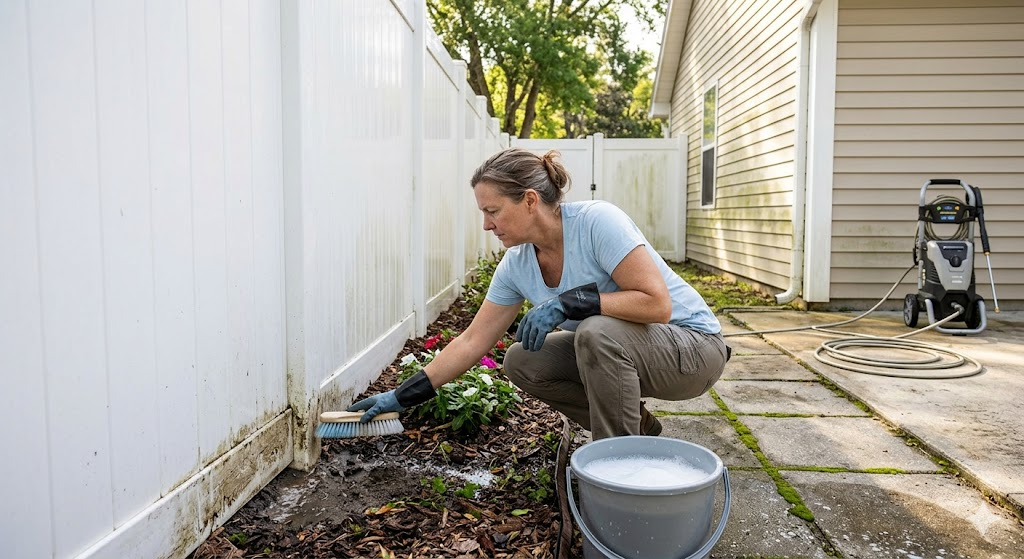
When homeowners wash their fences, they tend to focus on the eye-level panels. However, the most critical area is the bottom six inches where the fence meets the ground. Throughout winter, wet leaves, mulch, and dirt pile up against the base of the fence.
This constant contact with damp organic matter leads to “wicking,” where moisture is pulled up into the wood or vinyl. For wooden fences, this is the fastest way to trigger rot and fungal decay. For vinyl, it creates a stubborn line of orange or black staining caused by soil minerals and mold. When cleaning, ensure you clear away the debris from the base and use a targeted cleaning solution to neutralize the spores lingering at the ground level.
3. Concrete Edges and Expansion Joints
We often judge the cleanliness of our driveways and walkways by the center of the slabs. If the middle looks white, we assume it’s clean. However, the edges—where the concrete meets the grass—and the expansion joints (the gaps between slabs) are magnets for winter buildup.
Sand, salt (if used), and organic silt settle into these cracks over the winter. This creates a perfect “micro-environment” for weeds and moss to take root. As these plants grow, their roots can put pressure on the concrete, leading to cracking or shifting. Furthermore, the buildup of slime in these joints can make surfaces incredibly slippery when spring showers arrive. Precision cleaning of these edges is vital for both curb appeal and safety.
4. Underneath the Eaves and Soffits
Unless you are looking for a bird’s nest, you probably don’t spend much time looking up at your soffits and eaves. However, these areas are notorious for “ghosting”—a phenomenon where dark soot and dust particles are attracted to the underside of the roofline due to airflow and static.
Winter winds also blow cobwebs, dried leaves, and insect cocoons into these corners. Not only does this look unsightly, but clogged soffit vents can also interfere with your home’s attic ventilation. This can lead to heat buildup and moisture issues inside your home as the weather warms up. A soft-wash approach to these high-reach areas can brighten the entire silhouette of your home.
5. Screen Enclosures and Lanai Frames
For Florida residents, the lanai is an extension of the living room. During winter, we might not use these outdoor spaces as frequently, allowing pollen, dust, and spider webs to accumulate on the mesh and the aluminum framing.
The fine mesh of a screen enclosure acts like a filter, trapping airborne particles. Over time, these particles harden, making the screen look cloudy and reducing airflow. Additionally, the “spline”—the rubber cord that holds the screen in place—can trap moisture, leading to algae growth that eventually eats away at the integrity of the screen. A deep cleaning of the frame and mesh will restore your view and extend the life of your enclosure.
6. The “Hidden” Gutters: Downspout Exteriors and Splash Blocks
Most homeowners know to clear the leaves out of their gutters, but they often forget to clean the outside of the gutter system. Over the winter, “tiger striping” occurs. This happens when moisture mixed with pollutants from the roof drips over the edge of the gutter, leaving vertical dark streaks.
Equally important are the downspout splash blocks at the bottom. These often become buried in mud or covered in slick green algae. Ensuring these are clean and properly positioned is crucial for directing spring rainwater away from your foundation.
7. Window Tracks and Sills
While you might wash the glass, the tracks and sills are where the real winter grime hides. Condensation often forms on windows during cooler nights, which then drips into the tracks, mixing with dust to create a thick, muddy sludge. This can jam the window’s drainage “weep holes,” potentially leading to water backing up into your wall cavity during a heavy spring storm.
Why DIY Isn’t Always Enough
While many of these tasks can be tackled with a bucket of soapy water and a stiff brush, the reality is that winter buildup is often chemically bonded to the surface or embedded deep within porous materials like brick and concrete. Using a standard garden hose often lacks the pressure necessary to dislodge deep-seated spores, while “consumer-grade” pressure washers can actually cause damage if used incorrectly—gouging wood, stripping paint, or cracking vinyl siding.
This is where professional expertise becomes invaluable. To ensure your home is truly protected and sanitized, it is often best to seek out local pressure washing services in Riverview FL. Professionals use specialized “soft-washing” techniques—low-pressure delivery of eco-friendly cleaning agents—that kill mold and algae at the root without risking damage to your home’s delicate surfaces.
The Benefits of a Post-Winter Deep Clean
Investing the time (or hiring a professional) to address these overlooked areas offers several long-term benefits:
- Enhanced Curb Appeal: Removing the “gray film” of winter makes your home’s colors pop and increases its market value.
- Preventative Maintenance: It is much cheaper to wash away mold today than it is to replace rotted wood or damaged siding next year.
- Healthier Environment: Eliminating mold and pollen from your home’s exterior reduces the allergens that find their way indoors.
- Safety: Cleaning slime and algae from walkways prevents slip-and-fall accidents during rainy spring days.
Conclusion
As the sun begins to shine brighter and the days get longer, don’t let the hidden remnants of winter weigh down your home’s potential. By focusing on the shaded siding, the forgotten fence lines, and the intricate edges of your hardscaping, you can ensure your property is not just clean, but truly protected.
Spring cleaning is a tradition of renewal. This year, make sure that renewal extends all the way to the curb. Whether you take on the challenge yourself or call in the experts to handle the heavy lifting, your home will thank you for the extra attention to detail.